China and Europe Launch First Cross-Border Textile Digital Product Passport Pilot
NAFFIC and AWARE™ traced a recycled polyester garment from Chinese plastic bottles to Iqoniq, claiming the world's first China-EU textile digital product passport.

A recycled polyester garment traced from post-consumer plastic bottles in China to a finished product for European promotional brand Iqoniq became the subject of the world's first China-Europe Digital Product Passport (DPP) for textiles when NAFFIC and AWARE™ unveiled the initiative at the "Trace to Renew, Weave a Zero-Carbon Future" summit in Suzhou on March 26.
The passport names every hand in the chain. Post-consumer bottles are collected and processed into flakes, verified through NAFFIC's Sustainable Textiles Credible Platform (STCP); Jiangsu Reborn Eco-Tech spins those flakes into yarn; Wujiang City Chaodai Textiles weaves them into fabric; and Suzhou Qiandai Life Technology Development constructs the finished garment. At each stage, AWARE™ generates a unique blockchain-anchored data token for the production batch, producing a cryptographic transaction certificate and a traceability record that follows the material forward. The completed passport arrives as a scannable QR code delivering feedstock declarations, transaction certificates, and verification records at item level.
The regulatory urgency behind the project is precise and near. The EU's Ecodesign for Sustainable Products Regulation (ESPR) will make Digital Product Passports mandatory for all textile products sold in the EU from 2027, a requirement that places Chinese manufacturers, who supply the majority of Europe's garment volume, inside a compliance infrastructure they have historically had no route to enter. The NAFFIC-AWARE™ pilot is explicitly positioned to change that dynamic, replacing paper-based documentation chains with blockchain tokenisation and local verification to cut certification friction and cost across borders.
"This is not just a European regulation," said Feico van der Veen, AWARE's founder, at the Suzhou summit. "It is a transformation of global supply chains. For the first time, Chinese producers can give brands what they need most: irrefutable, blockchain-verified proof of what went into their product and where it came from. The data does not exist in brand head offices. It is created in factories. We can make that data tradable."
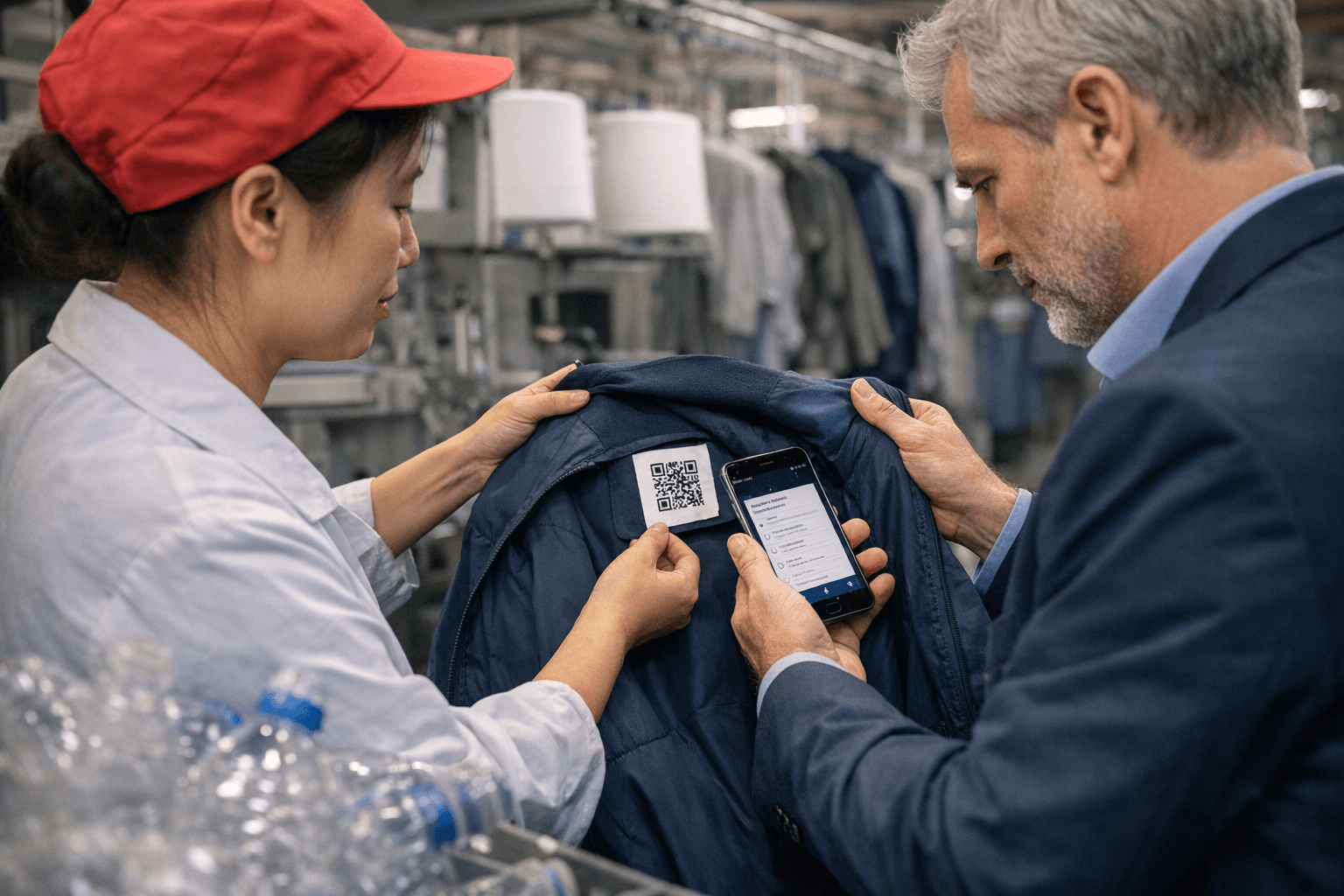
The system also generates an Impact Report that calculates each product's carbon footprint using verified production data rather than industry averages, a detail with real commercial weight as greenwashing litigation accelerates across European markets. Because the underlying blockchain is public, any consumer, regulator, or brand can audit the record independently, without relying on a proprietary ledger that demands trust in a single intermediary.
Mr. Chao, speaking at the same summit, framed the collaboration in terms that went beyond compliance: "This is more than technology. This is China and Europe working together. A new Digital Silk Road."
Whether that vision translates into widespread adoption before the 2027 deadline depends on how quickly Chinese manufacturers can plug into systems like NAFFIC's STCP. What this pilot established is that the technical infrastructure already exists. The pressure now is industrial scale.
This article was produced by Prism’s automated news system from verified source data, official records, and press releases, then run through automated quality and moderation checks before publishing. The system is built and supervised by the people who set the standards it runs under. Read our full AI policy.
Did this article answer your question?


