EU footwear imports hit 1.98 billion pairs, pushing circular fashion urgency
1.98 billion pairs of shoes a year is a lot of leather, glue and rubber to hide from the waste bin. APICCAPS says that volume leaves the EU carrying about 1.22 million tonnes of potential waste.
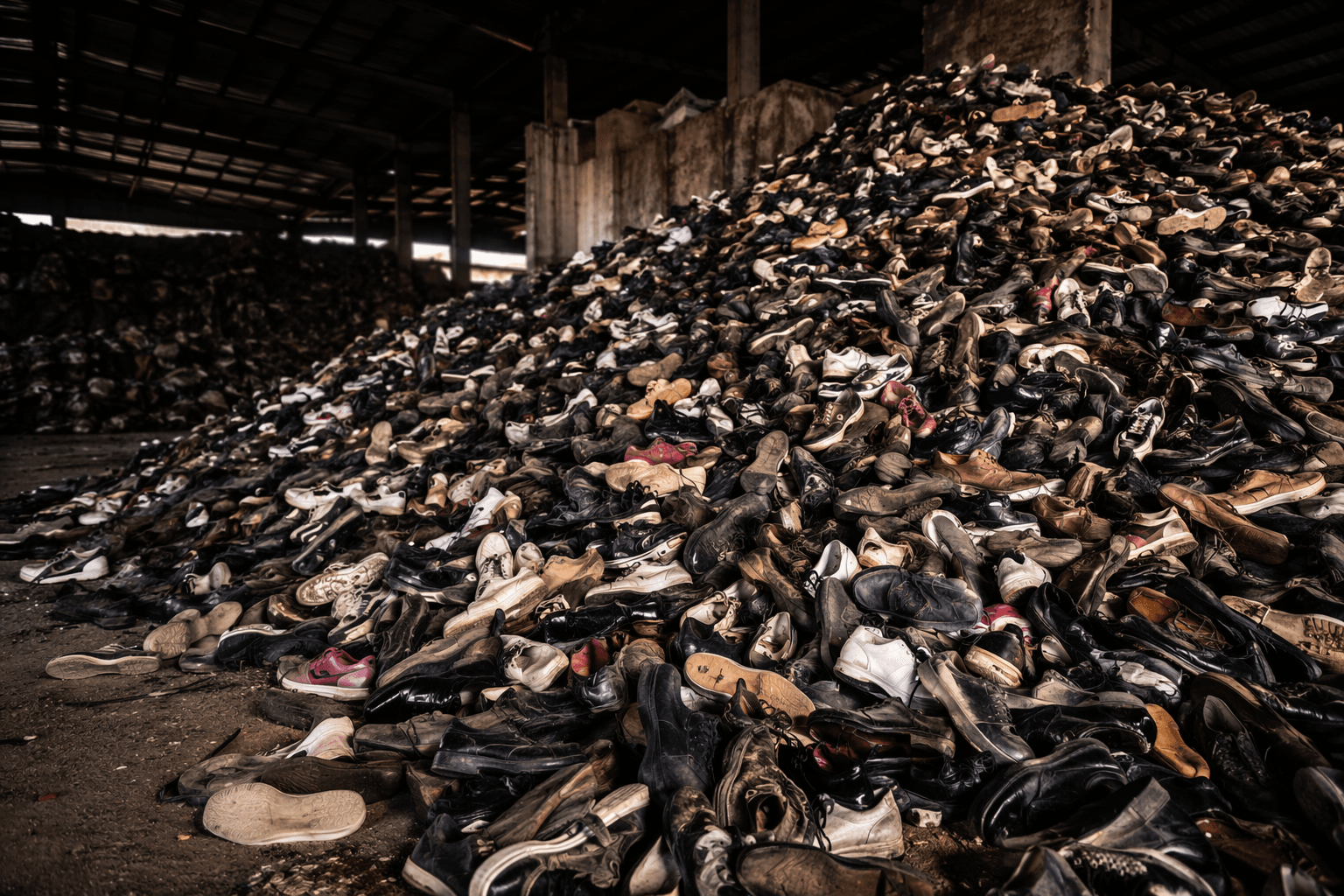
1.98 billion pairs of shoes a year is not a footprint, it is a landfill problem wearing a nice silhouette. APICCAPS and the CEC put that number on the table in Brussels on June 22, and the waste math is brutal: at an average 616 grams a pair, the EU’s annual footwear imports add up to roughly 1.22 million tonnes of potential waste.
That is the real system failure exposed by the figure. Europe is pulling in enough shoes to keep shop floors full, but the sector still behaves as if end-of-life is somebody else’s job. Once a trainer splits at the midsole, a heel tips, or a boot is made from a cocktail of materials that do not want to come apart, collection systems inherit the mess. Recycling gets harder, resale gets patchier, and the easiest destination remains the bin.
The uncomfortable part is that the policy machinery is finally catching up. On February 9, 2026, the European Commission adopted new measures under the Ecodesign for Sustainable Products Regulation to stop the destruction of unsold apparel, clothing accessories and footwear. The Commission says that in Europe an estimated 4% to 9% of unsold textiles are destroyed before they are ever worn, a statistic that makes overproduction look less like a business model and more like a leak in the floor.
The Commission has also started lining up the measurement tools that circular footwear needs. On June 25, 2025, it welcomed new Product Environmental Footprint Category Rules for apparel and footwear, designed to give brands a science-based way to assess impact from raw materials through end-of-life. That matters because shoe sustainability cannot be managed by marketing copy and recycled-content tags alone. If a sneaker is built from layers that cannot be separated, no amount of green language changes the fact that the product is engineered for disposal.
APICCAPS knows the industrial side of that argument better than most. The Portuguese Footwear, Components, Leather Goods Manufacturers’ Association, founded in 1975 and based in Porto, says Portugal’s footwear cluster employed about 42,500 people in 2024, including 33,000 in manufacturing, and generated €2.2 billion in exports, up 5% from pre-pandemic levels. Portugal also exported 68 million pairs of shoes to 170 countries that year, proof that a serious footwear economy still exists in Europe when the factory floor is treated as a strategic asset, not a nostalgia project.
That is why the next move has to be more specific than vague circularity talk. Shoes need to be designed for disassembly, built with more mono-material experimentation, and supported by take-back logistics that actually move pairs out of wardrobes and into recovery streams. Policy can do the heavy lifting too, especially through extended producer responsibility that forces brands to pay for collection and sorting instead of dumping the bill on cities. The EU already has the Circular Economy Action Plan, adopted in March 2020, and the footwear number now shows how much faster the sector has to move.
This article was produced by Prism’s automated news system from verified source data, official records, and press releases, then run through automated quality and moderation checks before publishing. The system is built and supervised by the people who set the standards it runs under. Read our full AI policy.
Know something we missed? Have a correction or additional information?
Submit a Tip