Fashion Pact Launches Collective to Scale Textile-to-Textile Fibres
The Circular Fibre Collective is chasing 2 million tonnes of textile-to-textile capacity, aiming to lift these fibres from under 1% of production to 8% by 2030.
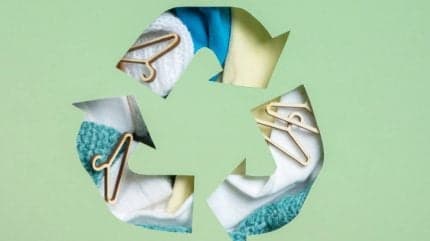
The Circular Fibre Collective is trying to do what fashion has talked around for years: turn textile-to-textile recycled and next-generation fibres into something buyers actually order at scale. Backed by The Fashion Pact and Fashion for Good, with strategic design input from the Ellen MacArthur Foundation, the initiative launched on April 21 with a blunt target, up to 2 million tonnes of capacity and a jump from less than 1% of global fibre production today to about 8% by 2030.
That is the real story here. Fashion has never lacked recycled-fibre rhetoric; it has lacked coordination. The sector’s “chicken-and-egg” problem is brutal in plain sight. Mills will not pour money into new recycling lines without guaranteed demand. Brands will not lock in supply if the quality, volume, and price of post-consumer feedstock are unpredictable. Add weak policy frameworks, thin financing, and patchy recycling infrastructure, and the result is a market that keeps circling the same pilot projects.
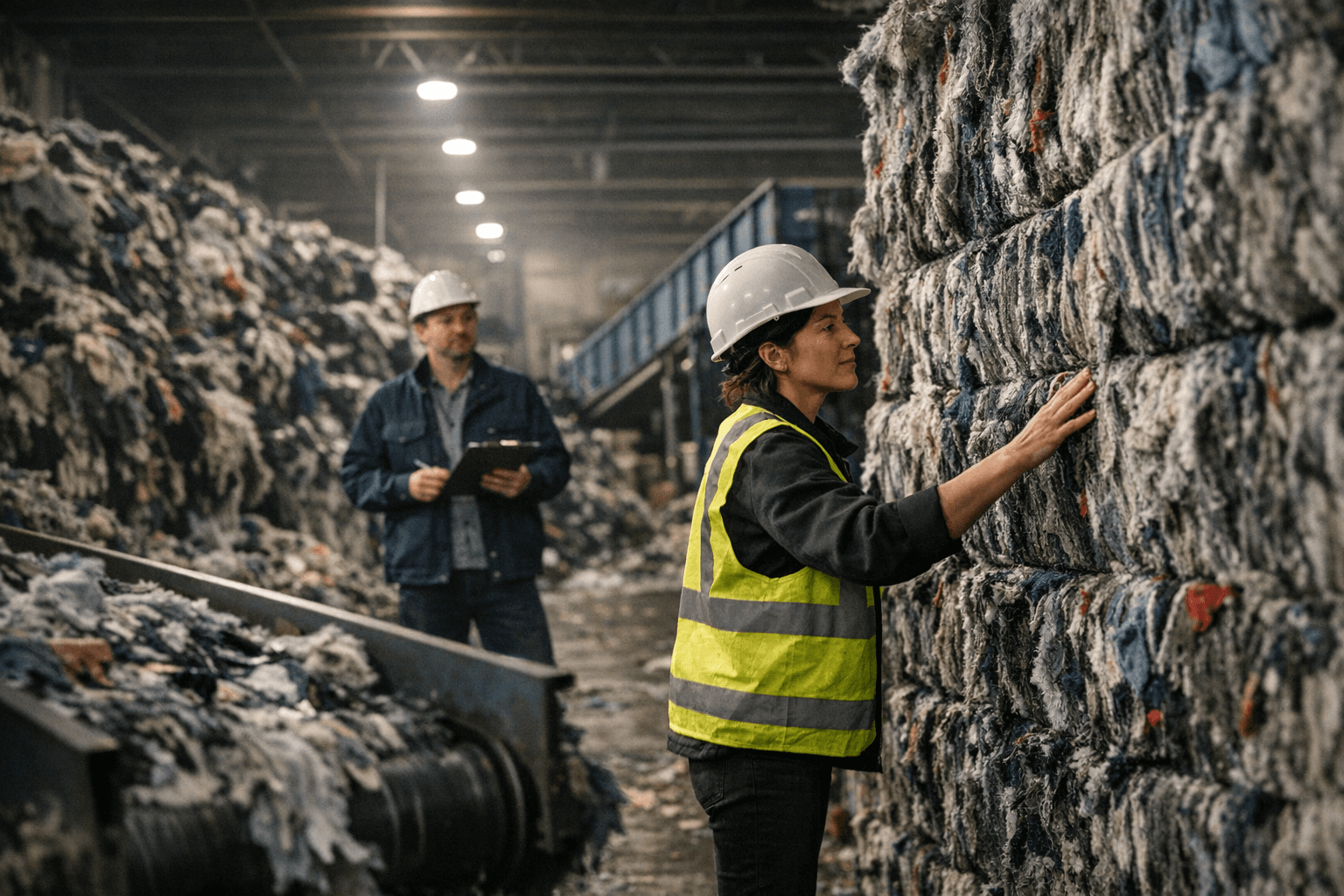
The Collective is meant to wedge itself into those missing links. After consulting with 25 leading fashion brands, it is leaning on voluntary aggregated demand, non-binding commitments, material supply mapping, policy exploration, financing unlocks, and practical adoption tools for brands and suppliers. In other words, it is trying to make textile-to-textile sourcing look less like a heroic experiment and more like a usable procurement category. That matters because the bottlenecks are not abstract. Feedstock quality determines whether a recycler can produce consistent output. Certification determines whether a claim survives scrutiny. Procurement risk determines whether a buying team can sign off on volume without getting burned. Mill capacity determines whether any of it can scale beyond a showroom sample.
The timing is no accident. The Ellen MacArthur Foundation still describes fashion as a linear system, with the equivalent of a rubbish truckload of clothes burned or buried in landfill every second. Against that backdrop, the case for circular fibres is not aesthetic, it is structural. A 2025 Boston Consulting Group and Fashion for Good analysis said next-generation materials could reach 8% of the fibre market by 2030, about 13 million tonnes, and that materials account for 92% of the industry’s emissions.
That is why this launch matters more as a buying signal than as a mood piece. If the Collective can convert brand interest into multi-season demand and clearer supply commitments, it could change real sourcing decisions. If it cannot, it will join the long shelf of polished sustainability pledges that looked decisive until the order book opened.
This article was produced by Prism’s automated news system from verified source data, official records, and press releases, then run through automated quality and moderation checks before publishing. The system is built and supervised by the people who set the standards it runs under. Read our full AI policy.
Did this article answer your question?


