Fast Fashion's Hidden Cost: Pollution, Exploitation, and Rana Plaza's Legacy
Fast fashion's bargain price hides a dirty machine: emissions, waste, and worker deaths. Rana Plaza still names the cost of speed.
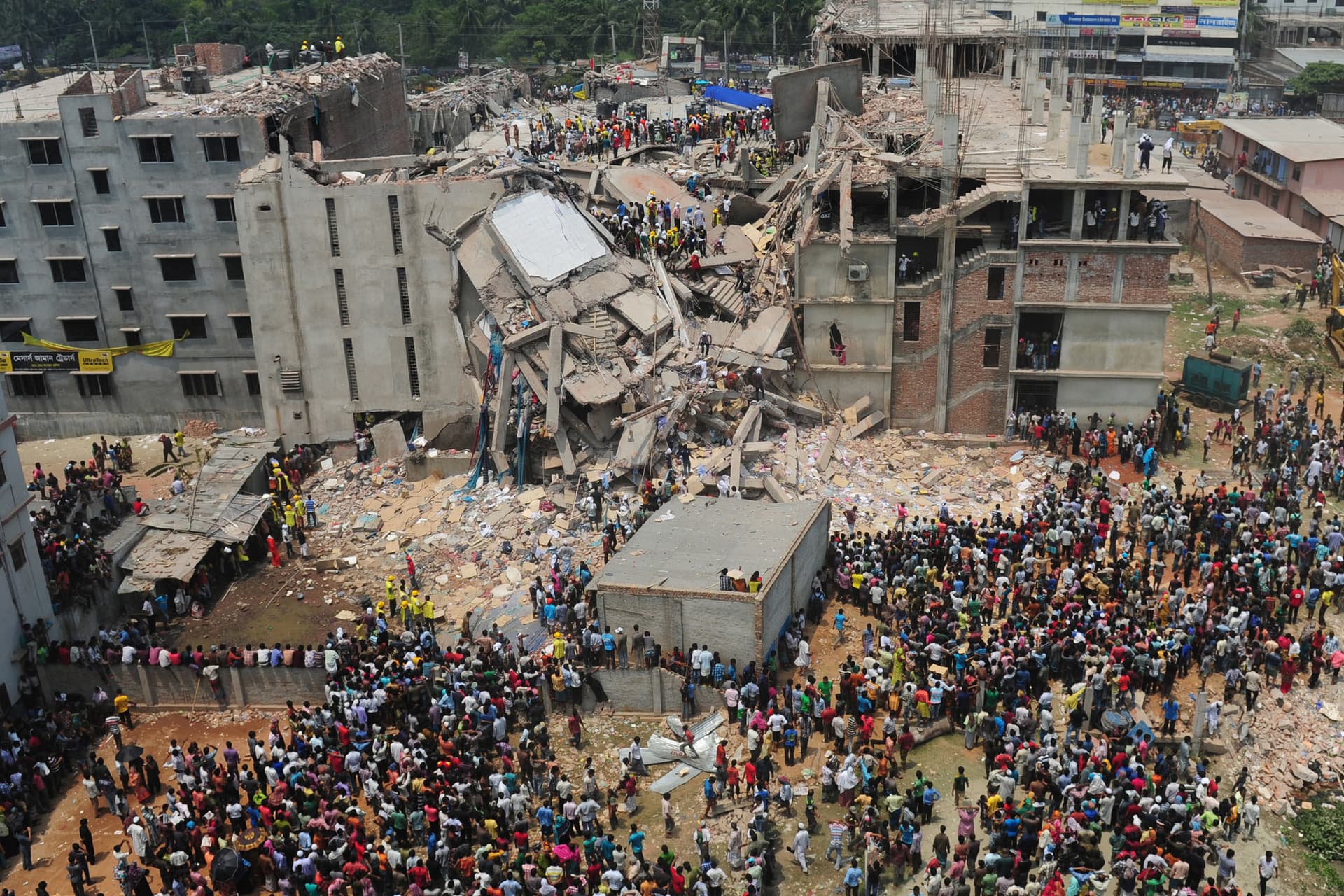
The machine behind the rack
Fast fashion is not just cheap clothes. It is a machine built to turn speed into profit, then pass the mess to everyone else. The clothes are light because the system is heavy with hidden costs: between 2% and 8% of global greenhouse gas emissions, about 215 trillion liters of water a year, and roughly 9% of the microplastic pollution that reaches the oceans annually. UNEP and the World Bank also say people are buying about 60% more clothes than they did 15 years ago, while wearing them for only about half as long.
That is the whole trick. Micro-trend speed keeps shoppers chasing the next silhouette, the next color, the next “it” top that looks good under fluorescent fitting-room lights and falls apart after a few washes. Low prices make the binge feel harmless, but the math only works if someone, somewhere, absorbs the cost in polluted rivers, exhausted workers, and mountains of castoff fabric.
Rana Plaza is the scar the industry still carries
Rana Plaza is the point where the industry stopped being able to pretend this was just about style. On 24 April 2013, the building on the outskirts of Dhaka, Bangladesh collapsed, killing 1,138 workers and injuring more than 2,500 others. The International Labour Organization calls it the global garment industry’s worst-ever industrial accident, and that phrase still lands because it captures the scale of what cheap clothing had been hiding in plain sight.
The collapse forced a reckoning in Bangladesh and pushed major efforts to improve workplace safety and compliance. The ILO says conditions there are safer now and government oversight is stronger, but it also says challenges remain. That is the part people skip when they turn Rana Plaza into a memorial post: the disaster was not a one-off tragedy, it was the exposed seam of a business model that had been stretched too far for too long.
Why the environmental bill keeps growing
The environmental damage is built into the way fast fashion works. Brands pump out more volume because volume is how they stay visible, and overproduction is how they keep racks full, feeds fresh, and margins alive. UNEP says the fashion and textiles industry is tied to environmentally and socially destructive practices because its linear model is built on overconsumption, not durability.
And the waste is obscene. UNEP says around 92 million tonnes of textile waste are generated worldwide each year, which is basically a garbage truck full of clothing being dumped or burned every second. The World Bank says about 87% of the fiber input used for clothing ends up incinerated or landfilled. That means most of what gets spun, dyed, cut, stitched, shipped, and sold is not really “circulating” at all. It is just moving through the system until it disappears.
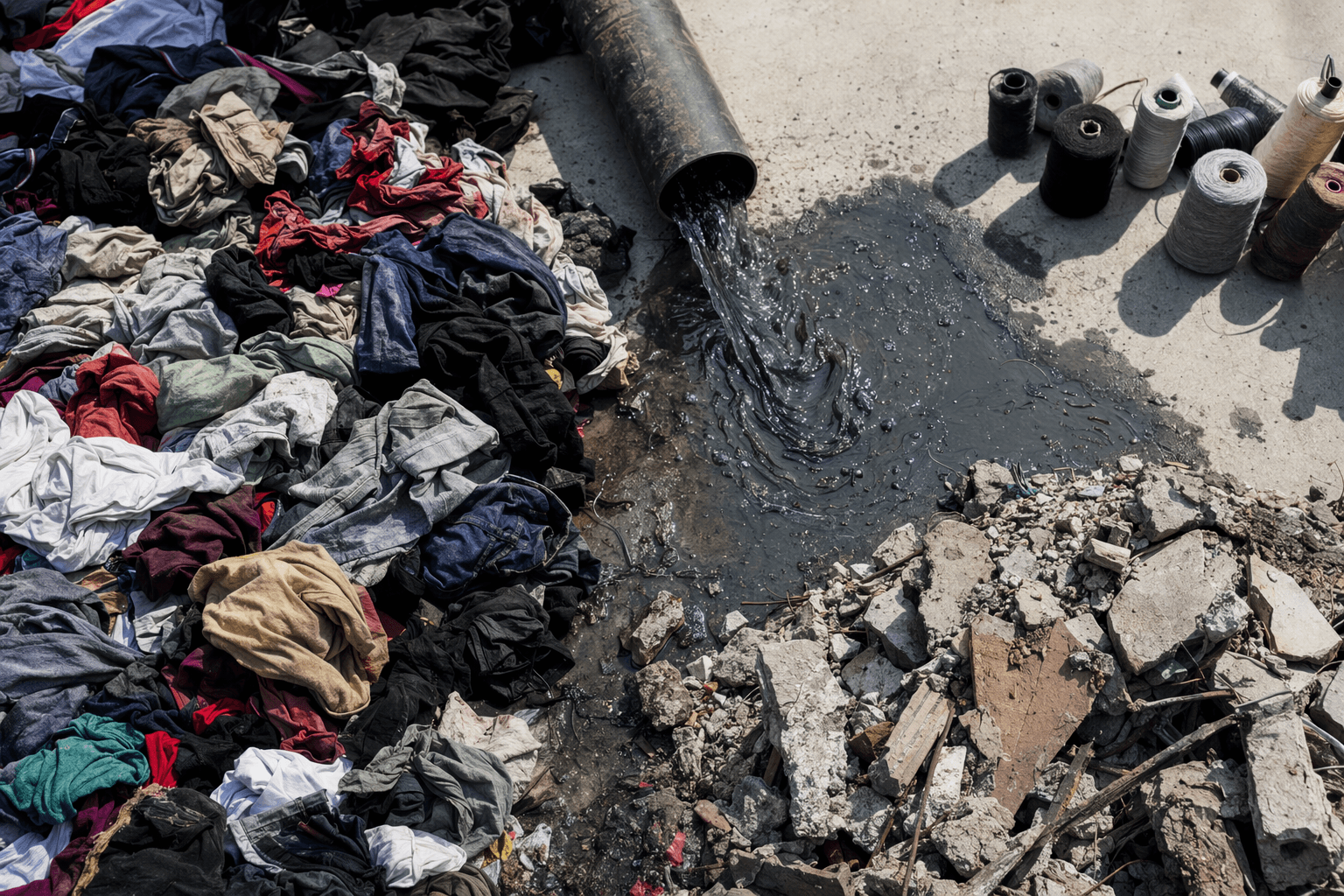
The water footprint is just as brutal. UNEP says the sector uses 215 trillion liters of water a year, the equivalent of 86 million Olympic-sized swimming pools. That matters whether you care about cotton fields, dye houses, or the dry arithmetic of a garment that costs less than lunch. Cheap clothes are not cheap to make. They are cheap to buy because the real bill gets hidden in the landscape.
The damage reaches beyond the laundry basket
This is also why fast fashion is a pollution story, not just a shopping story. Synthetic garments shed plastic microfibers every time they are washed, and the World Bank puts the ocean toll at about half a million tons of plastic microfibers a year. Add that to the 9% share of microplastic pollution reaching the oceans annually, and suddenly the fuzzy little sweater on your chair is part of a much uglier picture.
The pressure extends to labor and, yes, to animal harms too. When a system is obsessed with cheaper inputs and faster replenishment, it squeezes every part of the chain harder. Factory workers are pushed into tighter deadlines and thinner margins, and material sourcing gets pulled toward whatever keeps prices down, even when the ethical cost is obvious.
What has changed, and what has not
There has been movement, but not enough to break the model. The UN launched the Alliance for Sustainable Fashion in March 2019 to confront the sector’s destructive practices and push more circular, less wasteful business models. That shift matters because it reframes sustainability as a supply-chain problem, not just a consumer mood. If the industry wants less pollution, it needs less waste. If it wants safer labor, it needs slower, more accountable production.
The trouble is that the same forces that made fast fashion powerful are still rewarded in 2026: speed, cheapness, and churn. The industry has gotten better at talking about circularity, recycling, and responsible sourcing, but the rack still fills up faster than the system can clean up after itself. The ILO’s line on Bangladesh says the clearest truth of all: safety can improve, oversight can strengthen, and the broader model can still remain under pressure.
What a real fix looks like
The answer is not a guilt-trip. It is a redesign. A system that produces less, lasts longer, and tracks its waste honestly will do more than any glossy sustainability campaign ever could.
- Cut overproduction at the source, because extra inventory becomes markdowns, waste, or landfill.
- Make fewer, better garments with stronger seams, denser fabrics, and construction meant to survive more than one season.
- Push for circular models that keep fiber in use longer instead of treating clothing like disposable packaging.
- Demand supply chains that do not rely on invisible labor and impossible deadlines.
- Treat durability as style, because a well-made coat, crisp shirt, or heavy denim jacket always looks more expensive than it is.
Rana Plaza proved that the fast-fashion bargain can be paid for in lives. The environmental data proves it is also paid for in water, air, and waste. Until the business model changes, every new trend will still carry the same old price: someone else’s damage.
This article was produced by Prism’s automated news system from verified source data, official records, and press releases, then run through automated quality and moderation checks before publishing. The system is built and supervised by the people who set the standards it runs under. Read our full AI policy.
Did this article answer your question?


