Global Fashion Agenda launches Asia policy matrix to track textile rules
Global Fashion Agenda’s new Asia matrix turns textile policy into a sourcing map, spanning eight manufacturing hubs as chemical, waste and due-diligence rules tighten.
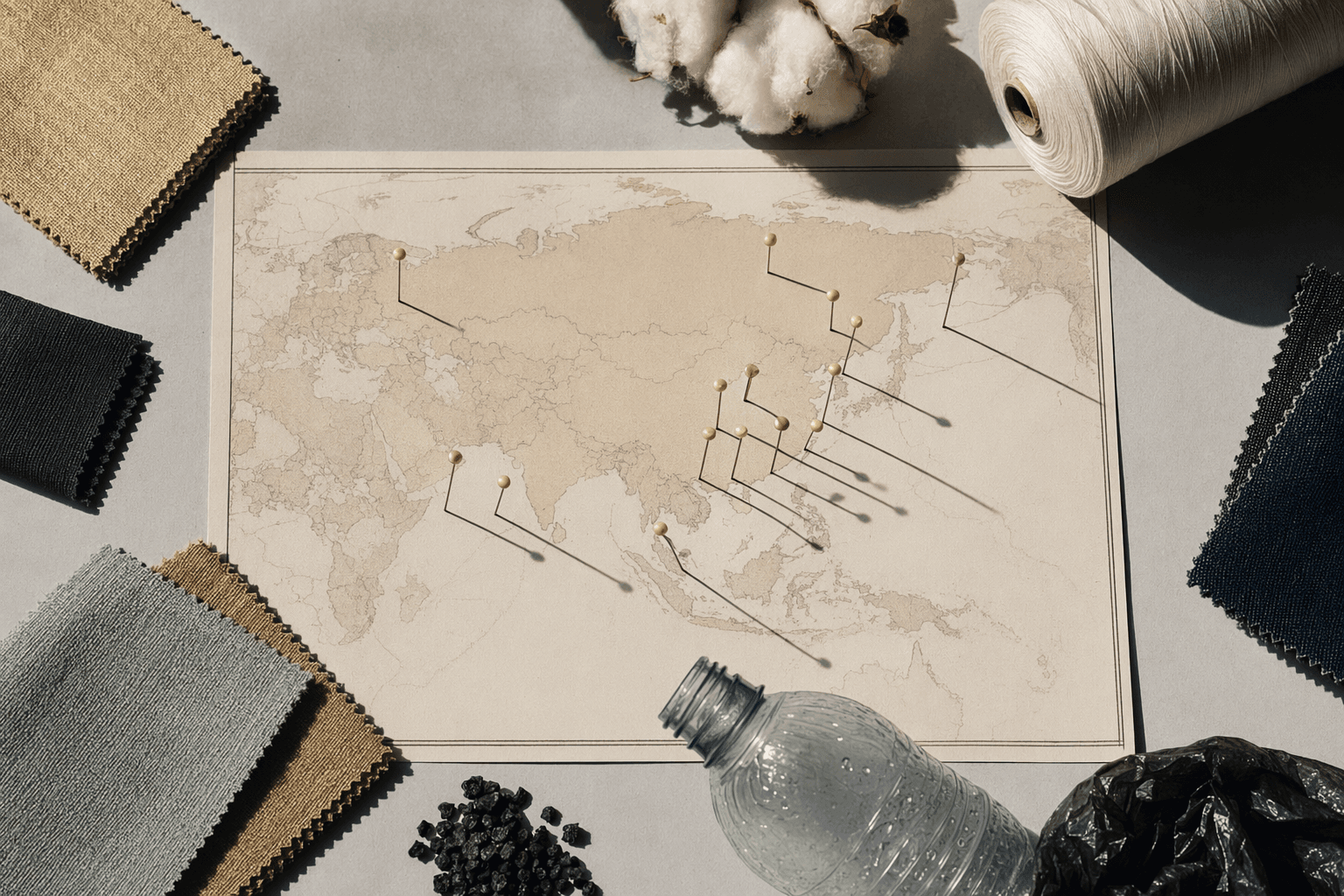
Global Fashion Agenda has moved textile regulation out of the footnotes and onto the front desk. Its new GFA Policy Matrix: Asia tracks adopted rules, live proposals and emerging policy shifts across eight manufacturing countries, giving brands and suppliers a clearer read on where compliance pressure is building fastest.
The matrix covers Bangladesh, Cambodia, China, India, Indonesia, Pakistan, Türkiye and Vietnam, which together sit at the center of global apparel sourcing. GFA says the platform is regularly updated, non-exhaustive and built around the five priorities of the Fashion CEO Agenda, with policies grouped by status: in force, in force under revision, ongoing, upcoming and non-policy initiatives. That structure matters because fashion’s biggest risk is no longer just bad cotton or a missed shipment. It is missing the rule change that affects what can be dyed, imported, labeled, sold or recycled next season.
GFA is positioning the Asia tool as practical reference material for industry stakeholders, policymakers and sustainability advocates, and it builds on the organization’s earlier EU and Americas matrices. It also extends GFA’s wider policy push through the Global Textiles Policy Forum and its 2024-2025 effort to help the industry navigate mounting regulatory and stakeholder pressure. For brands with supply chains stitched through South and Southeast Asia, the difference between “ongoing” and “upcoming” is often the difference between a planned buy and a stranded one.
The timing is sharp. At UNEA-6 in February 2024, governments called for a global policy dialogue on textiles to create a more coherent response to the sector’s environmental and social harms, from production pollution to the role trade plays in circularity. UNEP has said those dialogues should be government-led, inclusive and internationally coordinated, a sign that textiles are no longer being treated as a niche sustainability issue but as an industrial policy problem.

The pressure is clearest in the manufacturing hubs that keep the world’s wardrobes stocked. In 2022, a UNEP-led programme launched a $43-million initiative to reduce hazardous chemicals in textile production across Bangladesh, Indonesia, Pakistan and Viet Nam, with a particular focus on phasing out PFAS and other chemicals of concern. UNEP said those four countries’ textile sectors employ more than 10 million people and account for nearly 15% of global clothing exports. Wet-processing factories, meanwhile, can use 0.58 kg of chemical inputs for every 1 kg of fabric produced, a figure that makes every new restriction on dyes, finishing agents or wastewater handling feel immediate.
Market pressure is shifting at the same time. McKinsey said in 2023 that seven Asian apparel manufacturing countries drive global apparel exports, while major factories in Bangladesh, India and Sri Lanka were running at 60% to 70% utilization as demand weakened. GFA’s own 2025 Fashion Impact Toolkit is designed to help textile companies navigate that squeeze, and when completed it will map nearly 3,000 potential impacts across the value chain. Taken together, the matrix is less a database than a warning light: in Asia, compliance is becoming part of the cost of doing fashion.
This article was produced by Prism’s automated news system from verified source data, official records, and press releases, then run through automated quality and moderation checks before publishing. The system is built and supervised by the people who set the standards it runs under. Read our full AI policy.
Did this article answer your question?


