Global Fashion Agenda launches blueprint to scale textile-to-textile recycling in EU
Europe has the recycling rules, but not yet the factories: Global Fashion Agenda wants €8-11 billion to turn textile waste into new fiber.

Europe finally has the policy scaffolding for textile collection and extended producer responsibility, but the missing piece is the industrial engine that can turn discarded clothing into new yarn at scale. Global Fashion Agenda and ReHubs used the Global Fashion Summit in Copenhagen to push the 2030 Circularity Blueprint, a plan built to tackle the bottlenecks that still keep textile-to-textile recycling stuck between ambition and reality.
Presented on 6 May 2026 at the Copenhagen Concert Hall, the blueprint lays out eight interconnected intervention areas aimed at the same stubborn problem: the EU textile system is still too fragmented to function as a circular supply chain. Global Fashion Agenda says Europe will need about €8 billion to €11 billion in capital expenditure to build the infrastructure, and that recycled inputs currently cost roughly 20% to as much as double virgin materials. That is the real pressure point. A circular wardrobe is not only a design challenge; it is a cost problem, a logistics problem and, above all, a market-making problem.
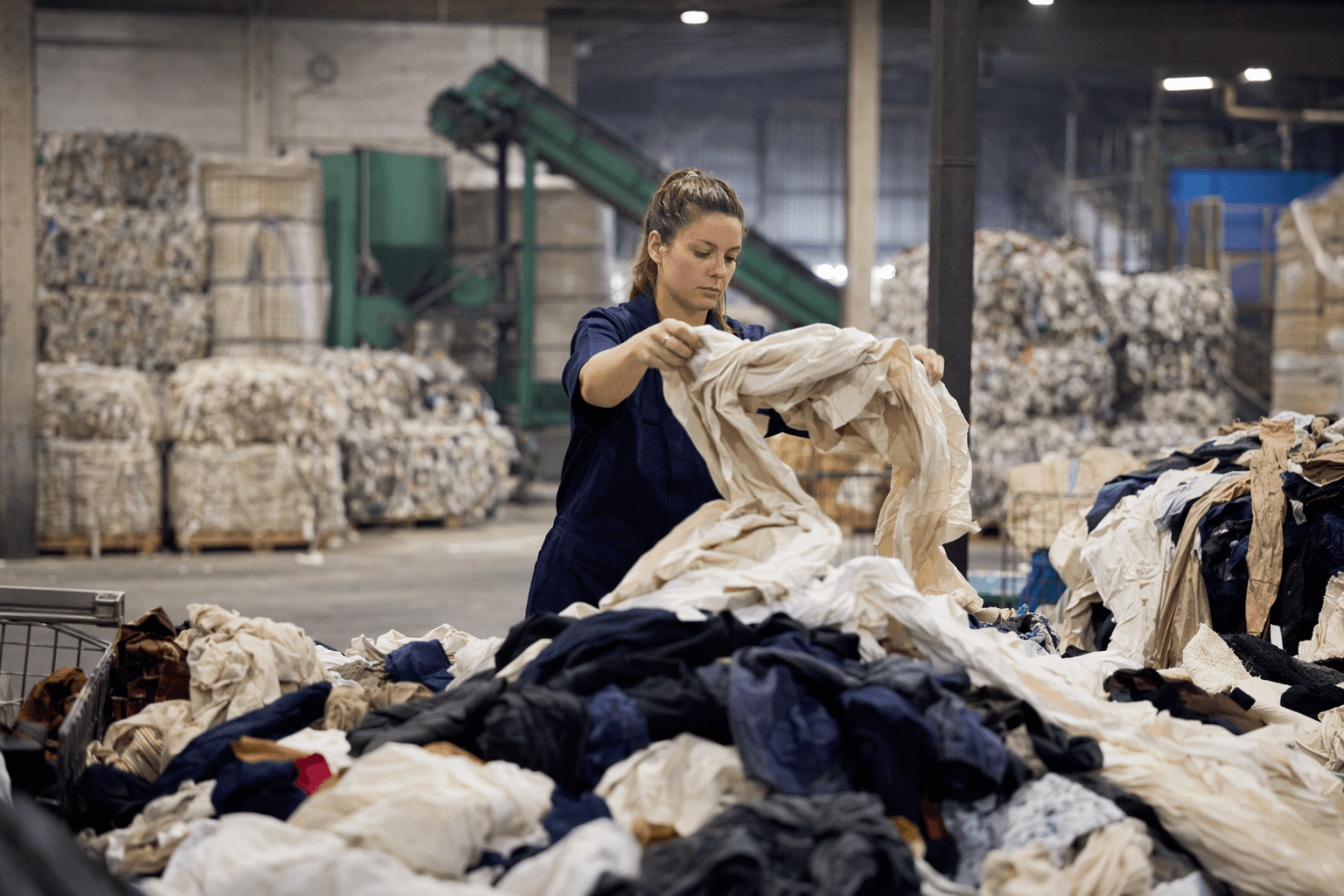
The blueprint’s value lies in whether it can solve the practical choke points that have defeated so many well-meaning roadmaps before it. Sorting capacity remains too thin, feedstock quality too inconsistent, financing too cautious and offtake demand too weak to give recyclers confidence to build. Global Fashion Agenda is calling for stronger public procurement, more harmonised and fit-for-purpose EPR systems, clearer recycled-content requirements and more investment in recycling capacity, which is the right direction if Europe wants to move beyond pilot plants and into industrial production. But the blueprint will only matter if those policy levers create predictable supply, cleaner input streams and buyers willing to sign long-term contracts.
The policy backdrop is no longer theoretical. EU rules require separate textile collection by 1 January 2025, and textile EPR was formally adopted in October 2025, with a 20-month transposition period and producer responsibility organisations expected to be operational within 30 months. A Circular Economy Act is also anticipated in 2026. ReHubs, first unveiled by EURATEX on 16 November 2020 with a vision for five European hubs, now says its roadmap targets 2.5 million tons of recycling capacity by 2030 to 2032, with more than 30 industry organisations involved.
A March 2026 analysis by Boston Consulting Group and ReHubs gives the blueprint its hard economic edge. Europe generates around 25 kg of post-consumer textile waste per person in 2025, yet only a fraction is captured and qualified for recycling. The model they outline also needs roughly €5 billion to €6.5 billion in annual operating expenditure by 2035, and it is not yet profitable for standalone recyclers without shared-risk mechanisms. That is why the blueprint is more than another summit statement. By 2030, it will have to help Europe build sorting systems, secure cleaner feedstock, unlock capital and guarantee demand, or circular fashion will remain a polished idea without enough machines behind it.
This article was produced by Prism’s automated news system from verified source data, official records, and press releases, then run through automated quality and moderation checks before publishing. The system is built and supervised by the people who set the standards it runs under. Read our full AI policy.
Did this article answer your question?


