Moncler tops sustainability rankings again, recycled nylon drives emissions cuts
Moncler stayed atop two major sustainability benchmarks for a seventh year, with recycled nylon over 60% of nylon use and emissions down 46% from 2021.
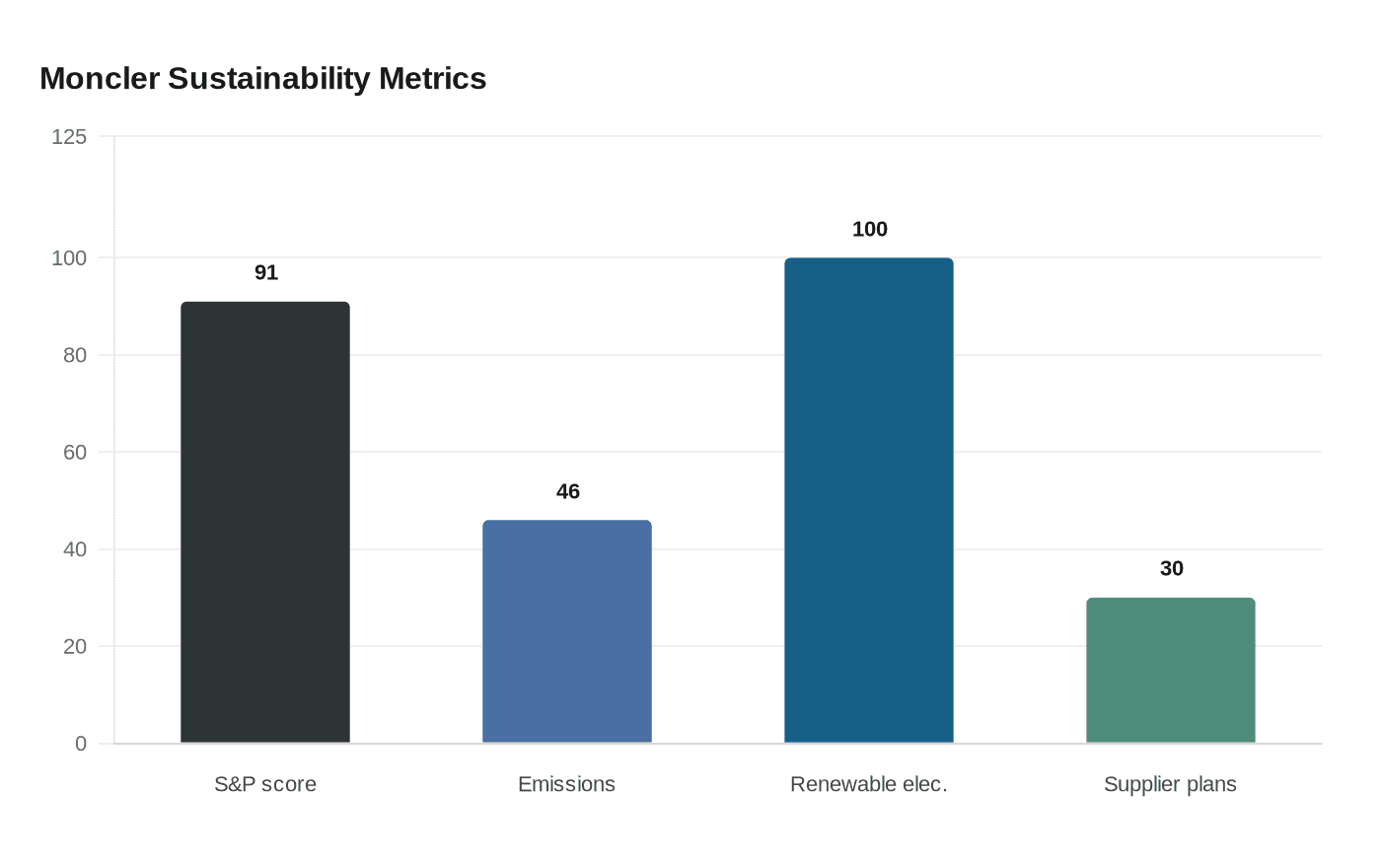
Moncler has turned sustainability into a repeatable operating system, not a one-off campaign. For the seventh consecutive year, Moncler Group was confirmed in the Dow Jones Best-in-Class World and Europe Indices, and it held the highest score, 91 out of 100, in the Textiles, Apparel & Luxury Goods sector in S&P Global’s Corporate Sustainability Assessment 2025. That matters because the Dow Jones Best-in-Class World Index is not a fashion-only prize case. S&P Dow Jones Indices says it covers the top 10% of the largest 2,500 companies in the S&P Global BMI, which puts Moncler in the company of global sustainability leaders, not just luxury peers.
The real story is in the machinery behind the score. Moncler said recycled nylon accounted for more than 60% of nylon used in 2025 collections, while more than 55% of the total yarns and fabrics used across collections were preferred materials. The company also said more than 55% of its yarns and fabrics were preferred materials overall, with organic or recycled cotton above 55% and certified wool above 70%. That mix is the kind of materials shift that luxury brands have struggled to scale, because it demands supply security, quality control and a design language that still looks sharp on a rack.

The emissions data is equally telling. Moncler said Scope 1 and 2 market-based emissions fell 46% from its 2021 base year, and Scope 2 market-based emissions were zero because it said it has procured 100% renewable electricity across all directly operated sites since 2023. On top of that, Moncler said it has been on CDP’s Climate A List for three consecutive years. Those are not soft, lifestyle-friendly promises; they are measurable signals that the brand is tightening energy use and reporting discipline across the business.
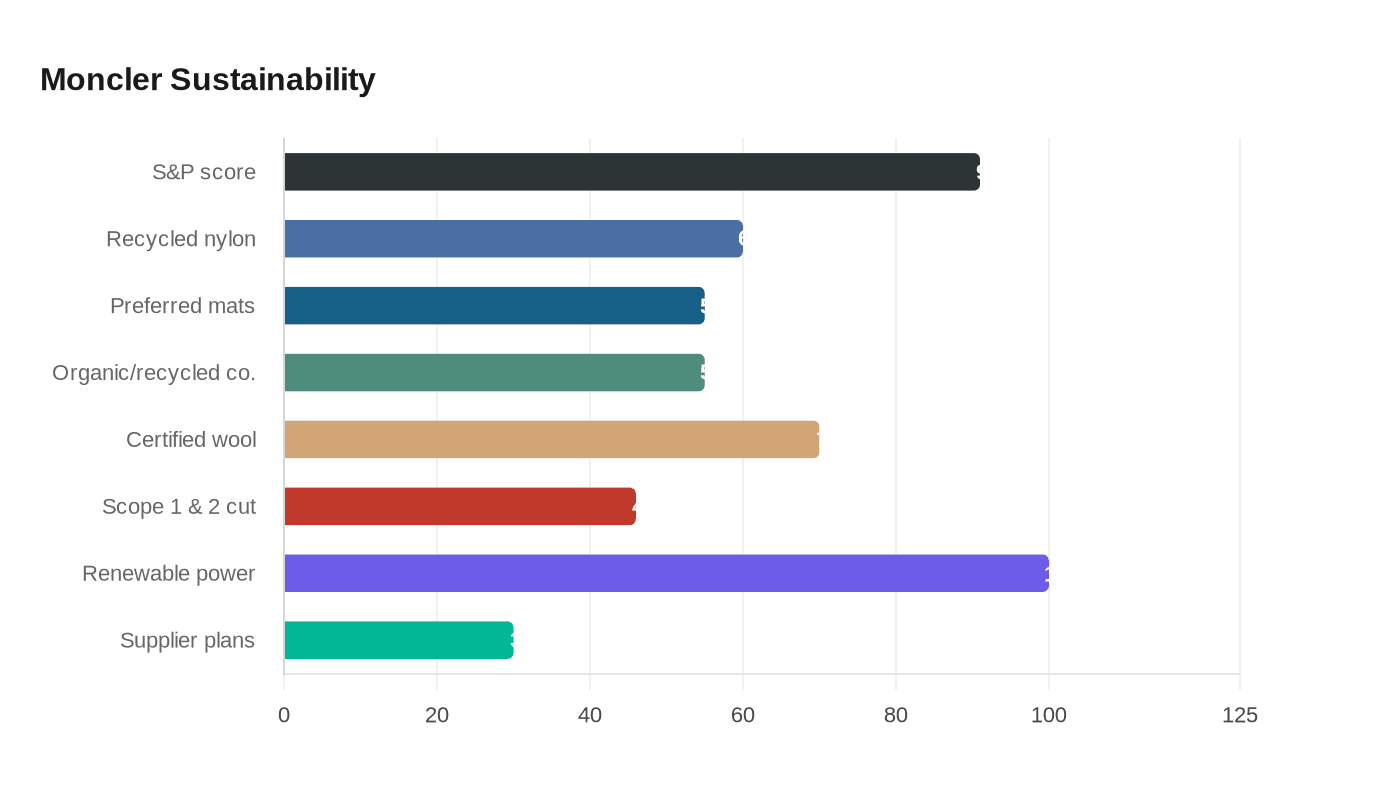
The harder test is whether this becomes a broader luxury playbook or just a high-scoring outlier. Moncler said it supported 30% of key suppliers in defining their own emissions-reduction plans, which is where the next phase of sustainability will be won or lost. Supplier control, renewable power and materials reform are the levers that move the numbers, and they are exactly the areas that luxury rivals will now be expected to match if they want their ESG claims to look as polished as their outerwear.
This article was produced by Prism’s automated news system from verified source data, official records, and press releases, then run through automated quality and moderation checks before publishing. The system is built and supervised by the people who set the standards it runs under. Read our full AI policy.
Did this article answer your question?