Recover and Prosperity Textile bring recycled cotton to core denim lines
Recycled cotton is moving out of capsule territory and into the denim supply chain, with Recover and Prosperity Textile showing fabric and garments built for volume, not novelty.

The real test for recycled cotton denim is no longer whether it looks good on a mood board. It is whether it can survive the grind of core-collection production, where lead times, consistency and hand-feel matter as much as the sustainability pitch. Recover and Prosperity Textile are betting that it can, pairing recycled cotton fiber with industrial denim manufacturing in a partnership they say is built to scale, not showcase.
Announced on April 14, 2026, the deal puts Madrid-based Recover, which turns post-industrial and pre- and post-consumer textile waste into recycled cotton fiber, together with Prosperity Textile, a vertically integrated denim maker operating at industrial scale. The fabric developments sit under Recover Fabrics, and the whole setup is meant to stay flexible enough to evolve with customer needs, volumes and end-use applications. That matters because denim has spent years trapped between one-off sustainability capsules and the far messier reality of mainstream sourcing.
The first signal that this is not just another concept drop came fast: selected garments were shown at Kingpins Amsterdam on April 15 and 16, crafted in Vietnam to demonstrate how the fabrics could move across different denim categories. That location is telling. Vietnam is already part of Recover’s manufacturing push, after the company opened a new factory and recycling technology operation there in December 2024. Prosperity Textile also has production centers in China and Vietnam, with annual capacity approaching 100 million yards, or more than 90 million meters of fabric. In other words, this is the kind of scale that can actually touch the jeans most people buy, not just the ones fashion insiders photograph.
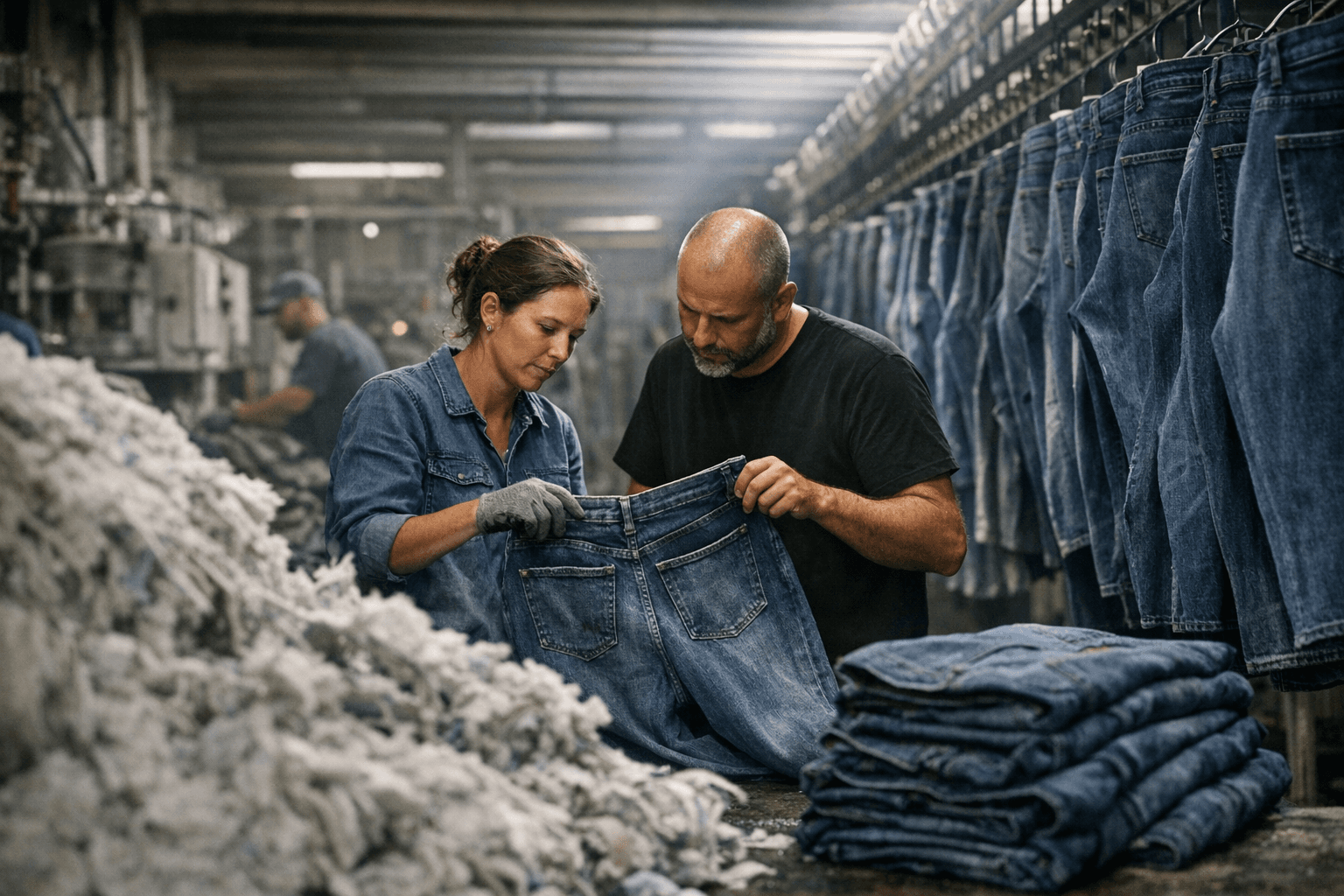
Anders Sjöblom, Recover’s chief executive, framed the partnership as a way to push circular materials beyond niche collections and into core quality denim ranges while cutting dependence on virgin cotton. Stafford Lau, Prosperity Textile’s chief executive, said the collaboration is intended to deliver competitive, high-volume denim fabrics that meet global brands’ performance, lead-time and quality expectations. That is the whole fight in one sentence: recycled cotton only wins when it can hold up under the same pressure as the stuff brands already trust.
There is also broader industrial momentum behind Recover’s strategy. The company launched its Vietnam operation in 2024 and announced a joint venture with Intradeco in May 2025 to expand recycled cotton production in Central America. Taken together, those moves suggest a company building supply in multiple regions rather than selling circularity as a one-season story. If this partnership works, recycled cotton denim stops being a sustainability talking point and starts looking like the new normal of the supply chain.
This article was produced by Prism’s automated news system from verified source data, official records, and press releases, then run through automated quality and moderation checks before publishing. The system is built and supervised by the people who set the standards it runs under. Read our full AI policy.
Did this article answer your question?


