Reju opens North American R&D center to scale textile recycling
Reju opened a Conshohocken lab to tackle textile-to-textile recycling’s hardest step: separating polyester-rich blends and proving the process at industrial scale.

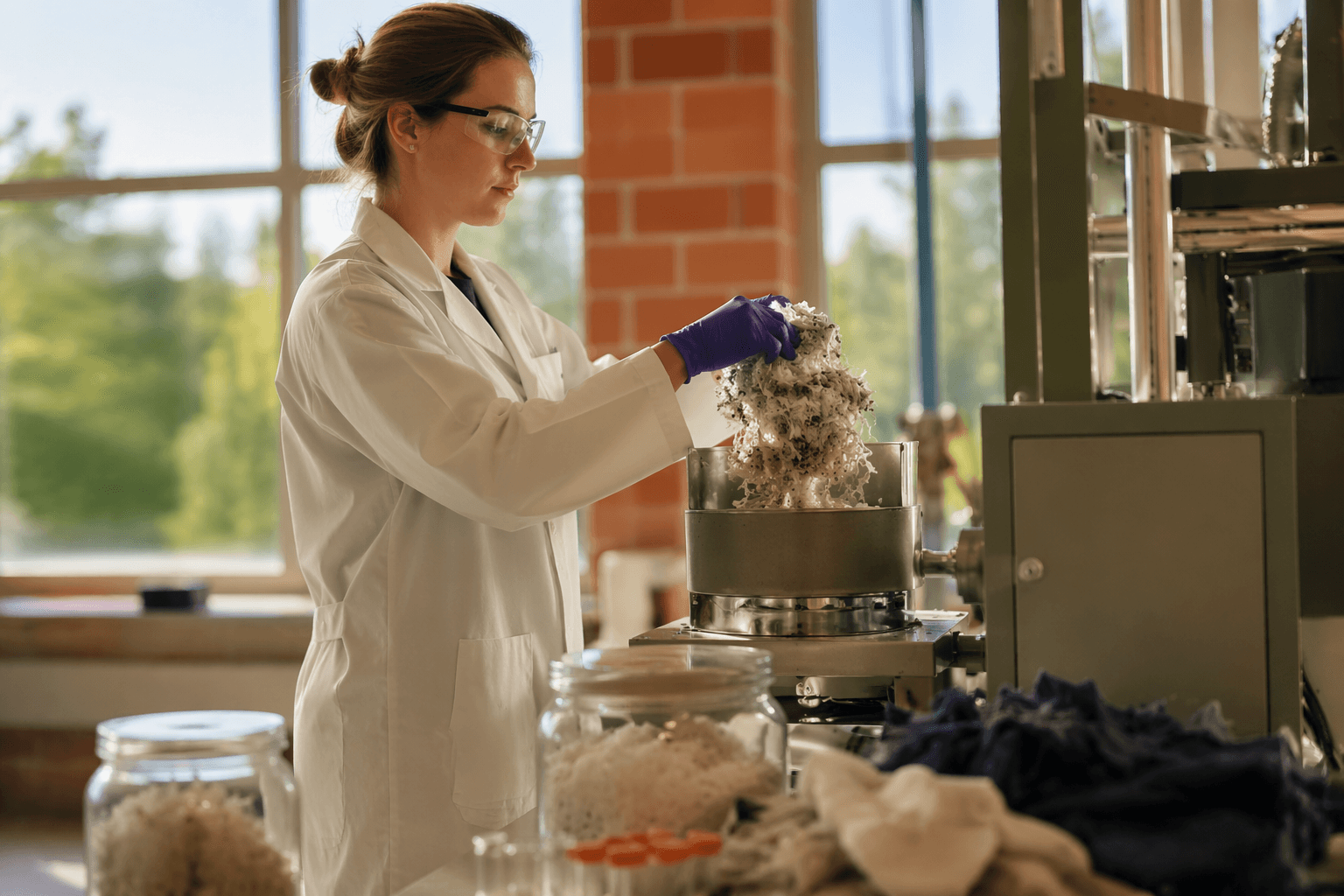
Reju opened its first North American research and development center in Conshohocken, Pennsylvania, on July 1, placing its next stage of textile recycling inside Technip Energies’ Advanced Materials and Catalysts research center. The lab will refine polyester recycling, mixed-fabric solutions and circular chemistry pathways for pilot work and industrial scale.
Reju puts textile waste at 121 million tonnes a year, polyester at 59% of global textile fiber production, and textile recycling into new garments at less than 1%. The hardest bottleneck sits in the middle of that system: separating blended fibers cleanly enough to turn used clothing into dependable feedstock again. A lab focused on polyester and mixed-fabric chemistry is meant to solve exactly that, giving Reju a place to test how materials can be broken down, purified and rebuilt without losing the quality brands need.
The Conshohocken center gives the company a technical base in the market where many of the world’s largest apparel brands, mills and supply-chain players now need circularity to move from promise to practice. Reju was established in November 2023 by Technip Energies, which operates in 35 countries and employs 15,000 people. The lab sits inside Technip Energies’ Advanced Materials and Catalysts research center, where process control, repeatability and throughput will be tested.
Reju launched Regeneration Hub Zero in Frankfurt on October 3, 2024, as its first operating unit and first major step after incorporation. It has also selected sites for larger industrial regeneration hubs in France and the United States.
Regenerated Reju Polyester carries almost 50% lower carbon emissions than virgin polyester, based on a 2024 lifecycle assessment, and is designed for multiple recycling loops. In June 2026, the company joined Recycling Europe’s textiles branch to push for stronger recycled-material markets and binding recycled-content rules in Europe.
This article was produced by Prism’s automated news system from verified source data, official records, and press releases, then run through automated quality and moderation checks before publishing. The system is built and supervised by the people who set the standards it runs under. Read our full AI policy.
Did this article answer your question?