Re&Up, Isko turn 20,000 used jeans into Madewell capsule collection
Re&Up and Isko turned 20,000 worn-out Madewell jeans into new denim, a sharp test of whether circularity can scale beyond a polished pilot.
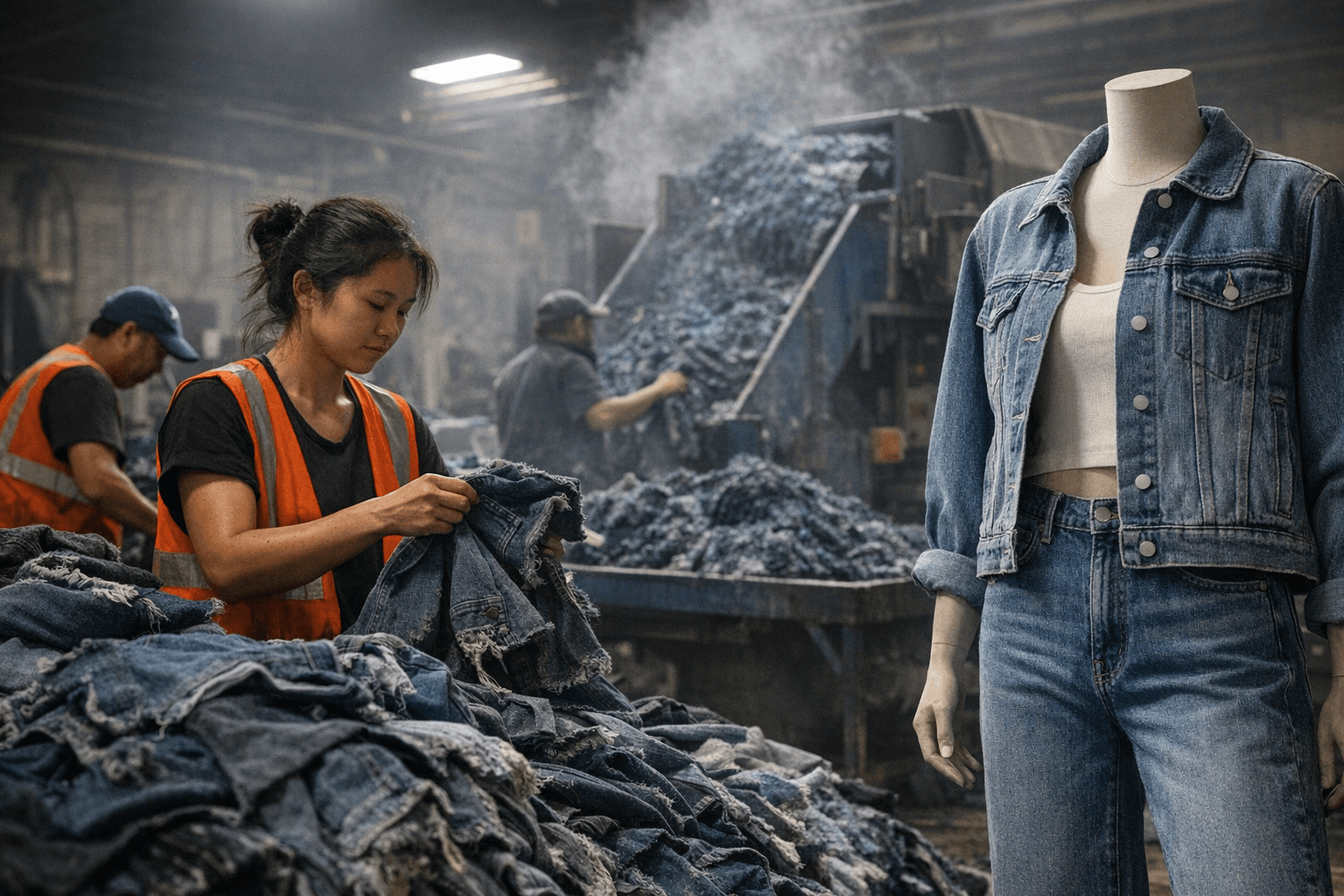
Re&Up and Isko did not just make a capsule, they put textile-to-textile denim under pressure. The collaboration, announced April 8, turned about 20,000 pairs of post-consumer jeans from Madewell’s take-back stream into recycled feedstock for a three-style capsule, a volume that sounds serious until set against the scale of a real denim market.
Madewell said the jeans used were no longer wearable, which matters because this was not a resale story dressed up as sustainability. The brand’s take-back system has collected more than 2 million pairs over more than a decade, so this project built on existing reverse logistics rather than a one-off salvage effort. That is the stronger argument here: the infrastructure already existed to gather the material, and the collaboration tested whether it could be routed back into product with enough consistency to make fashion-grade fabric.
The fabric itself tells the real story. Madewell said the capsule used premium ISKO denim made with recycled cotton from those preowned jeans, blended with viscose, recycled polyester and a touch of stretch. That mix is the reminder that circular denim at this stage is not a pure fiber-to-fiber fantasy. It still needs supporting fibers to deliver hand feel, drape and recovery, especially when the goal is a jean that can hold a longline straight leg, a darted barrel shape or a circular wide-leg silhouette without sagging into novelty.
ISKO’s role was not cosmetic. Industry coverage noted that the denim weaver further processed the fibers into Global Recycled Standard-certified fabrics, which adds a certification layer that sustainability-minded shoppers and regulators are increasingly likely to care about. RE&UP called the project a “scalable, closed-loop solution” and said closing the loop on post-consumer denim requires industrial precision. That is the right language for a category that has spent years talking about circularity in abstract terms while struggling with contamination, fiber degradation and quality loss.
Madewell has placed the capsule on its website under its Do Well framing, with the line, “Great denim is circular.” The sentiment is tidy; the harder question is volume. Twenty thousand pairs is meaningful, but it is still a polished stress test, not yet the operating system of the industry. For textile-to-textile denim to move from capsule to standard practice, the chain has to stay clean, the fibers have to stay strong, and the recycled yarn has to perform at scale without losing the fit, finish and durability that make a pair of jeans worth keeping.
This article was produced by Prism’s automated news system from verified source data, official records, and press releases, then run through automated quality and moderation checks before publishing. The system is built and supervised by the people who set the standards it runs under. Read our full AI policy.
Did this article answer your question?


