Soorty advances net-zero denim with organic cotton and circular designs
Soorty is turning denim into a full system test, tying organic cotton, wind power, and circular design to a business case that could travel beyond one mill.
Denim’s real sustainability test is scale
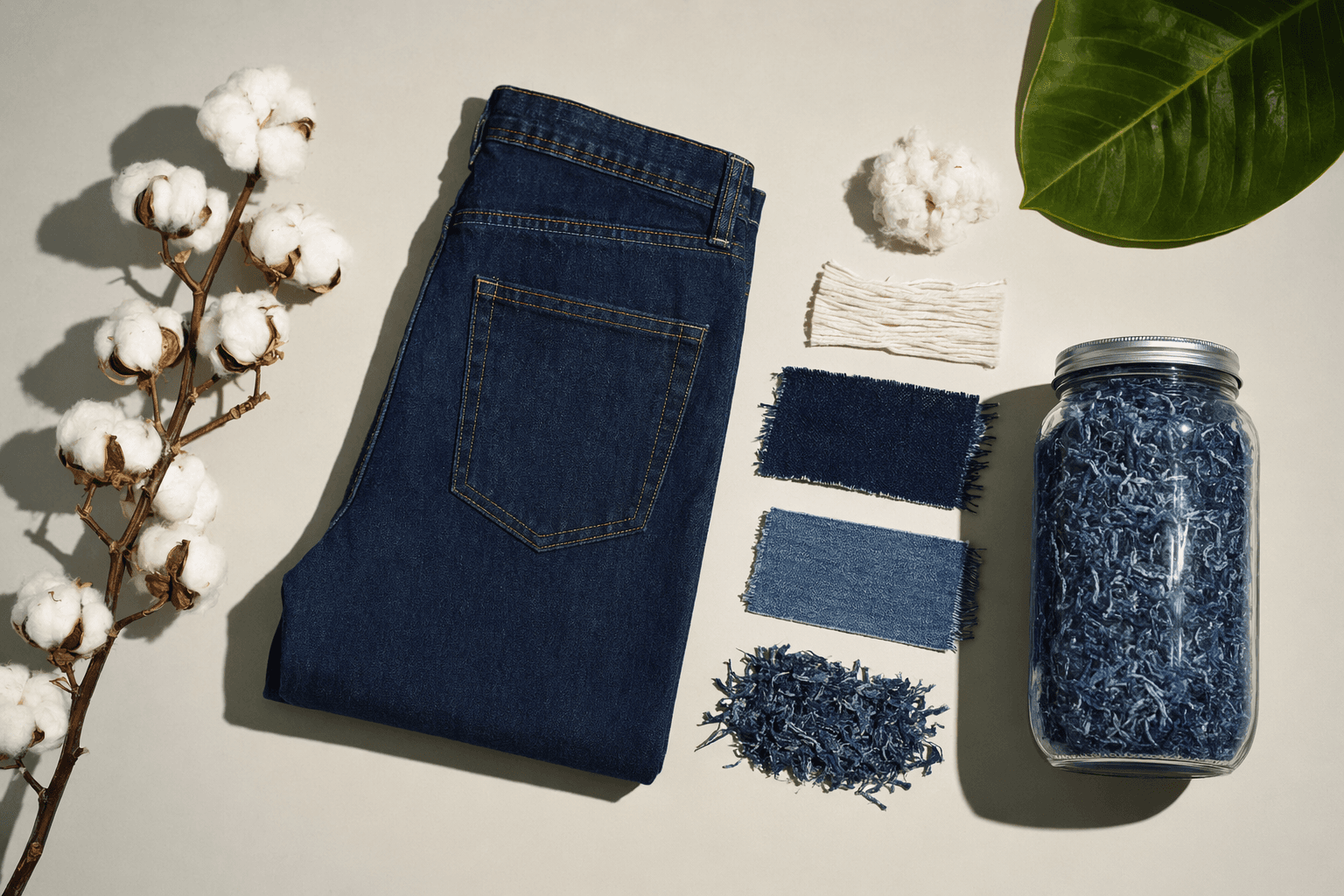
Soorty is trying to prove that denim can shrink its footprint without shrinking its ambition. The Pakistan-based, vertically integrated manufacturer says sustainability is built into its business model through “design for purpose,” in-house fiber-to-jeans production, and a goal of making sustainable denim at scale. That is the part worth watching: not a one-off eco capsule, but a system that can work across farms, mills, and finished jeans.
For readers who want to know whether sustainable fashion can move beyond symbolism, Soorty offers a useful answer in numbers and mechanisms. The company is backing organic cotton, renewable energy, and circular design at the same time, which is exactly how a resource-heavy category starts to look less like a problem and more like a template. Denim has always been about durability; Soorty is trying to extend that idea to the way the fabric is grown, powered, and remade.
Start with the farm, because that is where the hardest work happens
Soorty’s Organic Cotton Initiative, launched in April 2021, is the clearest sign that the company understands how slow real change can be. WWD reported that the program reached nearly 1,000 farmers in Balochistan, and that kind of reach matters because organic cotton is not a switch you flip. The transition can take up to four years before cotton is certifiable as organic, which means the business case has to survive patience, training, and crop cycles before it pays off in a finished fabric.
That is also why the Control Union In-Conversion Year-1 certification matters so much. It signals that the fields are moving through the long middle stage between conventional farming and organic certification, where the agronomic work is real but the market reward is still unfolding. For Soorty, the value is not just cleaner fiber, but a more resilient and traceable supply chain built around domestic farmers rather than distant commodity markets.
The company has framed this as more than a sourcing project. Its materials describe sustainable agriculture as part of a broader push for traceability and resilience, and that framing is smart because it links the farm to the shirt, the jacket, and the jeans you actually wear. If the cotton story is strong enough, it becomes easier to justify the premium effort of lower-impact production elsewhere in the chain.
The mill side is where sustainability becomes industrial, not aspirational
Soorty’s climate action work gives the initiative a backbone. The company says it invests in off-site wind power through NASDA Green Energy’s 50 MW wind farm in Jhimpir, Pakistan, a serious piece of renewable infrastructure rather than a decorative claim. In a category where energy use can quietly undo progress, that matters as much as a better fiber blend, because lower-impact denim needs cleaner electricity to be credible at scale.
This is where Soorty’s vertically integrated structure becomes an advantage. Because much of its denim production happens in-house, the company can push environmental changes through spinning, weaving, finishing, and garment creation without relying on a long chain of outside vendors to move in lockstep. That kind of control is rare, and it is one reason the company can talk about sustainable denim “from farm to wardrobe” without sounding purely rhetorical.
The important part for shoppers is not just that the mill says it is cleaner, but that its model is measurable. Organic cotton acreage, renewable power capacity, and traceable production each give the story a hard edge. In a market crowded with vague green promises, those are the details that separate a strategy from a slogan.
Circularity is where the design language gets sharper
Soorty has also been treating circular denim as a design problem, not just a recycling problem. In February 2023, it introduced a “Design for Circularity” collection with partners including The Lycra Company, Lenzing, Jeanologia, and Marmara Hemp. That mix is revealing: elasticity, cellulose innovation, finishing technology, and hemp all point to a company trying to rethink the ingredients of denim rather than simply add recycled content after the fact.
The cleaner proof point came in January 2024 with Orbit, a circular denim collection created with ex-Levi’s designer Miles Johnson. Orbit used Circulose, SOCI cotton, and denim-to-denim recycled fibers from Soorty’s Second Life program, which makes the collection feel more like a system demonstration than a runway exercise. It is the kind of lineup that suggests the company is trying to close loops at multiple stages, from agricultural input to post-consumer recovery.
Soorty says its Second Life recycled cotton fiber is listed on the Higg Materials Sustainability Index as a best-in-class recycled fiber. That kind of recognition matters because recycled claims in denim can be slippery, especially when blends and finishes complicate end-of-life recovery. A best-in-class designation does not solve the whole problem, but it does suggest Soorty is pushing toward materials that can be repeated, not just marketed.
Why the business case could travel beyond one company
The most interesting part of Soorty’s strategy is that it is not treating sustainability as a separate department. In late 2024, the company said it was working with Better Cotton to advance sustainable cotton farming and highlighted its Sustainable Cotton Research Hub, along with a non-GM cotton seed bank and digital tools for farming. It also said it had been selected by the Organic Cotton Accelerator for a seed multiplication project in Pakistan, which it described as a first for the country and a response to the shortage of high-quality local organic seed.
That seed story is especially important because it exposes the bottleneck most brands ignore. You can ask farmers to change practices, but if the right seed is unavailable, the system stalls before it starts. By working on seed multiplication, research, and digital farming tools at the same time, Soorty is trying to build the infrastructure that lets organic and regenerative cotton expand beyond pilot acreage.
This is also where the business case gets more convincing for other denim suppliers. Soorty has the advantage of vertical integration, a built-in customer base, and the scale to support farmers through a long transition, but the model itself is not mystical. It relies on a clear chain of actions: support growers, secure seed, clean up energy, design for circularity, and keep production close enough to trace. That is the kind of operating logic the denim industry can copy, if it is willing to move from branding to infrastructure.
What to look for next
The real test is whether Soorty’s system keeps expanding without losing rigor. If organic cotton grows, wind power stays embedded, and circular collections keep using measurable inputs like SOCI cotton and Second Life fibers, the company could become one of the clearest examples of how denim scales down its impact without losing commercial force. For a category built on ruggedness and repetition, that is exactly the kind of sustainability story that can stick.
This article was produced by Prism’s automated news system from verified source data, official records, and press releases, then run through automated quality and moderation checks before publishing. The system is built and supervised by the people who set the standards it runs under. Read our full AI policy.
Did this article answer your question?


