Textile Recycling’s Biggest Bottleneck, Collecting Clean Feedstock for Reuse
Textile recycling is stalling where the clothes first enter the system: collection, sorting, and clean feedstock. The breakthrough will come from better logistics, design, and policy, not just new machines.

The real bottleneck is not the recycling machine
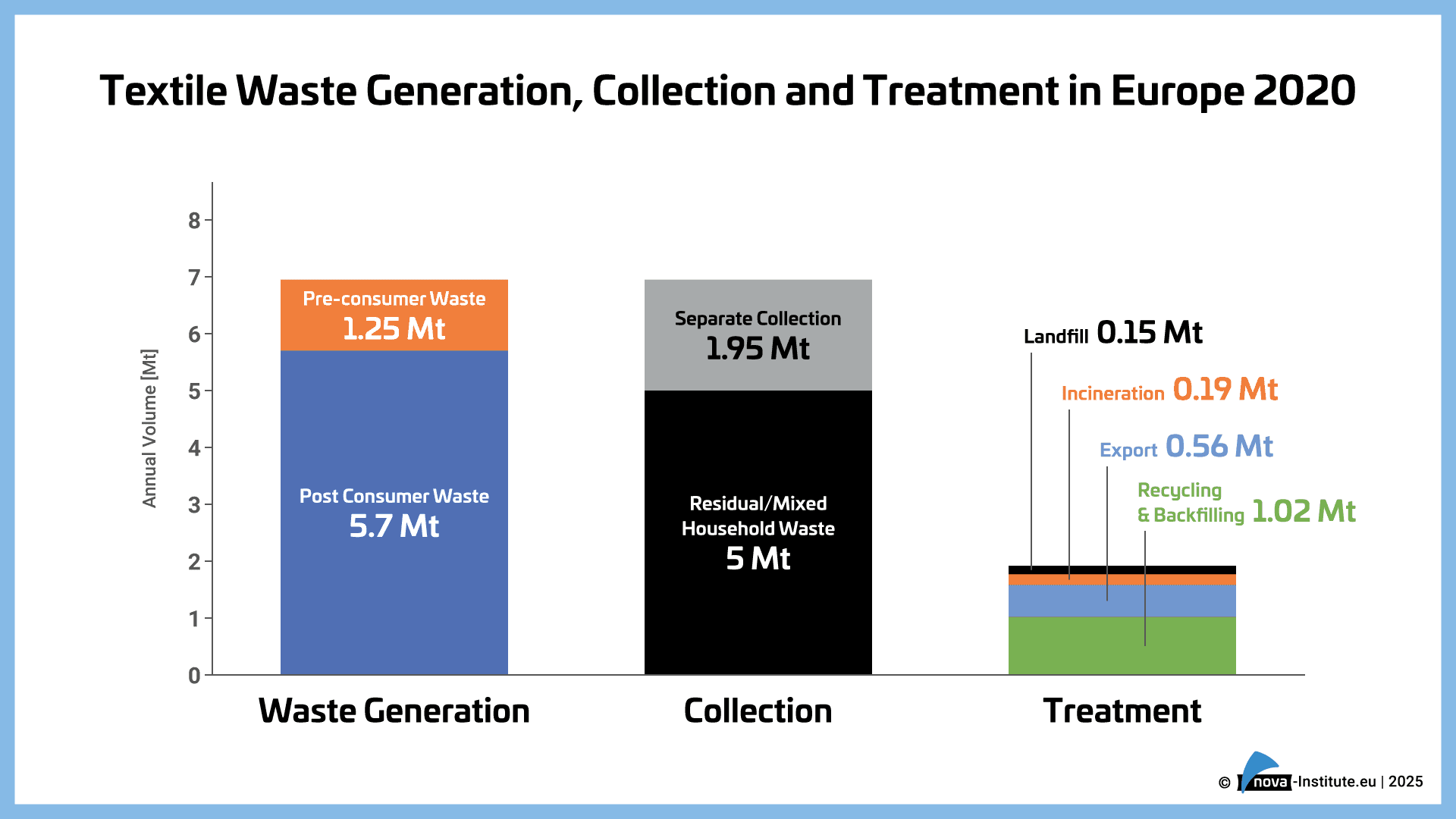
Fiber-to-fiber recycling is only as strong as the clothes that feed it, and right now the front end is the problem. The industry can talk all it wants about chemical processes and next-generation materials, but Textile Exchange says the hardest task is building clean material feeds by identifying, collecting, sorting, and aggregating garments into fiber-specific streams like cotton-to-cotton or wool-to-wool.

That is why the conversation in Charlotte mattered. At the Textiles Recycling Expo USA, held April 29 and 30 at the Charlotte Convention Center, the most important question was not whether recycling can work in theory. It was whether enough clean post-consumer textiles can be collected, traced, and sorted into the right bins fast enough to make the system behave like an industry, not a pilot program.
The numbers expose the weak link
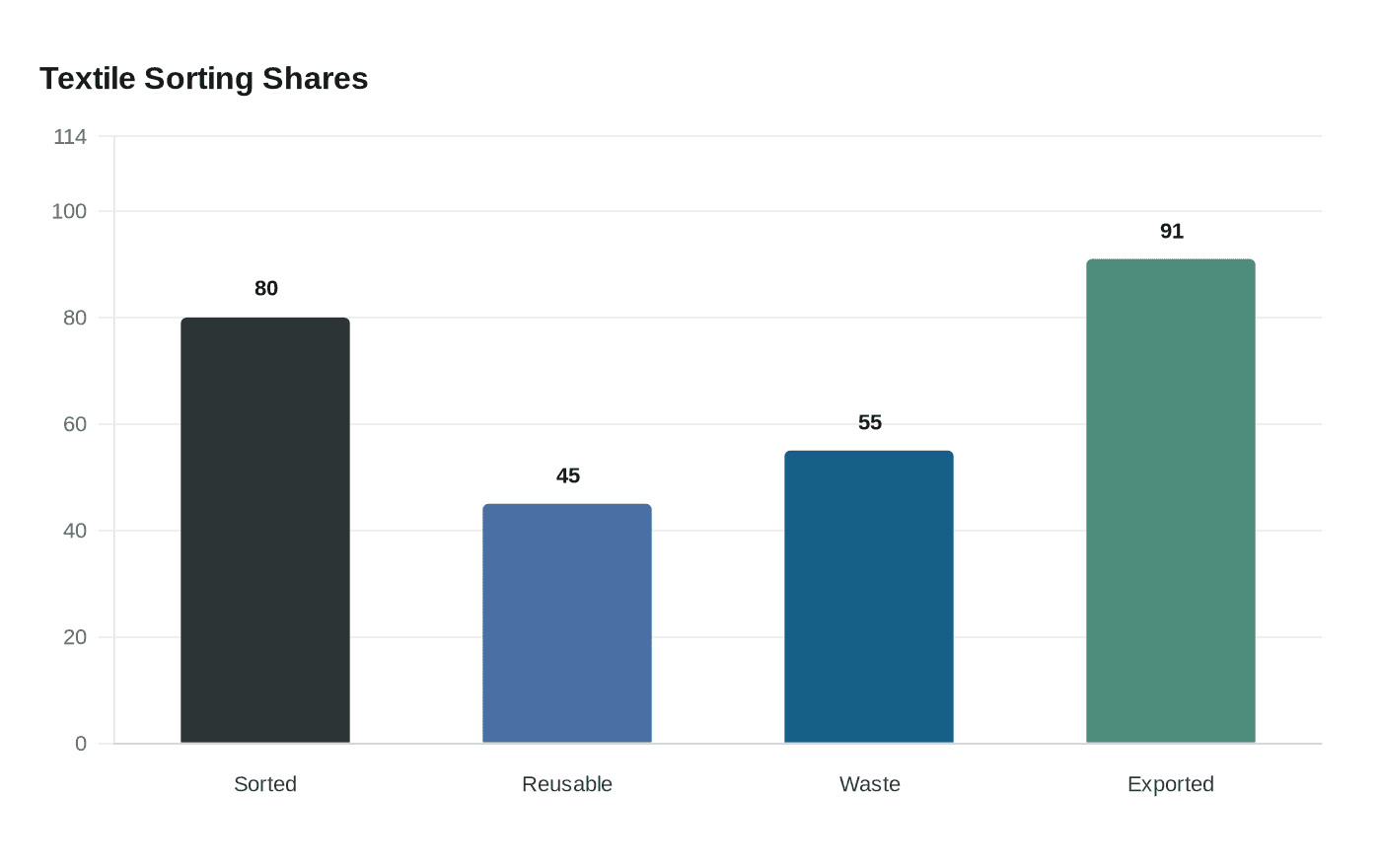
The Ellen MacArthur Foundation’s U.S. factsheet gives the bottleneck a hard edge. It says 80% of discarded textiles are sorted after collection, but only 45% of those sorted textiles are reusable. Of the reusable share, 91% is exported internationally and only 9% is sold on the U.S. national market. The remaining 55% of textiles sorted after collection is non-reusable waste that goes to recycling or downcycling, landfill, or incineration.
That is the reality brands have to grapple with: sorting is already happening, but it is not producing a clean, domestic stream of fiber-ready feedstock at the scale the industry keeps promising. The problem is not just volume. It is contamination, mixed fibers, untraceable origins, and garments that were never designed to be easily disassembled in the first place.
For fashion readers, that should change how you think about recycling claims. A take-back program is not automatically a solution. If the returned clothes cannot be identified, sorted, and routed into a stable fiber stream, the system still leaks value at every step.
Collection is the new runway
The recent Charlotte gathering made clear that the most consequential work in textile recycling is happening offstage, in warehouses, aggregation centers, and reverse logistics networks. Goodwill Industries International, Fabscrap, SuperCircle, and the Ellen MacArthur Foundation all focused on the same issue: how to move post-consumer textiles from closet to collection point to sorting line without losing quality along the way.
SuperCircle has framed the challenge as a logistics problem as much as a materials problem. Textile Exchange says the company exists to connect the fashion and retail sector to post-consumer textile waste and recycling infrastructure, which is exactly the kind of unglamorous bridge the industry has lacked. SuperCircle says it aims to divert more than 1 billion textile products from landfills by 2030, a target that only makes sense if collection systems become far more efficient and far more legible.
That is where the fashion industry has to get serious. The cleanest recycling feedstock is not found, it is organized. Brands need take-back systems that do more than invite people to drop off bags of clothes. They need routes, standards, and sorting partners that can separate wearable from non-wearable, mono-material from blended, and local reuse from export-bound inventory.
Policy is finally moving toward the front end
The Ellen MacArthur Foundation has been blunt about what would help most: extended producer responsibility. By creating a clear pathway for the collection, sorting, and management of used textiles, EPR policy gives the market a collective framework for action.
California is now part of that story. The foundation says SB 707, the Responsible Textile Recovery Act of 2024, was chaptered on September 28, 2024. It also notes that EPR schemes already exist in 33 states across 19 product categories. That matters because textile recovery will not scale on brand goodwill alone. It needs rules that make collection and sortation part of the business model, not a side project.
EPR can do something especially useful in this space: it can force shared infrastructure. One brand cannot solve the sorting problem by itself, but a policy framework can help create the volume and coordination needed to justify better collection networks, cleaner sorting standards, and more reliable downstream output.
Goodwill, Reju, and WM are testing the system
Goodwill is positioning itself as a collection and sortation partner in that future. It and Reju have announced plans to work with WM on a multi-year textile collection, sortation, reuse, and recycling initiative in North America. The goal is not just to move garments through a pipeline, but to develop a regional model for how the pipeline should work.
That effort builds on Goodwill research funded by the Walmart Foundation to assess the fiber composition of unsold textiles and develop the skills and systems needed to turn unwearable textiles into recycling feedstock. The Walmart Foundation-funded textile circularity project was valued at $1.28 million, which is a useful reminder that the unglamorous middle of the chain requires real investment, not just optimistic language.
This is the part of textile recycling that most consumers never see, but it is the part that determines whether the whole promise holds together. If a sweater is too blended, too contaminated, or too poorly labeled, it falls out of the recycling stream before it ever becomes a resource.
What would move the market fastest
The quickest fixes are practical, not futuristic. Better garment labels, simpler fiber compositions, and stronger take-back logistics would all help, but they only matter if collection and sorting capacity can absorb the volume. The industry needs more clean feedstock, more traceability, and fewer garments that arrive as mystery material.
The most effective changes would be these:
- Design for sortation, with clearer fiber content, fewer hard-to-separate blends, and more uniform trims and finishes.
- Build take-back systems around named logistics and sorting partners, not vague collection promises.
- Use EPR policy to fund the collection and sortation infrastructure the market will not build on its own.
- Treat reuse and recycling as linked systems. If a garment is reusable, it should be captured cleanly. If it is not, it should be routed quickly into the right recycling stream.
The lesson from Charlotte is simple and unromantic. Textile recycling will not be won by better rhetoric or prettier bins. It will be won by cleaner feedstock, tighter logistics, and the discipline to make collection and sorting the center of the business, where they belong.
This article was produced by Prism’s automated news system from verified source data, official records, and press releases, then run through automated quality and moderation checks before publishing. The system is built and supervised by the people who set the standards it runs under. Read our full AI policy.
Did this article answer your question?