UK Fashion Sector Held Back by Policy Fragmentation, Report Says
Policy drift, not weak demand, is squeezing the UK fashion economy, with £62bn at stake and public procurement still the sector’s most overlooked lever.
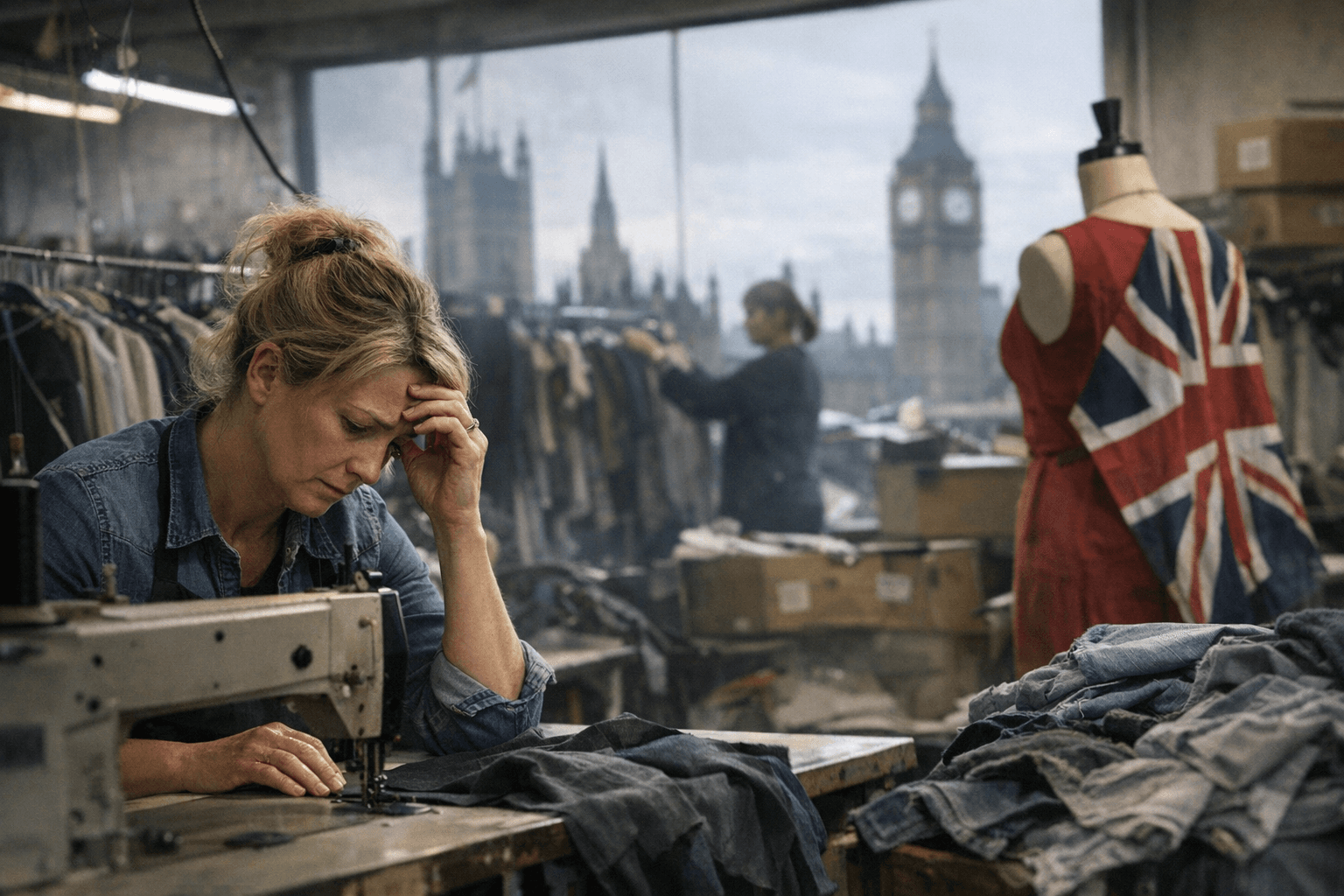
Britain’s fashion and textiles industry is not short on talent, scale or appetite. It contributes £62bn to the economy, supports 1.3 million jobs and raises more than £23bn in tax revenues, yet a new report argues that the sector is being held back by policy failure rather than industrial weakness. Based on policy analysis, stakeholder mapping and 19 in-depth interviews, Policy Fragmentation and Place-Based Opportunity in UK Fashion and Textiles says the problem is structural: fragmented governance, stop-start interventions and weak coordination across policy areas have left the industry exposed, even as demand for made-in-UK fashion and textile capability remains real.
The report also pinpoints a more awkward truth. Fashion and textiles sit awkwardly between creative industries and manufacturing, which has reduced their visibility in industrial strategy and investment policy. That gap has practical consequences. Mills, spinners, garment makers and finishing businesses need steady demand to justify machinery, apprenticeships and local hiring, yet they are still too often treated as peripheral rather than foundational. Tamara Cincik, LPIP Hub Fellow and chief executive of Fashion Roundtable, said public procurement is a chance to invest in British manufacturing instead of overseas sourcing, and that narrow definitions of creative industries and defence spending leave local suppliers missing repeated opportunities to support growth across the UK.
That is why procurement has become the report’s most pointed policy ask. It calls public purchasing the most underused and potentially transformative lever for stabilising demand, strengthening local value chains and improving job quality. Where procurement is aligned with place-based policy, fashion and textiles manufacturing can act as anchor infrastructure for wider local economies, supporting skills ecosystems, innovation and social mobility. Without that kind of coordination, brands face uncertainty, suppliers are left chasing sporadic orders, and workers lose the security that makes craft skills worth keeping.
The broader policy picture is active, but still disjointed. The Circular Economy Taskforce was established in November 2024 to help create a circular economy strategy for England and develop roadmaps for sectors and supply chains. WRAP’s January 2026 blueprint for a UK textiles extended producer responsibility scheme goes further, warning that the textile recycling industry is on the brink of imminent collapse and calling for eco-modulated fees, enforcement and public awareness campaigns. The UK Textiles Pact Roadmap 2026-2030 targets a 50% cut in carbon emissions and a 30% reduction in water use by 2030, while a 2025 Fashion Declares and Bates Wells white paper said the UK still lacks a coherent fashion and textile regulatory framework. It proposed variable EPR fees, investment in UK manufacturing, supply-chain transparency, and easier trade and talent mobility with Europe. The message is plain: without joined-up policy, Britain will keep outsourcing both production and opportunity.
Know something we missed? Have a correction or additional information?
Submit a Tip