UK urged to ban forced-labor goods before 2029 deadline
Britain’s trade minister is under pressure to back a forced-labor import ban before 2029, as fashion importers weigh one tougher system for the U.S., EU and UK.
Britain’s trade minister said he would be deeply disappointed if the United Kingdom still had no forced-labor ban by the end of this Parliament in 2029, even as he warned that any import-ban law would be harder to draft and enforce. For fashion importers, the sharper question is immediate: whether to build one compliance system around the toughest rules already emerging in the United States and the European Union, or keep running three separate due-diligence tracks for the UK, the EU and America.
The UK still relies on a transparency model under Section 54 of the Modern Slavery Act 2015. Commercial organisations operating in Britain with turnover of at least £36 million must publish annual modern slavery statements, but the regime does not itself stop goods made with forced labor from entering the market. In practice, the government’s approach remains largely voluntary rather than a mandatory due-diligence system, leaving brands to decide how much supplier mapping, traceability paperwork and customs screening to do.
The UK Parliament Joint Committee on Human Rights said on July 24, 2025, that the existing framework was inadequate and that goods produced or part-produced with forced labor were already being sold to consumers in the UK. It urged ministers to bring forward new legislation within one year that could ban imports or sales of forced-labor goods, require mandatory human rights due diligence and create a civil liability route for survivors.
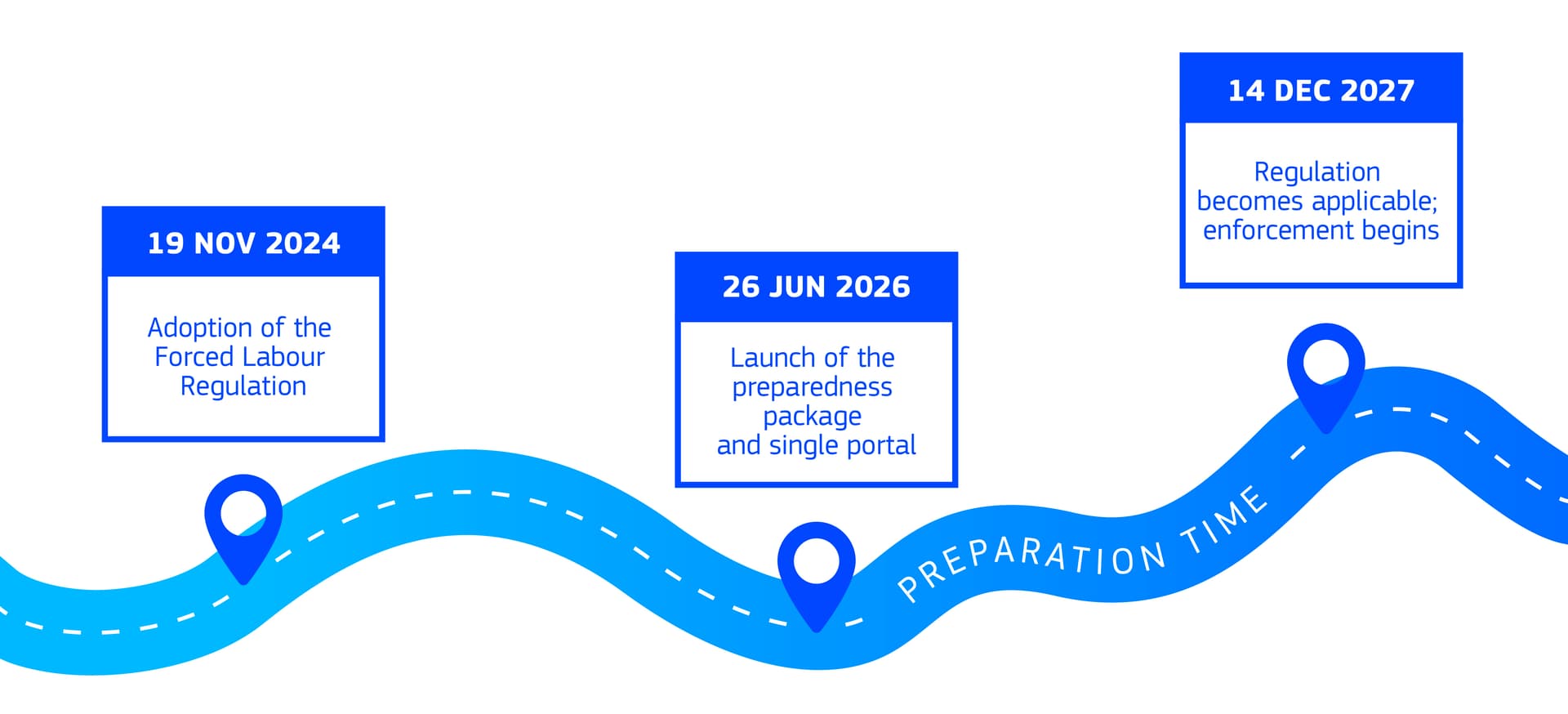
The committee pointed to the U.S. Uyghur Forced Labor Prevention Act, signed in December 2021, and the European Union’s forced-labor regulation, which will apply from December 14, 2027. No product made with forced labor may be sold in or exported from the EU market once the rule takes effect.
On June 2, 2026, the United States Trade Representative made findings in 60 Section 301 investigations tied to failures to prohibit and enforce forced-labor import bans, and proposed extra duties of 10% or 12.5% on products from the economies under review, depending on the regime in place.
Political pressure still centers on goods linked to the Xinjiang Uyghur Autonomous Region, where Western governments, the United Nations and human rights groups have accused China of forced labor and other abuses. China denies the allegations. Christopher James Bloore has suggested a country-agnostic import ban, and a Xinjiang-specific measure would still require brands to prove where fibers, trims and finished goods came from, document every step, and be ready for customs checks.
This article was produced by Prism’s automated news system from verified source data, official records, and press releases, then run through automated quality and moderation checks before publishing. The system is built and supervised by the people who set the standards it runs under. Read our full AI policy.
Did this article answer your question?