Vinted revenue hits 1.1 billion euros as second-hand fashion surges
Vinted posted 1.1 billion euros in 2025 revenue and 10.8 billion euros in GMV, proving second-hand is now a mainstream shopping habit, not a fallback.

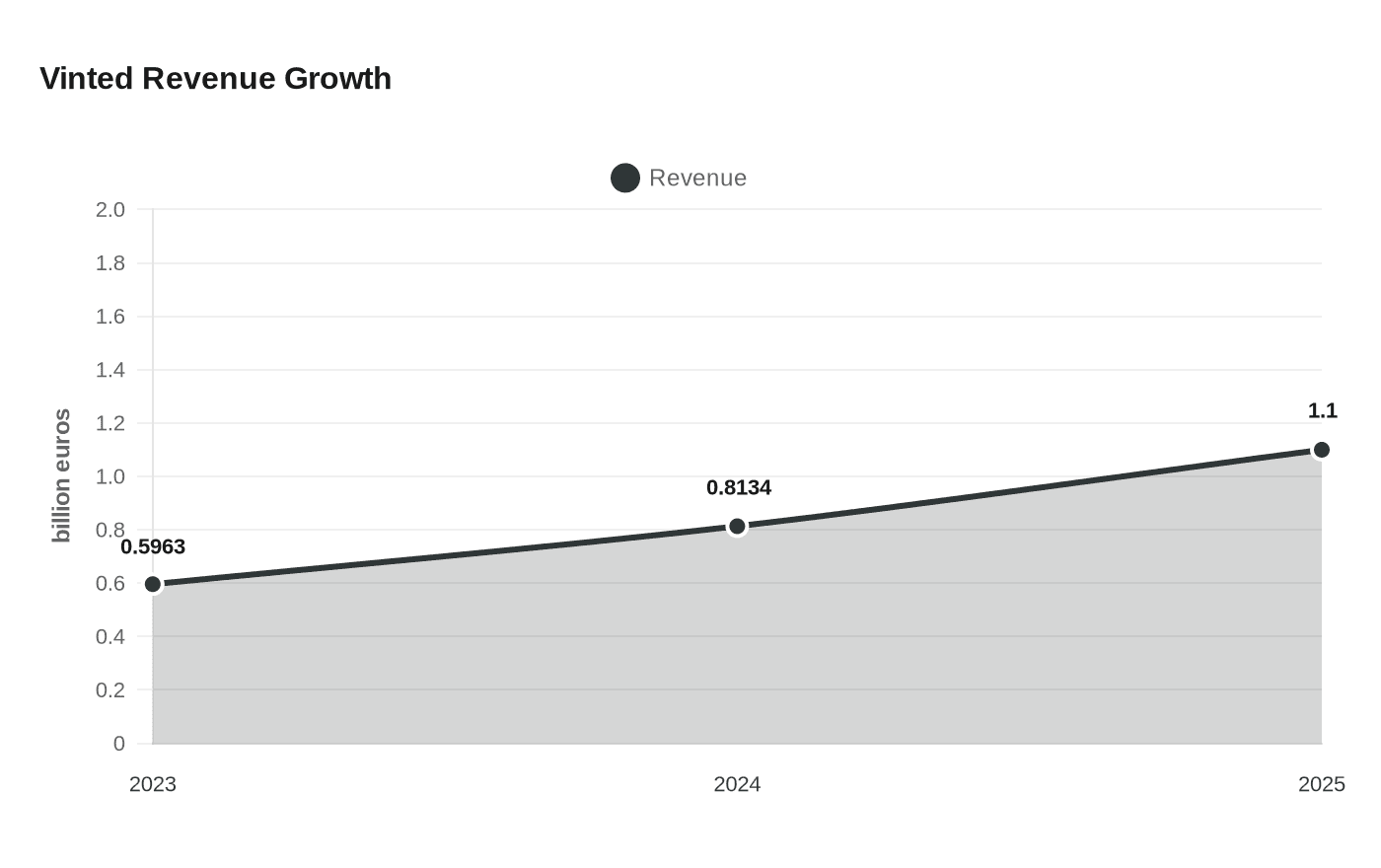
Vinted just put a hard number on what the resale floor has been saying for years: second-hand is no side quest anymore. The Vilnius-based platform said 2025 revenue hit 1.1 billion euros, up 38% year on year, while gross merchandise value climbed 47% to 10.8 billion euros. It also posted a net profit of 62 million euros, the kind of result that makes resale look less like a sustainability story and more like a fully formed fashion market with real scale.
The speed of that growth matters. In 2024, Vinted’s consolidated revenue was 813.4 million euros, already up 36% from 596.3 million euros in 2023. By 2025, the company had pushed far beyond that trajectory, with members trading 10.8 billion euros worth of goods across the marketplace. For younger shoppers, that mix of price, trend-chasing and lower-impact consumption has become the point. The old distinction between “shopping second-hand” and “shopping smart” is basically gone.
Thomas Plantenga has been blunt about the opportunity, describing second-hand fashion as still a relatively young market that makes up only a small part of the overall fashion industry. That is exactly why Vinted’s numbers feel bigger than one company’s balance sheet. They show how quickly resale is moving from an occasional bargain hunt to a default behavior, especially when a closet can be built around pre-owned denim, nylon shells, worn-in leather and cult basics without the markup of new-season retail.
The platform is also broadening the lane. In 2025, Vinted expanded beyond fashion into electronics and homeware, and launched in three new countries. It has been building the plumbing around that growth too, with Vinted Go for logistics and Vinted Pay for payments. In April 2025, it launched Vinted Ventures to back re-commerce startups with ticket sizes ranging from 0.5 million euros to 10 million euros, a tell that the company sees resale not as a niche marketplace, but as infrastructure.
The sustainability case is still doing work here, and it is not abstract. In 2023, Vinted said members helped avoid 679 kilotonnes of CO2e by buying second-hand instead of new, and two-thirds of members had a quarter or more of their wardrobes made up of second-hand items. That is the real shift to watch: resale is no longer just competing with thrift-store nostalgia. It is challenging the traditional retail model at the point of habit, where full-price drops, overbuilt seasonal inventory and disposable trend cycles start to look outdated.
This article was produced by Prism’s automated news system from verified source data, official records, and press releases, then run through automated quality and moderation checks before publishing. The system is built and supervised by the people who set the standards it runs under. Read our full AI policy.
Did this article answer your question?