Vogue Philippines Earth Issue Links Craft, Community, and Sustainable Style
In Pilar, Sorsogon, two-thirds of Feed Back program graduates now earn 25% of their income from surplus crops. Vogue Philippines built its Earth issue around that community.
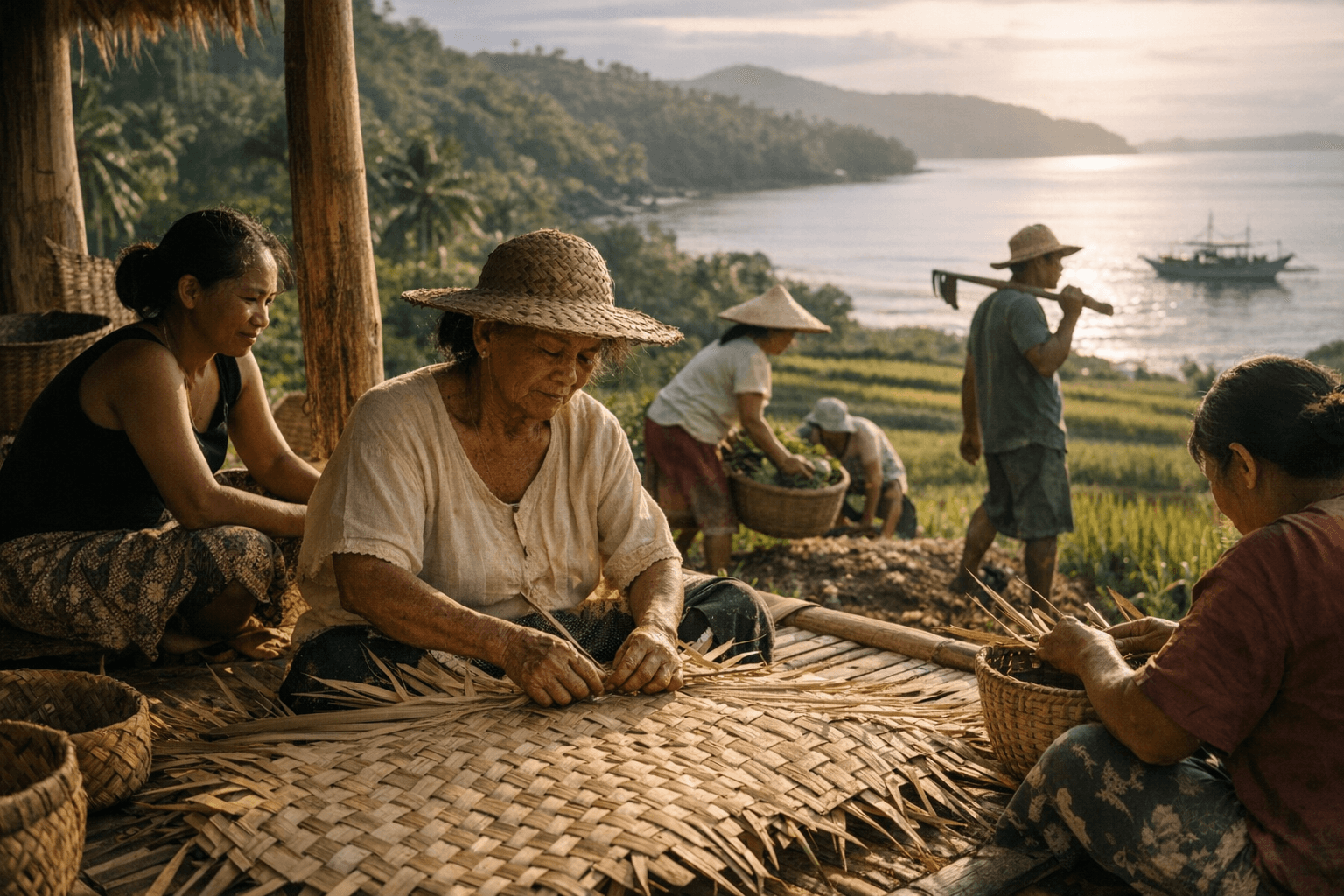
The cover lands differently when you know what's in the soil. Vogue Philippines placed cover model Maria Isabela Galeria back in the fields of Pilar, Sorsogon for its April Earth issue, and the editorial decision is doing more work than most fashion spreads attempt. Galeria is a Sorsogon native and former Miss Universe Philippines candidate, photographed by Artu Nepomuceno and Archie Geotina wearing avant-garde and heritage pieces from Rajo Laurel, Jaggy Glarino, and Pinagtagpi, with styling that integrates high fashion with functional agricultural elements. The specific garments read like a catalogue of Philippine craft: a King Morden barong top, a Cult Gaia hat, a Touch of Craft leather brooch, and a Vestido Manila embroidered manton.
The issue's provenance argument runs deeper than costume. Galeria is joined on location by the team from ARK Solves, a social impact group running a program called Feed Back, a community harvest exchange that founder Ayesha Vera-Yu describes as "in our DNA," inspired by old-school bartering and her grandfather's stories. ARK's Feed Back program operates across parts of Sorsogon, running weekly harvest exchanges where families share surplus crops grown in backyard gardens, strengthening both food security and community ties. The 16-week program moves families out of monocropping and into cultivating their own food, fostering a community-wide vegetable exchange that generates surplus for market sales.
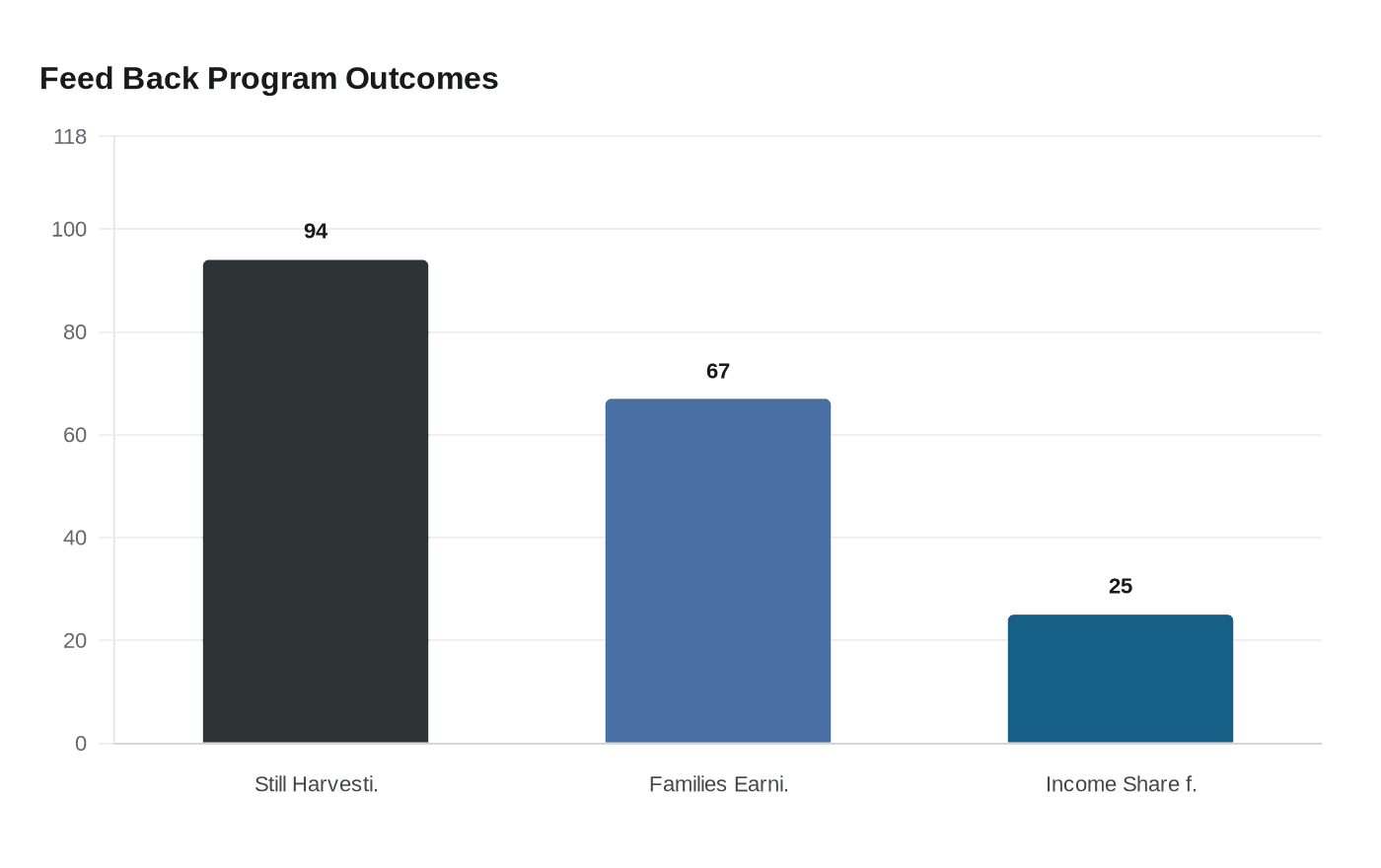
The numbers are where the story earns its share: Feed Back has taken root in 35 communities across six Philippine provinces, with approximately 325,000 kilos of food exchanged so far. In Traciano, a village that Super Typhoon Odette levelled in 2021, 94 percent of Feed Back graduates were still harvesting from their backyards a year after completing the program, and two-thirds of those families now derive 25 percent of their income from selling the surplus. That figure is the clearest signal in the issue: a supply chain that pays its source.
It is also the clearest diagnostic for spotting genuine community-led provenance versus heritage-washing. Verifiable origin means a named village, not a regional gesture. Transparent impact means an income figure reaching the maker, not a percentage reaching the brand. Seasonal integrity means a program structured around what land can actually yield — Feed Back's weekly exchange cadence is set by backyard capacity, not by a production brief. When a brand cannot name the grower, the village, or what proportion of the retail price returns to the source, the sustainability story is decorative.
The Earth issue extends this inquiry from Sorsogon to Phuket, Kyoto, Cape Town, Oahu, and Ushuaia, linking place-specific practice to a global editorial argument. In Patagonia, designer Romina Cardillo is growing clothes from fermented bacteria, a biomaterial called Celium that reframes what a textile supply chain can look like at the material level. In London, designer Phoebe English confronts the "panic-inducing" planetary impact of fashion without softening it for a mainstream audience.
What the Sorsogon feature proves, and what a 25-percent income figure confirms, is that regenerative fashion storytelling requires exactly this kind of specificity: named land, named people, named outcomes. The stylistic argument and the economic argument are the same argument. How a garment is worn tells you relatively little. Where it comes from, and who was paid along the way, tells you everything.
This article was produced by Prism’s automated news system from verified source data, official records, and press releases, then run through automated quality and moderation checks before publishing. The system is built and supervised by the people who set the standards it runs under. Read our full AI policy.
Did this article answer your question?