WRAP report tracks how textile EPR schemes reshape waste systems
Textile EPR is no longer abstract: France, California and the EU are turning producer-funded waste systems into real deadlines, fees and design rules.
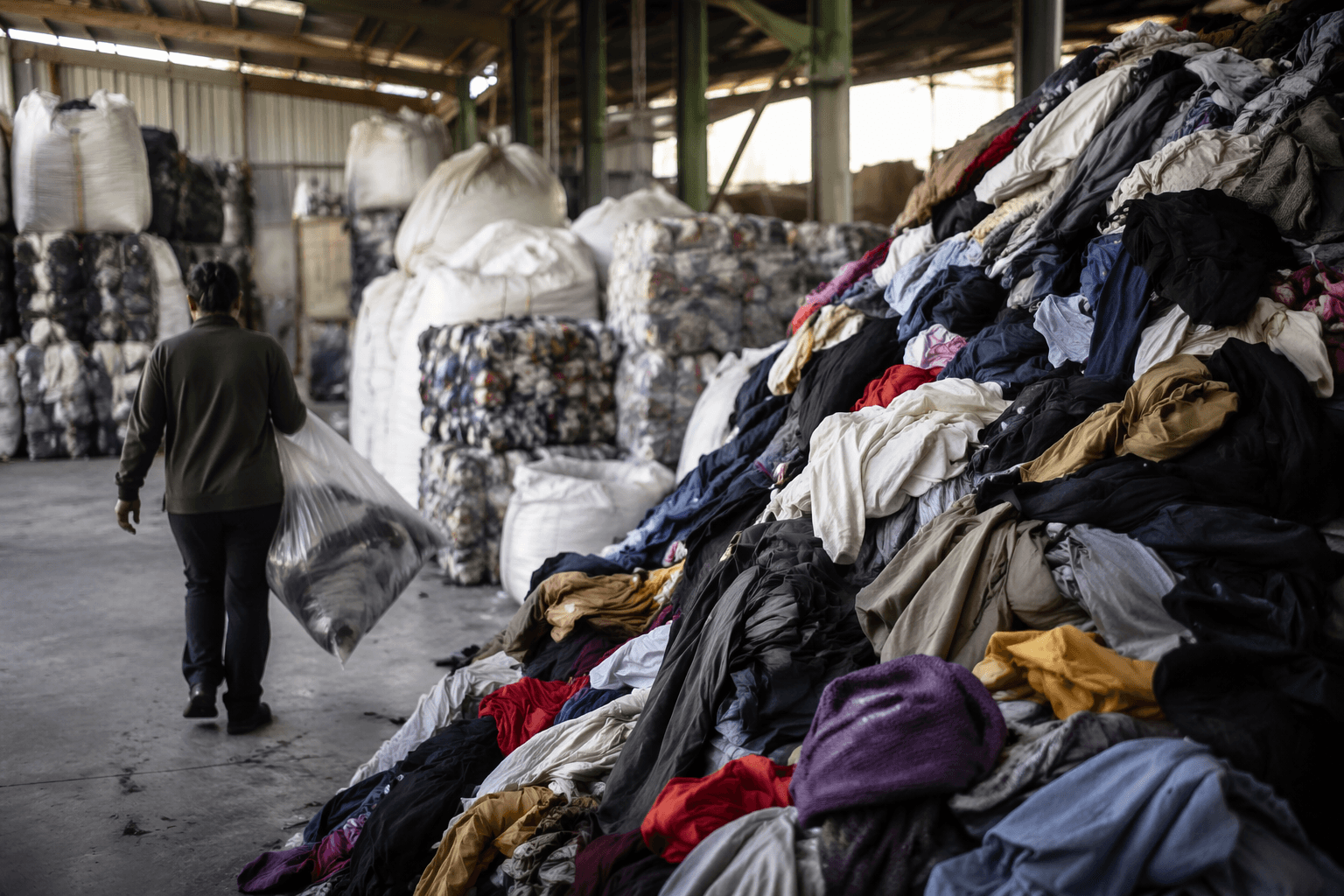
Textiles extended producer responsibility has moved from policy language into the part of fashion that gets counted, billed and audited. WRAP’s Nike-funded guide maps the schemes already operating in France and California, while the EU, the UK and several other markets are turning waste management into a producer cost that will reshape design choices from the first sketch to the last markdown.
The new cost center behind the collection bin
WRAP frames the report as structured guidance for countries and businesses trying to build textiles EPR, drawing on lessons from packaging, plastics, electronics and batteries. That matters because textiles are no longer being treated as a soft sustainability topic but as a system problem: WRAP’s earlier status report put annual textiles production emissions at about 1.2 billion tonnes and said clothing and footwear account for about 8% of global greenhouse-gas emissions.
The policy logic is simple, even if the plumbing is not. Under the EU’s revised Waste Framework Directive, every member state must establish a textile and footwear EPR scheme, and producers will pay a fee for each product they place on the market. The European Commission says those fees will finance collection, reuse, preparing for reuse, recycling and disposal, while eco-modulation will push the price of a garment up or down according to durability and recyclability.
France is the closest thing to a working prototype
France is the world’s first textile EPR system, in place since 2007 and now run by Refashion. The French government has updated the REP TLC framework for 2023 to 2028, which gives the system a clearer mandate than the loose, charity-led collection model many markets still rely on.
The numbers show how much work the system still has to do. The Ellen MacArthur Foundation says France collected textiles equal to 31% of textiles placed on the market in 2022, and 72% of collected textiles were sorted after collection. Of the textiles that were reusable after sorting, 95% were exported internationally, which is a sharp reminder that collection and circularity are not the same thing.
That export-heavy outcome is exactly why EPR is becoming more than a recycling conversation. A mature scheme like France’s does not just pay for bins and balers, it creates a financial architecture around what happens after the clothes leave the wardrobe, including how much gets sorted, where it goes next and which kinds of garments justify higher fees in the first place.
California brings the model into the U.S. market
California’s Responsible Textile Recovery Act, SB 707, is now the first statewide textile EPR program in the United States. CalRecycle says a producer responsibility organization must be approved by March 1, 2026, and the agency has scheduled a Textile Stewardship Informal Regulatory Concepts Workshop for August 13, 2026.
That timetable shifts textiles EPR from a policy debate into a compliance calendar. Once a PRO is in place, brands selling into California will need the kind of operational discipline that already defines packaging and electronics programs: clear producer data, stewardship planning, and a way to fund collection and end-of-life management rather than assuming resale or donation can absorb everything. That is an inference, but it is the direction the statute and rulemaking process point toward.
Europe and the UK are now racing the clock
The EU framework is the most far-reaching because it is mandatory across all member states, but the timing matters just as much as the scope. EURATEX says the revised directive gives countries a 20-month transposition period and requires producer responsibility organisations to be operational within 30 months, while the Commission says the fees should also support better product design and waste prevention.
WRAP’s map places active systems in France, California, Hungary, Kenya, Latvia and the Netherlands, with pending rules in Germany, Italy, Spain and the UK. That is the useful shift for brands: textile EPR is no longer one national experiment, but a spread of schemes that may differ in mechanics while moving toward the same outcome, which is producer-funded waste infrastructure.
The UK is already sketching its version. WRAP’s UK Textiles Pact published a 10-point blueprint for a mandatory textiles EPR scheme on January 28, 2026, after a 2025 cross-industry statement argued that EPR could stabilize the struggling used-textiles sector. WRAP has also supported Ireland in the early steps toward designing a national textiles EPR scheme, which shows how quickly countries are moving from abstract ambition to administrative planning.
The European Commission has added another pressure point by adopting measures on February 9, 2026, to stop the destruction of unsold apparel, clothing accessories and footwear under ESPR. For large companies, that means the end of treating excess stock as invisible waste, because the new rules pair disclosure requirements with limits on destruction and push brands toward resale, repair, donations or reuse instead.
What brands need to do now
- Build fee models around the products you place on each market, because the EU system is explicitly designed to charge producers per item and to vary those charges by sustainability criteria.
- Map reporting obligations early, especially in California and the EU, where producer responsibility organizations and disclosure systems are central to compliance.
- Invest in take-back and sorting relationships, since the money collected through EPR is meant to fund collection schemes, reuse and recycling rather than leave end-of-life to ad hoc charity channels.
- Tighten material choices, because durability and recyclability are now policy variables, not just design aspirations, and the fee structure is built to reward products that are easier to keep in circulation.
- Treat unsold stock as a compliance issue, not a back-of-house clean-up, because the ESPR rules on destruction and disclosure are already changing what brands can do with excess apparel and footwear.
Textile EPR is becoming the part of fashion policy that touches the cut, the fiber, the warehouse and the returns ledger all at once. The brands that adapt fastest will be the ones that design with the recovery system in mind from the outset, because the old habit of letting waste disappear into someone else’s budget is coming to an end.
This article was produced by Prism’s automated news system from verified source data, official records, and press releases, then run through automated quality and moderation checks before publishing. The system is built and supervised by the people who set the standards it runs under. Read our full AI policy.
Did this article answer your question?