A-POC ABLE and Tomokazu Matsuyama turn paintings into coats and T-shirts
A-POC ABLE turned seven Matsuyama paintings into seven coats and seven T-shirts, then extended the project into a fabric-heavy New York installation.

A-POC ABLE ISSEY MIYAKE has turned seven Tomokazu Matsuyama paintings into seven coats and seven T-shirts, and the smartest part is not the print but the process. The TYPE-XII project uses the label’s cloth-making system instead of a conventional pattern-first workflow, so the image, the cut and the textile are built as one object rather than assembled in stages. That is what gives the work its techwear edge: this is wearable engineering, not a simple artist collaboration.
The project began with limited-edition pieces created for Matsuyama’s first large-scale solo exhibition in Tokyo, FIRST LAST, at Azabudai Hills Gallery. That show ran from March 8 to May 11, 2025, and organizers said it brought together about 40 works, including 15 large-scale pieces premiering in Japan. A-POC ABLE says the response to that presentation pushed the collaboration forward, this time into new coats that reconstruct Matsuyama’s imagery as a single piece of cloth.
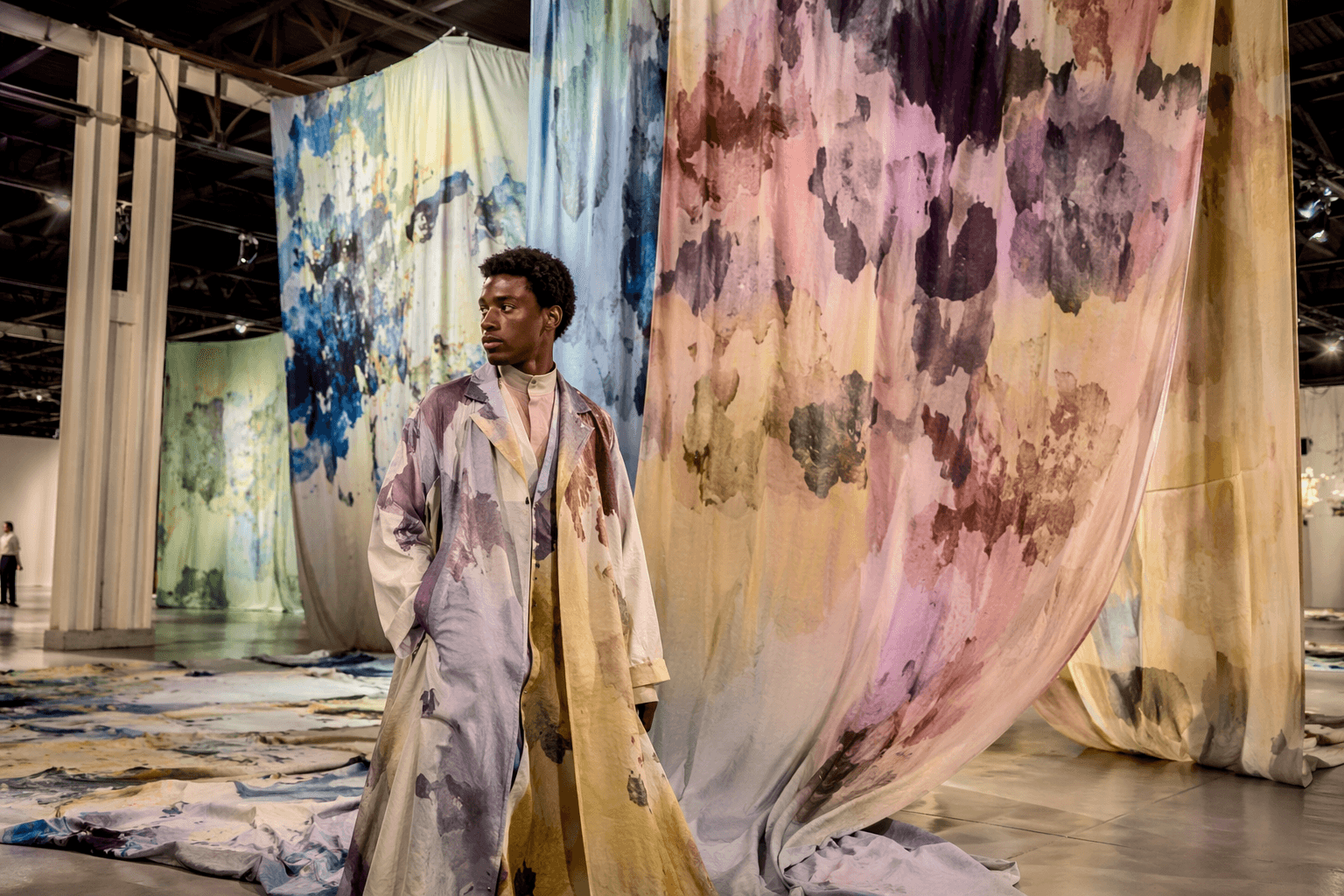
The new TYPE-XII release began on July 1, 2026, and the project now stretches into New York. ISSEY MIYAKE / NEW YORK and the adjoining MADO gallery will present a special exhibition from July 9 through August 31, 2026, giving the clothes a spatial setting that feels as considered as the garments themselves. The New York installation will include equestrian sculptures made with the same original 3D-printing technology used for A-POC ABLE mannequins, along with related paintings and a ceiling-hung arrangement of colorful fabrics.

That New York stop also carries an exclusive T-shirt line printed with all seven of Matsuyama’s works on A-POC’s seamless knit. It is the clearest expression of what this collaboration is really testing: not whether art can sit on clothing, but whether fabrication can determine how a work lives as clothing in the first place. For techwear, that is the sharper proposition. The future looks less like a graphic placed on a shell and more like a textile language where art, construction and surface are designed together.
This article was produced by Prism’s automated news system from verified source data, official records, and press releases, then run through automated quality and moderation checks before publishing. The system is built and supervised by the people who set the standards it runs under. Read our full AI policy.
Did this article answer your question?