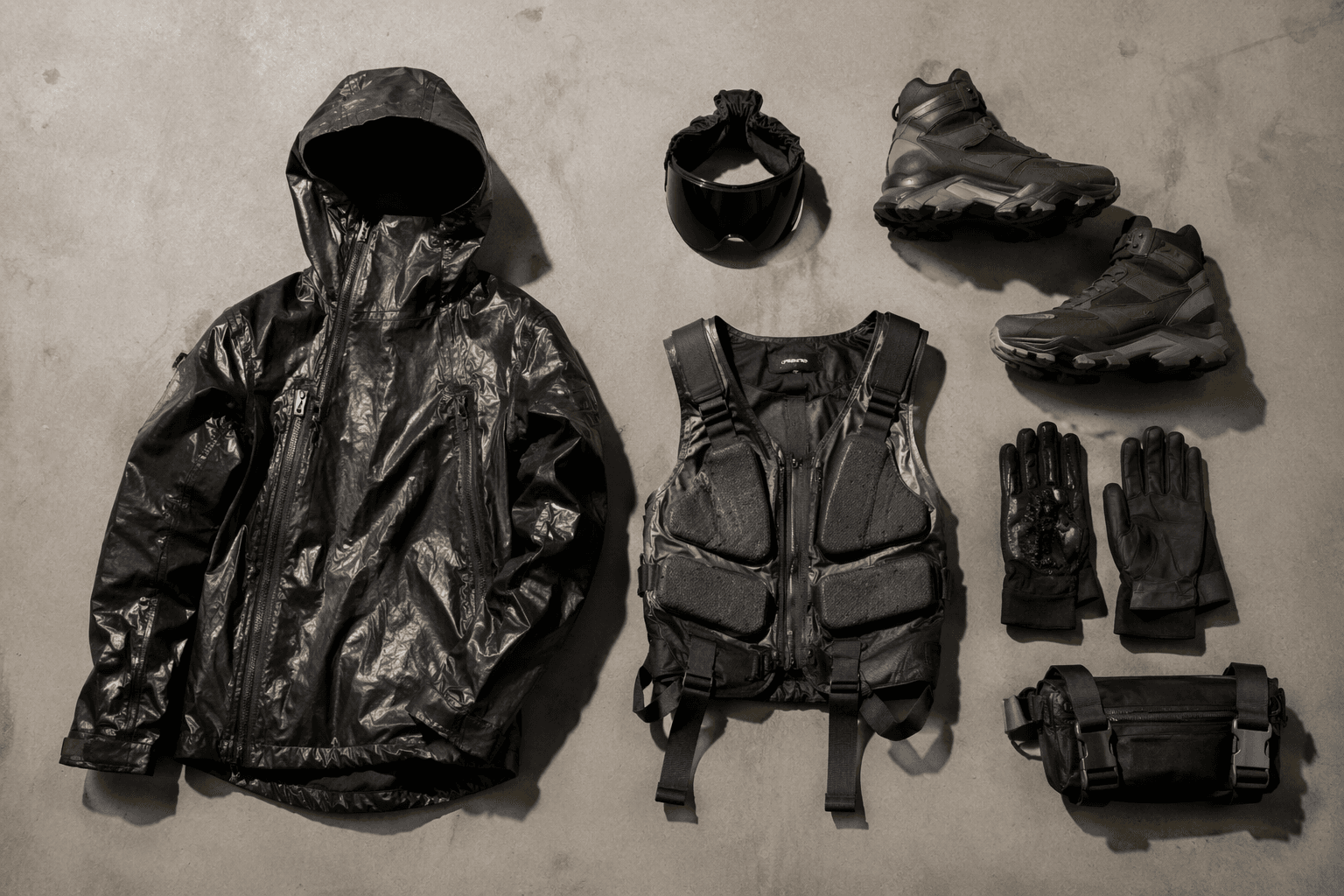
C.P. Company revives the Mille Miglia jacket, debuts acid-melted nylon camo
C.P. Company’s Mille Miglia comeback proves the label still does its best work when archive myth meets real fabric invention, not costume nostalgia.
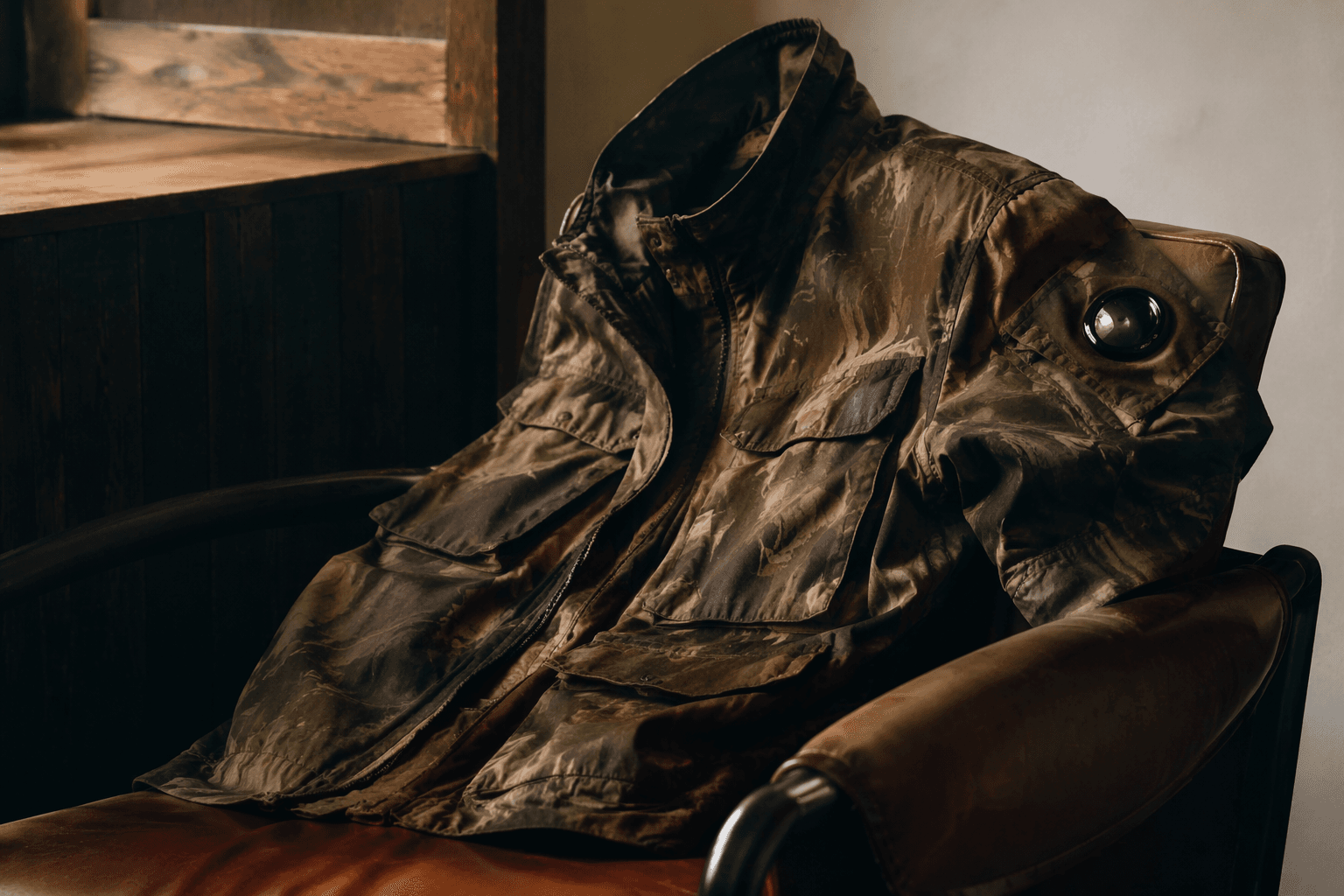
C.P. Company does not need to shout to look current. It just needs to put a jacket in front of you that feels like it came out of a factory, a racetrack, and a design archive all at once. At its Paris show on June 27, 2026, the brand did exactly that, reviving the Mille Miglia goggle jacket and introducing a new 3D camo made from acid-melted nylon. The result was pure C.P. Company: industrial, practical, and weirdly alive.
Why the archive still matters
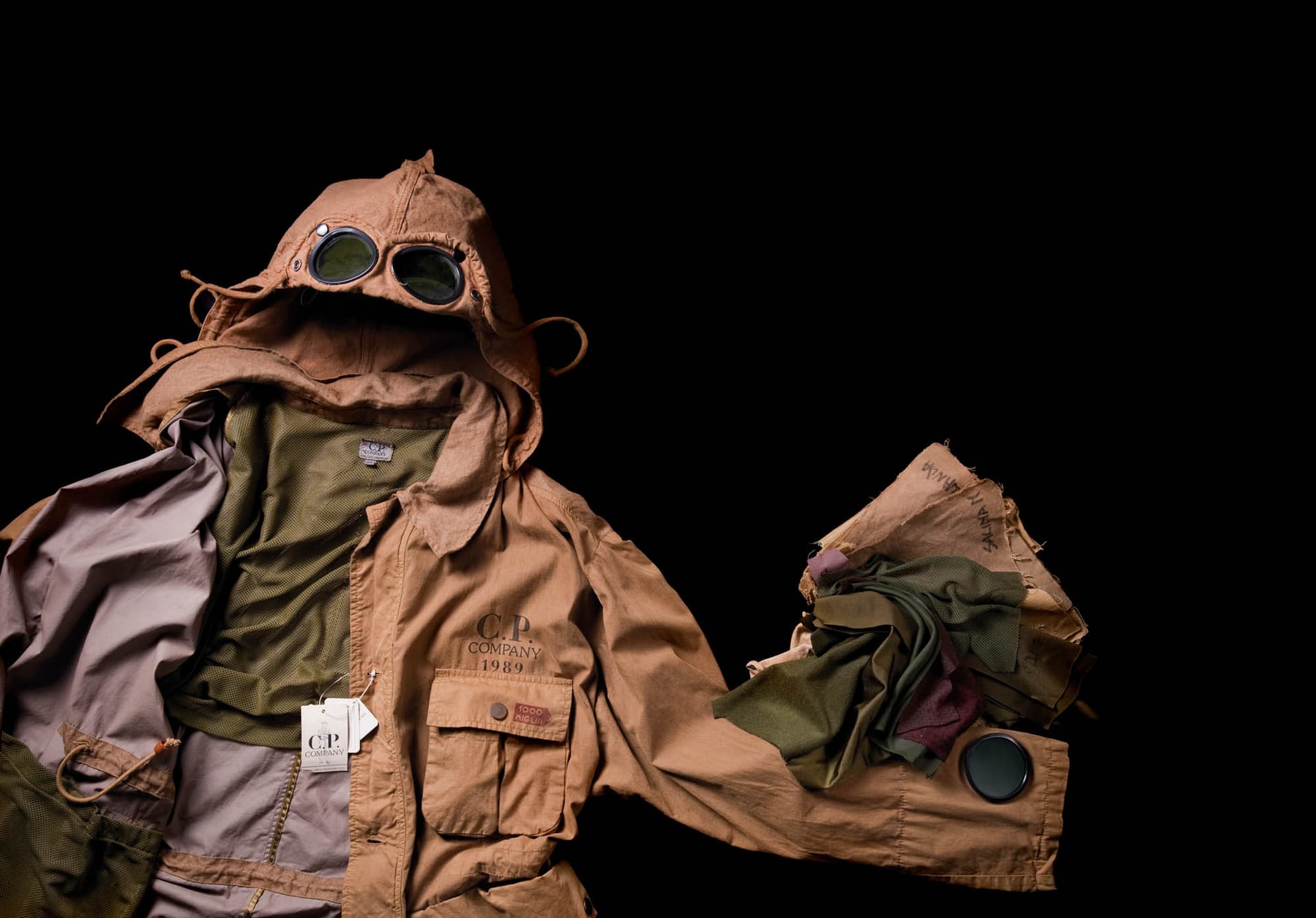
The Mille Miglia jacket is not some random throwback pulled from the back room. It began in 1988, when C.P. Company made it for its sponsorship of the Mille Miglia, the historic Italian open-road endurance race. The piece mattered because it solved a real problem with real gear: the goggle hood and wrist lens were functional details first, style signature second, and then, over time, a full-blown house code.
That is the C.P. Company advantage in one move. The brand can mine mythology without letting the clothes turn into museum props. Its archive version of the Mille Miglia Goggle Jacket is described as the first of the legendary model, cut from raw natural fabrics and garment-dyed with the little-known “cotonizzato” technique. That is the sweet spot for this label: technical language, tactile oddity, and a finish that feels lived in rather than polished to death.
The deeper backstory matters too. Historical summaries place C.P. Company among the early pioneers of synthetic fabric dyeing in 1981, which tells you this was never a brand built on surface decoration. Its reputation has long been tied to military and workwear references, the kind of clothes that look at home on a city sidewalk but still feel like they could take a beating. Later retrospective accounts put the brand’s output at more than 40,000 garments since 1975, which only underlines how much of its identity comes from relentless making, not just iconic one-offs.
The Mille Miglia jacket, revived without becoming a costume
The best part of the Mille Miglia revival is that it does not read like a museum replica. It reads like a brand returning to its own strongest silhouette and sharpening the edges. You still get the familiar coded language of the goggle hood and wrist lens, but the point is not to freeze 1988 in amber. The point is to remind you that the jacket was designed as functional streetwear before that phrase became marketing wallpaper.
C.P. Company has a habit of reopening this archive instead of simply reissuing it. In 2009, designer Aitor Throup reinterpreted the jacket for its 20th anniversary, proving the shape could survive a fresh hand without losing its identity. More recently, Palace pulled the Goggle Jacket into a denim capsule with a contrasting hoodie in technical CS II fabric, which is exactly the kind of mixed-media move that keeps the archive from feeling precious. Denim, technical fabric, and an old racing-born silhouette is the sort of combination that works because it respects the original logic rather than trying to outsmart it.
If you are reading C.P. Company as a techwear label, this is the lesson: the archive is not just there for nostalgia. It is the proof that the brand has been solving the same problem for decades, how to make utility look sharp without making it look sterile.
The new camo is where the fabric research gets interesting
The fresh 3D camo is the more forward-looking half of the story, and it is the part that keeps C.P. Company from becoming too attached to its own legend. WWD described the fabric as nylon that is acid-melted and dyed after processing, which already sounds more like a lab experiment than a print run. The aesthetic was set by an industrial process, with sun-faded effects that nod to archival garments and a little natural discoloration baked into the finish.
That matters because C.P. Company has never treated fabric as a neutral carrier for design. The cloth is the design. The process is the point. In this camo, the pattern does not just sit on top of the material, it seems to emerge from it, like something eroded, exposed, and then reassembled into a wearable surface. That is miles away from the deadened digital camouflage that clutters so much modern streetwear.
What makes it feel current is the tension between control and decay. The melted nylon gives the camo a rough, processed depth, while the sun-faded look connects it back to the archive without making it look sentimental. You get the sense of something engineered, then weathered, then made desirable again. That is a very C.P. Company move.
How to read the label now
If you want the short version of how to understand C.P. Company in 2026, look for the places where nostalgia gets forced through material innovation. The Mille Miglia revival is the heritage side of the formula. The acid-melted nylon camo is the experimental side. Together, they show why the brand still feels sharper than labels that simply recycle old military references or slap technical buzzwords onto basic shells.
A few details define the house better than any logo ever could:
- The goggle hood and wrist lens, still the brand’s most recognizable functional shorthand.
- Raw natural fabrics turned through garment dyeing and the “cotonizzato” technique, which gives the archive its lived-in authority.
- Acid-melted nylon and sun-faded camo effects, which push the label’s material research forward without abandoning its industrial mood.
- A history tied to racing, military utility, and workwear, not just fashion-world nostalgia.
That combination is why C.P. Company still matters to people who actually wear techwear, not just photograph it. The brand’s best pieces do not ask you to choose between archive and innovation. They make the old code look new by changing the fabric, and they make the fabric feel urgent by tying it back to clothes that were built to do a job.
This article was produced by Prism’s automated news system from verified source data, official records, and press releases, then run through automated quality and moderation checks before publishing. The system is built and supervised by the people who set the standards it runs under. Read our full AI policy.
Did this article answer your question?