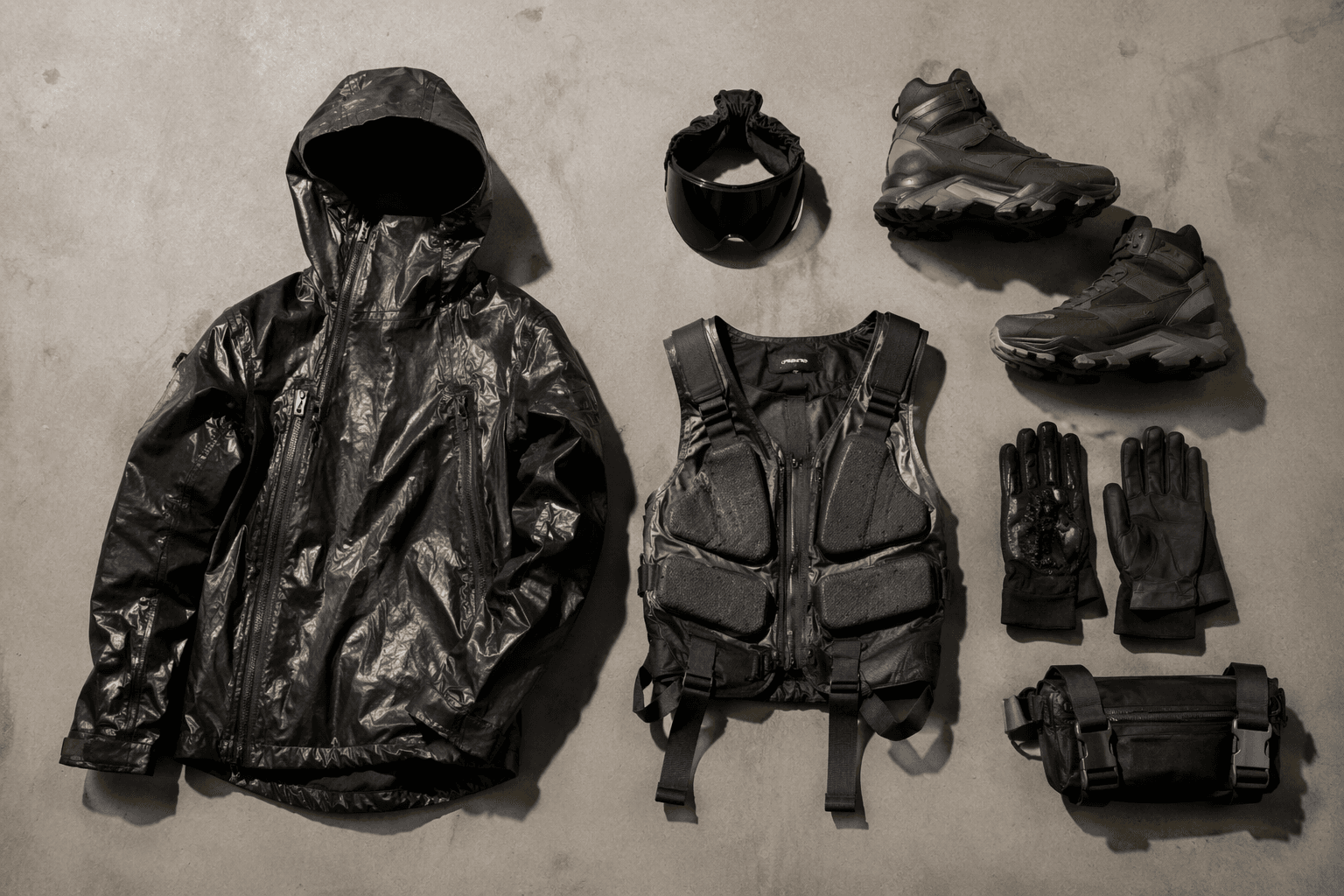
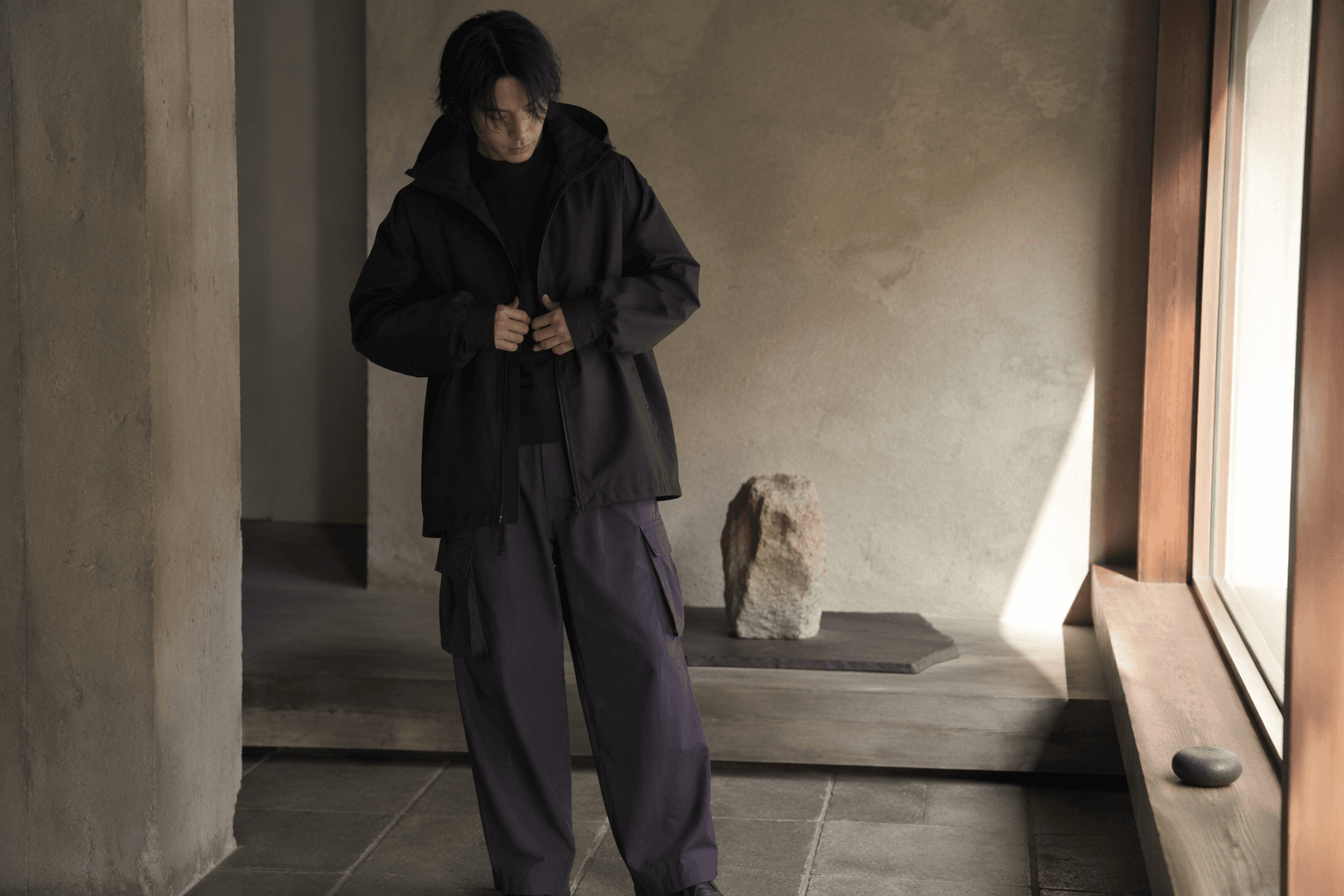
Graphpaper SS27 leans into yohaku with refined techwear layers
Graphpaper turns techwear quiet, using yohaku, Pertex, linen, and leather to make utility look calmer and more grown-up.

Linen Judo jackets, Pertex Unlimited blousons, and full-grain leather shirts anchor Graphpaper’s SS27 lookbook, “What Time Leaves Behind.” They are stripped of excess, then left to gain character through wear rather than decoration. The result is utility that feels composed, mature, and almost architectural.
Yohaku is the point, not a theme
Graphpaper roots the collection in yohaku, the Japanese idea of empty space, and treats that space as a design tool. The season favors slow maturation over seasonal churn, with garments becoming more complete as they are worn. It does not chase intensity; it lets form, fabric, and proportion do the work.
Takayuki Minami created Graphpaper in Aoyama, Tokyo, in February 2015, inspired by Harald Szeemann and his “free from any regulation” attitude. The store model is gallery-like, with works lined up equally and without visual interruption. The official site calls Graphpaper “a high-quality wardrobe” for adults.
The clothes are technical, but never loud
The material mix is where Graphpaper’s restraint becomes useful. The range also moves through structured linen-cupro V-neck overshirts, open-back seersucker blouses, multi-pleat cupro-cotton satin trousers, garment-dyed bal collar coats, yoke-sleeve blousons, and a rigid lamb leather Corbusier jacket. Even the Judo references are softened, with loose linen-cotton canvas and rugged nylon riggers belts rather than hard-edged cargo styling.
The palette deepens the same idea. Graphpaper organizes the season around Stone White, Moss Green, Oak, and Sumi, colors drawn from aged porcelain, moss on wet stone, dry weathered wood, and calligraphy ink absorbed into paper.
Why Pertex matters in a quieter techwear wardrobe
Pertex is the collection’s most practical bridge between performance and polish. Pertex textiles are “lightweight, packable, soft and quiet,” built for outdoor conditions with high-level performance and comfort. In Graphpaper’s hands, that turns into city-wear that protects without looking armor-like, which is why the Pertex Unlimited blousons feel more mature than the usual tech shell.
Skip the overbuilt hardware, aggressive paneling, and glossy surfaces that make a jacket read like costume. Graphpaper’s strongest pieces, especially the Pertex outerwear and the leather shirts, keep the silhouette relaxed and the finish quiet.
What to wear, and how to wear it now
The cleanest entry point is the linen Judo jacket, worn open over a soft top and relaxed trouser. It gives you structure without stiffness, which is the whole appeal of this collection’s gender-neutral profiles and architectural loungewear. If you want a more overtly technical layer, the Pertex Unlimited blouson is the smarter choice because it keeps the profile slim and the surface calm, while still bringing weather-minded function.
The leather pieces are the counterweight. A full-grain leather shirt or the leather raglan blouson brings weight and depth, but Graphpaper keeps even those pieces from feeling heavy-handed by pairing them with clean lines and measured proportions.
Why this move beyond Japan matters
Graphpaper originally presented the collection at 21 Rue Chapon in Le Marais during Paris Men’s Fashion Week, placing the brand inside a district known for art, design, and fashion culture. Minami said in June 2026 that Graphpaper had set up a company in the Netherlands as part of a broader European push, after planning to establish a company in Europe and present directly to customers in Paris.
This article was produced by Prism’s automated news system from verified source data, official records, and press releases, then run through automated quality and moderation checks before publishing. The system is built and supervised by the people who set the standards it runs under. Read our full AI policy.
Did this article answer your question?