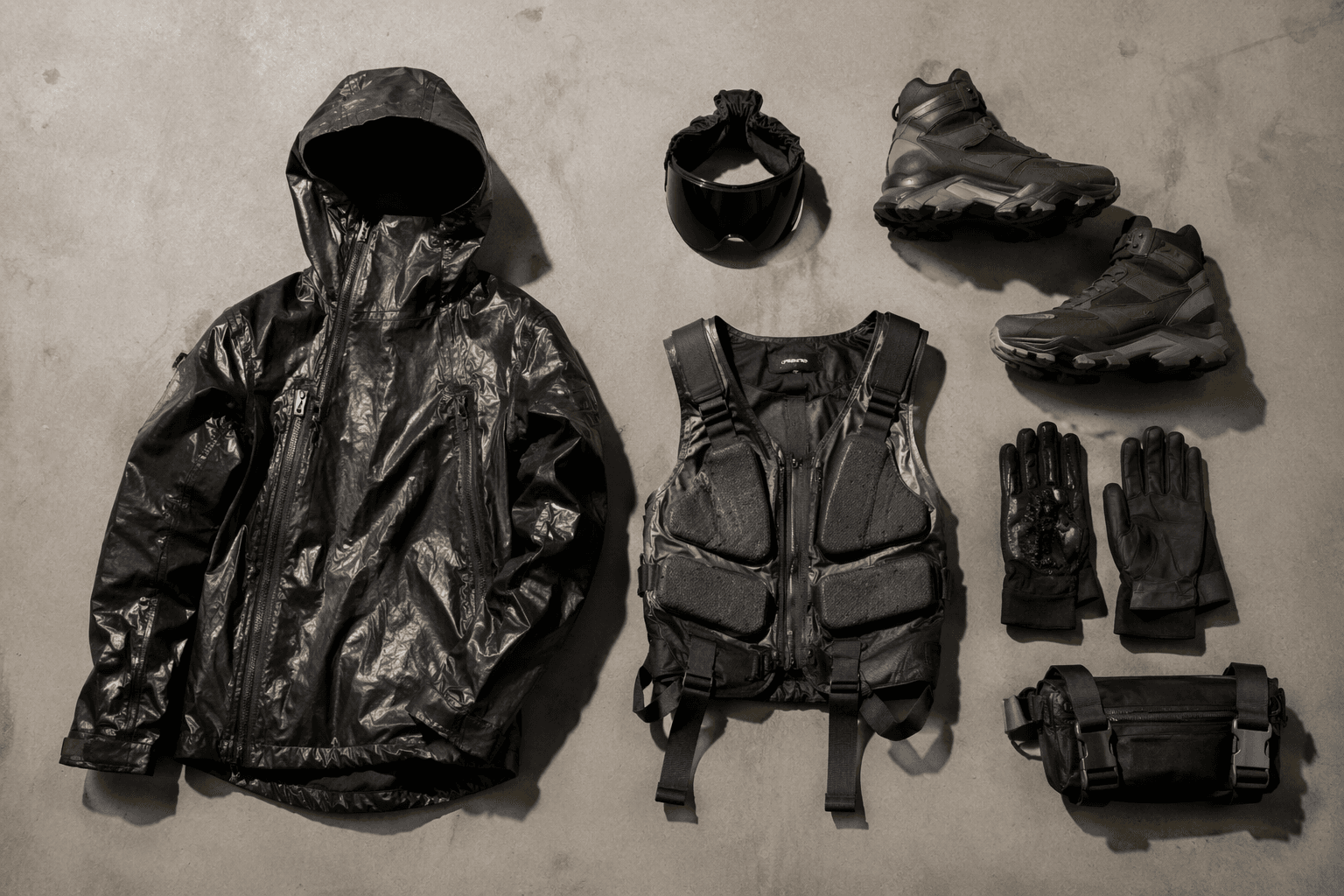
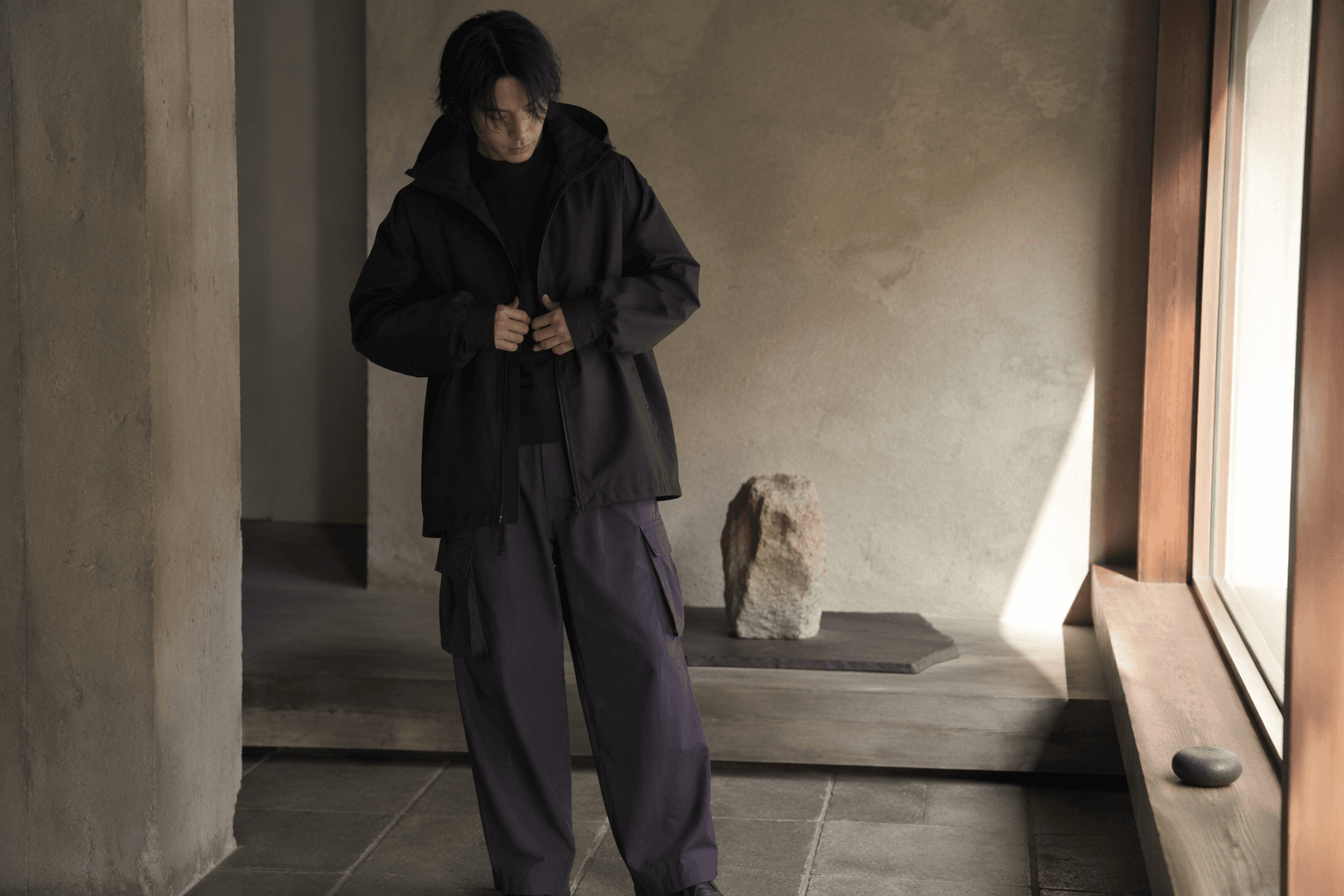
Pharrell’s Louis Vuitton SS27 blends surf tech with dandy tailoring
Pharrell Williams turned Louis Vuitton’s SS27 menswear into a surf-soaked dandy study, where real technical wetsuits met theatrical wave-set symbolism.

Pharrell Williams used Louis Vuitton’s Spring-Summer 2027 men’s show to rewrite what luxury tailoring can borrow from watersport utility. The collection’s sharpest trick was not just surf imagery, but the way it folded genuine performance references, monogrammed technical wetsuits, engineering-minded fabrics, and surfboard accessories into a polished dandy framework that felt built for status dressing as much as motion.
The dandy recut through surf
Louis Vuitton framed the show as a “dandy experience” grounded in surfing tradition, and that phrase is the key to reading the clothes. This was not beachwear pasted onto tailoring for effect; the house described hand-spun textures, sea-centric embellishments, sun-worn fabrics, nonchalant tailoring, technical engineering, and iconic accessories as part of the same wardrobe language. The result was a collection that treated coastal ease as a luxury code, not a holiday mood.
Pharrell has been developing the dandy idea throughout his Vuitton tenure, but here he shifted it away from the old guard’s polished formalism and toward surf and skate culture. LVMH’s own description made that pivot explicit, pairing precise tailoring with monogrammed technical wetsuits, surfboards used as accessories, and graphics pulled from acid colors and checkerboard motifs. That mix matters because it shows techwear moving up the ladder: what began as functional gear now reads as a marker of taste, access, and confidence.
Where the performance design is real
The most convincing technical gesture was the monogrammed wetsuit. WWD said this was the first time Louis Vuitton put its Monogram on functional diving gear, and that detail separates the collection’s actual performance logic from its seaside styling. Wetsuits are not decorative by nature; they are engineered to insulate, seal, and move with the body, so putting Vuitton’s signature on that silhouette signals a serious flirtation with utility.
The same goes for the show’s technical fabric language. Vuitton’s official write-up emphasized technical engineering alongside tailoring, which is exactly where contemporary luxury is mining credibility from sportswear and outdoorswear. In this collection, the brand was not simply printing waves on shirts. It was borrowing the visual authority of equipment and the tactile promise of gear designed to work in water, then recasting it in the house’s own expensive register.
What reads as symbolism on the runway
Other elements were clearly less about function than about atmosphere. The towering artificial wave, the sand-filled runway, the surf-and-skate graphics, and the board-sport references all worked as set design for a fantasy of fluidity and speed. WWD described the stage at Cité Universitaire in Paris with sand underfoot and a large wave spraying water into the audience, which gave the show a physical drama no garment alone could deliver.
That distinction matters because luxury has become fluent in the language of utility, but it still needs theater to sell it. A surfboard carried as an accessory is not the same thing as a board built for the ocean, and checkerboard motifs or acid colors do not make a garment perform better. They make the collection legible as part of a contemporary wardrobe that borrows from the codes of action sports while remaining firmly rooted in fashion hierarchy.
The heatwave changed the reading
The show landed during a record-breaking heatwave in Paris and much of France, with temperatures still above 30°C around 9 p.m. local time, according to Reuters. That backdrop made the watery spectacle feel less like pure fantasy and more like climate-aware stagecraft, even if the collection itself was not a protest or a manifesto. Louis Vuitton increased water supplies and added more breaks for workers ahead of the show, a practical adjustment that underscored how extreme weather was shaping the mechanics of presentation itself.
Dior and Rick Owens had already shifted some shows to the morning because of the heat, which placed Vuitton’s outdoor setup in a broader industry context. When a show about water and surf happens in punishing summer heat, the message becomes double-coded: nature is both muse and constraint. The wave was not only a symbol of freedom; it was also a counter-image to an atmosphere that made the body negotiate heat, shade, and endurance.
Regeneration 2030 and the environmental script
Louis Vuitton tied the presentation to its Regeneration 2030 framework and its support for Coral Gardeners in French Polynesia. The official materials said the show’s water came from Eaux de Paris and was circulated in a closed system, while the sand was later donated to the beach volleyball courts at Cité Internationale Universitaire de Paris. Those details give the spectacle an unusually concrete environmental afterlife, even as they remain part of a luxury brand’s self-authored sustainability story.
Additional coverage said the Coral Gardeners initiative is intended to restore 1,000 corals and 250 square metres of reef habitat in 2026. That is the sort of figure that gives the project measurable shape, and it also helps explain why the ocean imagery did not stop at mood boards. The collection’s coastal language was paired with a real reef-restoration narrative, which makes the show feel like an example of how luxury increasingly packages stewardship, performance, and branding in one visual gesture.
Pharrell’s own sea story
Pharrell’s personal connection to the ocean gave the collection an autobiographical edge. WWD said his fascination with the sea reaches back to childhood in Virginia Beach, and that he tried surfing for the first time in 2025 at a surf park near the Atlantis Apartments housing project where he grew up. That detail is telling because it places the surfer-coded dandy in lived memory rather than purely in fashion fantasy.
The sea, in other words, is not just a styling cue for him. It is a biographical thread that helps explain why this collection feels more coherent than a simple trend grab. Pharrell has turned a private history into public code, and Louis Vuitton has given that code the full machinery of luxury production.
The front row and the scale of the moment
The guest list reinforced the show’s reach. WWD named Jeremy Allen White, Jackson Wang, and J-Hope among the attendees, while other coverage also noted Missy Elliott and Victor Wembanyama. AP captured the scale succinctly with its image of Pharrell sending Louis Vuitton’s “dandy surfer” over a giant wave, and that is exactly the tension the show thrives on: a tailored world launched into spectacle without losing its polish.
What makes SS27 distinctive is the way it treats techwear not as a niche of pockets, straps, and tactical hardware, but as a source of prestige codes. The wetsuit, the wave, the sand, the checkerboard, and the monogram all point to the same shift: utility is no longer outside luxury looking in. Under Pharrell, it has become one of luxury’s most persuasive forms of self-presentation.
This article was produced by Prism’s automated news system from verified source data, official records, and press releases, then run through automated quality and moderation checks before publishing. The system is built and supervised by the people who set the standards it runs under. Read our full AI policy.
Did this article answer your question?