Sacai splices prep and utility in hybrid menswear at Paris Fashion Week Men’s
Sacai turned 1980s prep into a utilitarian mash-up, slicing blazer lapels and shirting while pushing Birkenstock and Brooks Brothers into hybrid territory.
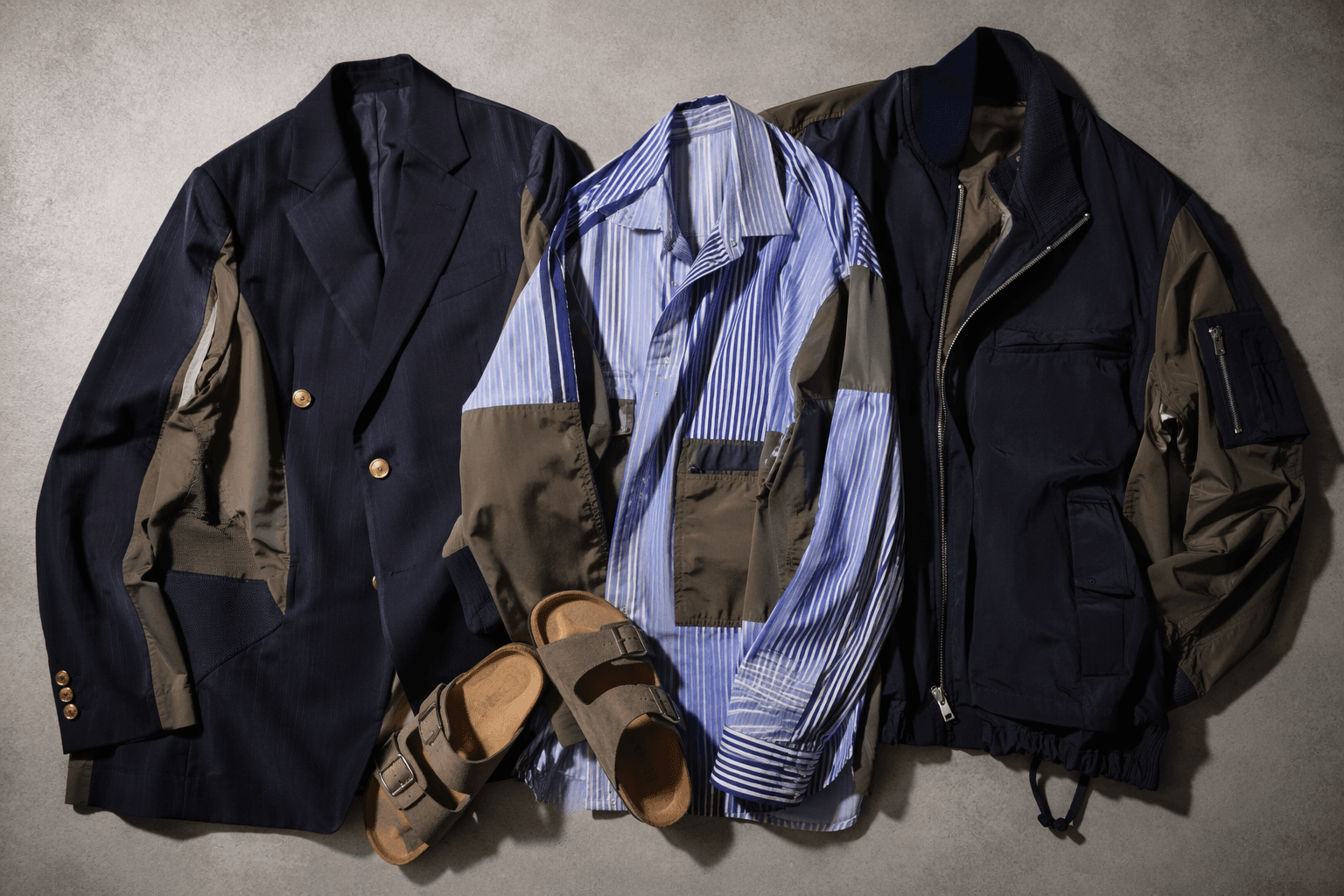
Chitose Abe’s latest menswear outing was built on friction. Sacai took the clean grammar of 1980s prep and dragged it through a rougher 1990s register, cutting into blazer lapels, loosening shirting, and binding denim and leather jackets with utilitarian straps. Shown in Paris on June 28, 2026, during Paris Fashion Week Men’s, the Spring 2027 collection made the case that Sacai’s real subject is no longer just hybrid clothing, but the tension between polish and purpose.
Prep, broken open
Abe centered the season on menswear, presenting the show as a stand-alone menswear statement with only a few women’s resort looks folded in. That choice mattered because it gave the collection room to work through classic male wardrobe codes without distraction: the blazer, the shirt, the trouser, the sandal. Sacai’s answer was not to preserve those categories, but to splice them until they looked newly vulnerable, as if the archive had been handled, clipped apart, and reassembled on a worktable.
The Brooks Brothers collaboration anchored that idea in recognizable preppy DNA. Rather than treating prep as costume, Abe used the partnership as a point of entry into something more disruptive, digging into the 1980s preppy archive and then pulling it off balance with Sacai’s signature layering and cut-and-paste logic. The result was less Ivy League nostalgia than Ivy League after-hours, with tailoring loosened and the familiar made slightly unstable.
Utility as distortion, not decoration
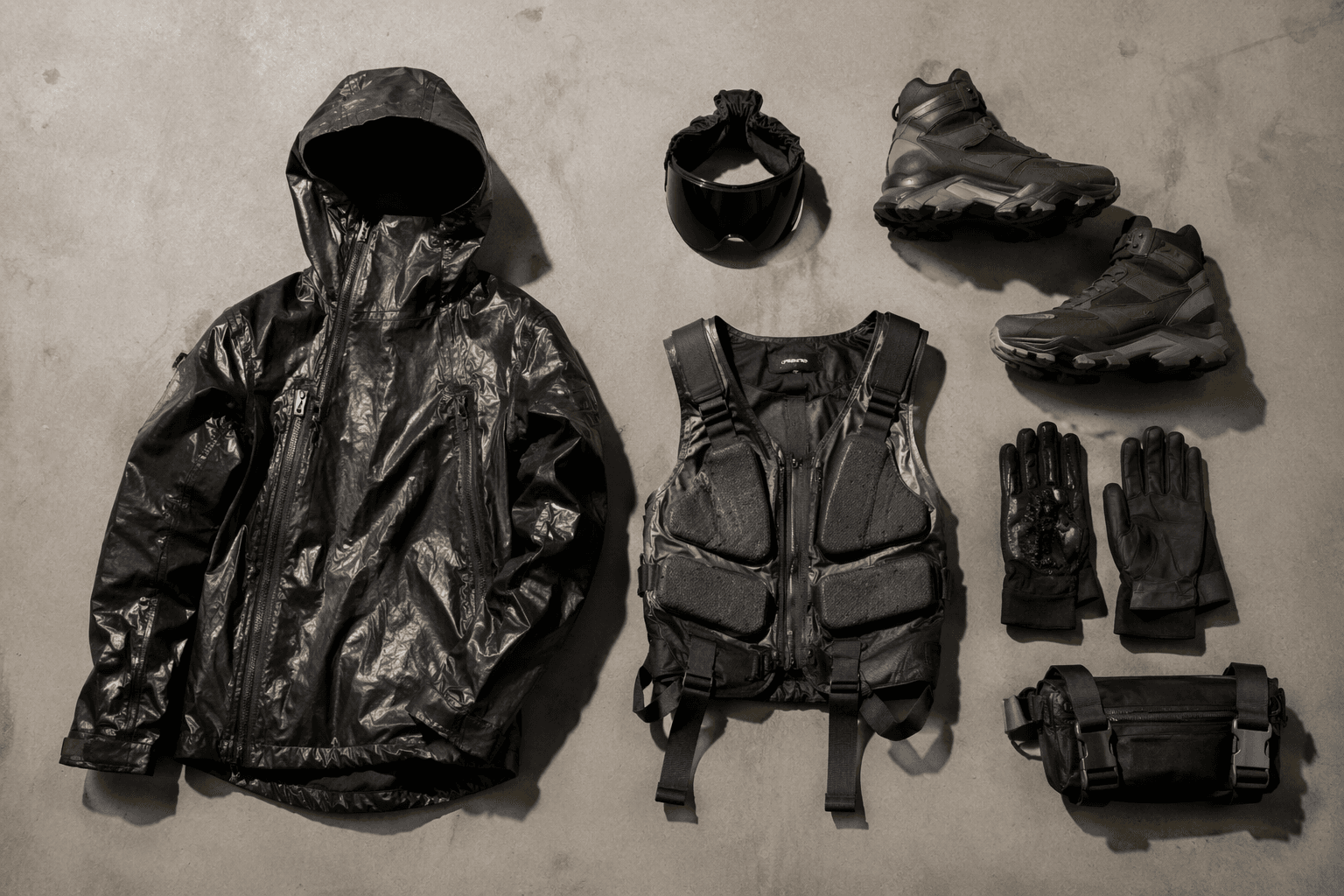
The strongest pieces came when the collection stopped behaving politely. Blazer lapels were sliced into something sharper and less settled, while shirting was loosened so it no longer sat cleanly against the body. Denim and leather jackets were hacked with straps, turning everyday menswear shells into gear-laden hybrids that read as practical only until you looked twice. Sacai has long worked in this territory, but here the utility language felt especially insistent, as if Abe wanted every seam to suggest adjustment, fastening, or reinvention.
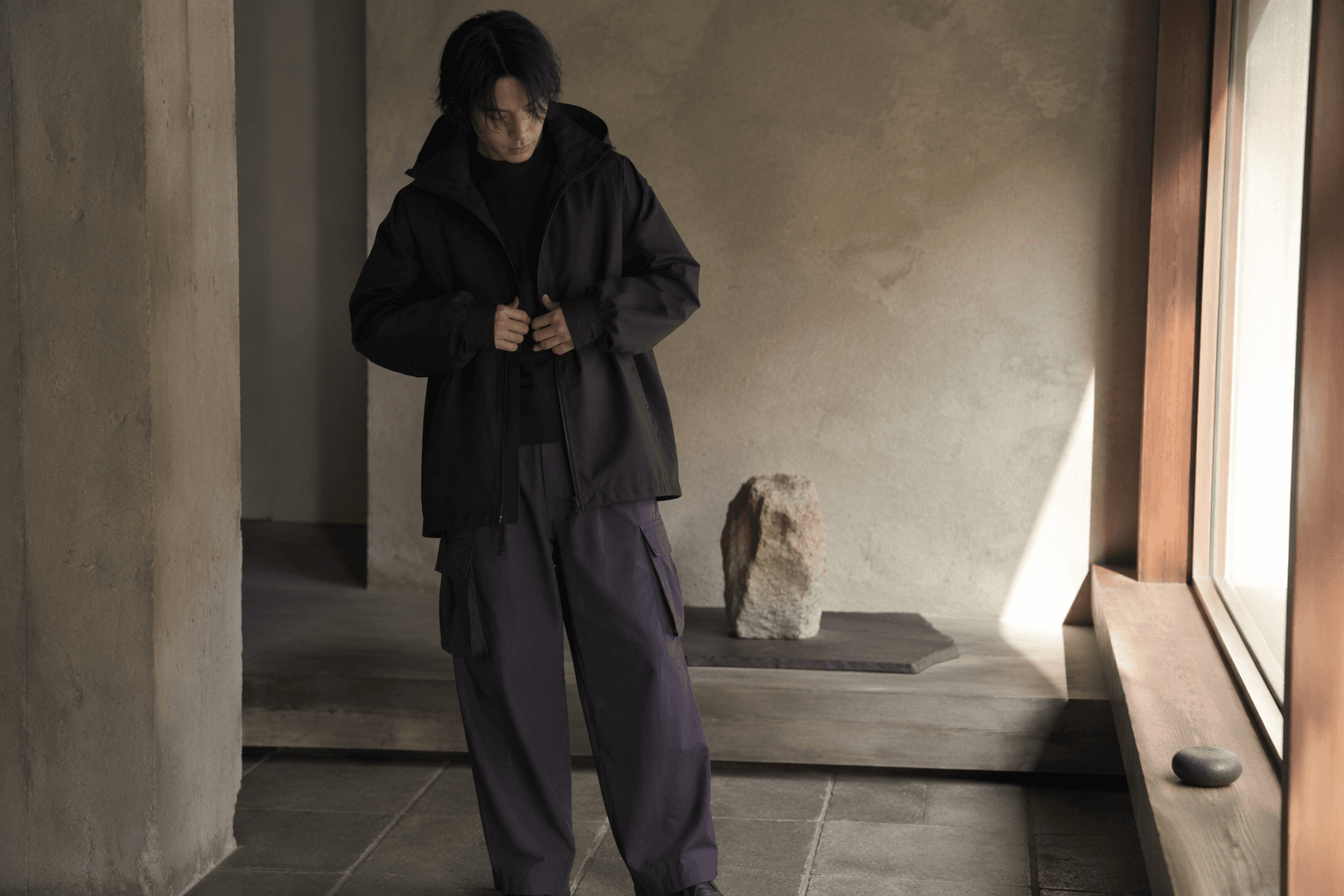
The same instinct ran through the smaller details. Industrial fireman clasps gave the clothes a hard, mechanical edge, while oversized outward-pouching trouser pockets pushed volume away from the leg and made storage itself part of the silhouette. Raw-seamed tailoring reinforced the sense that construction had been left visible on purpose, not polished away. In Sacai’s hands, the roughness is never accidental; it is the point of contact between form and function.
That is where the collection’s central question lives. Is Abe pushing functional design forward, or is she using techwear cues to rough up familiar menswear codes? The answer seems to be both. The hardware, straps, and pocketing do serve a utilitarian logic, but they also operate as visual interruptions, breaking up the neatness of prep and forcing it into a more restless, more modern shape.
The collage was not only on the clothes
Sacai extended the hybrid idea beyond tailoring and into image-making. Archive imagery and album art from Soul II Soul were worked into collage fabric, turning the collection into a patchwork of references rather than a single visual thesis. That material choice pulled the line between fashion and music closer together, especially once the soundtrack entered the picture: late-1980s Soul II Soul material was remixed with Strauss’s “Blue Danube,” a pairing that set a formal waltz against club culture’s rhythmic pulse.
The audience matched that cross-generational, cross-cultural logic. Jazzie B and Mahlon Romeo were reportedly in the room, alongside longtime brand supporter Pharrell Williams. Their presence gave the show a useful kind of context: Sacai was not simply quoting musical history, but placing itself inside a lineage of people who understand how style, sound, and subculture can be edited into something current.
Birkenstock, reworked into the Sacai system
The collaboration with Birkenstock pushed the collection even further into hybrid territory. Sacai combined three Birkenstock models to create two new styles for Spring 2027, producing sandals with extra straps and XL buckles that made the familiar footbed silhouette look more engineered, more aggressive, and distinctly more Sacai. It was the same strategy Abe applied to the tailoring: take something known, add tension, and let the splice become the signature.
What makes this partnership persuasive is that it does not try to disguise the original. The comfort-first logic of Birkenstock remains legible, but Sacai thickens it with hardware and layering until the sandal feels like part of a larger system of dress rather than a standalone casual shoe. That is the house’s best trick: it doesn’t erase provenance, it complicates it.
Why the show lands now
Presented in Paris as a 43-photo runway presentation, the collection moved with the tight editorial rhythm Sacai has honed over years of hybrid construction. Each image reinforced the same vocabulary, from raw seams to straps to collage fabric, until the collection read as one continuous argument about how menswear can be bent without losing its structure.
Abe’s strength lies in knowing exactly where to cut. She does not discard prep, nor does she fully surrender to utility. Instead, she lets the two codes collide until they produce a third thing: clothes that feel familiar in outline but unstable in detail, disciplined in silhouette but unruly at the edges. In this collection, Sacai’s splicing did more than rough up menswear. It made the case that menswear itself is most interesting when it looks like it has been taken apart and put back together by hand.
This article was produced by Prism’s automated news system from verified source data, official records, and press releases, then run through automated quality and moderation checks before publishing. The system is built and supervised by the people who set the standards it runs under. Read our full AI policy.
Did this article answer your question?