Undercover blends art and utility in Paris menswear lineup
Jun Takahashi turned Borremans paintings into wearable protection, where reversible linen, knits, and rainproof nylon sharpened Undercover’s emotional charge.
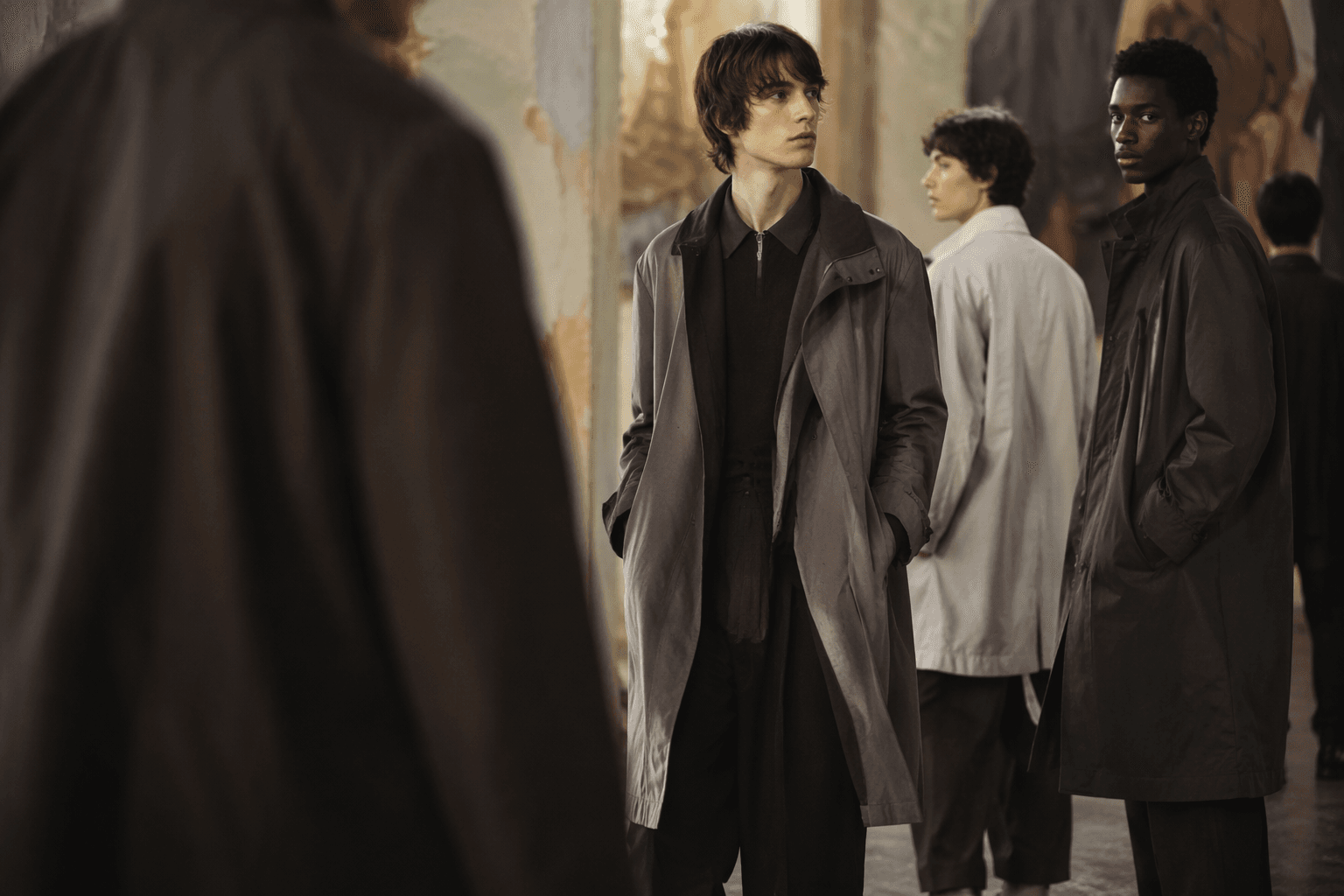
Undercover’s newest men’s collection made its point in the most convincing way possible: it treated art not as decoration, but as a working method. Jun Takahashi folded the mood of Michaël Borremans’ paintings into jackets, cardigans, and weather-ready shells that looked considered enough for the runway and useful enough for real life. The result was a lineup where the emotional atmosphere came through in the construction, not in some fragile layer of symbolism.
A painterly idea, built for the street
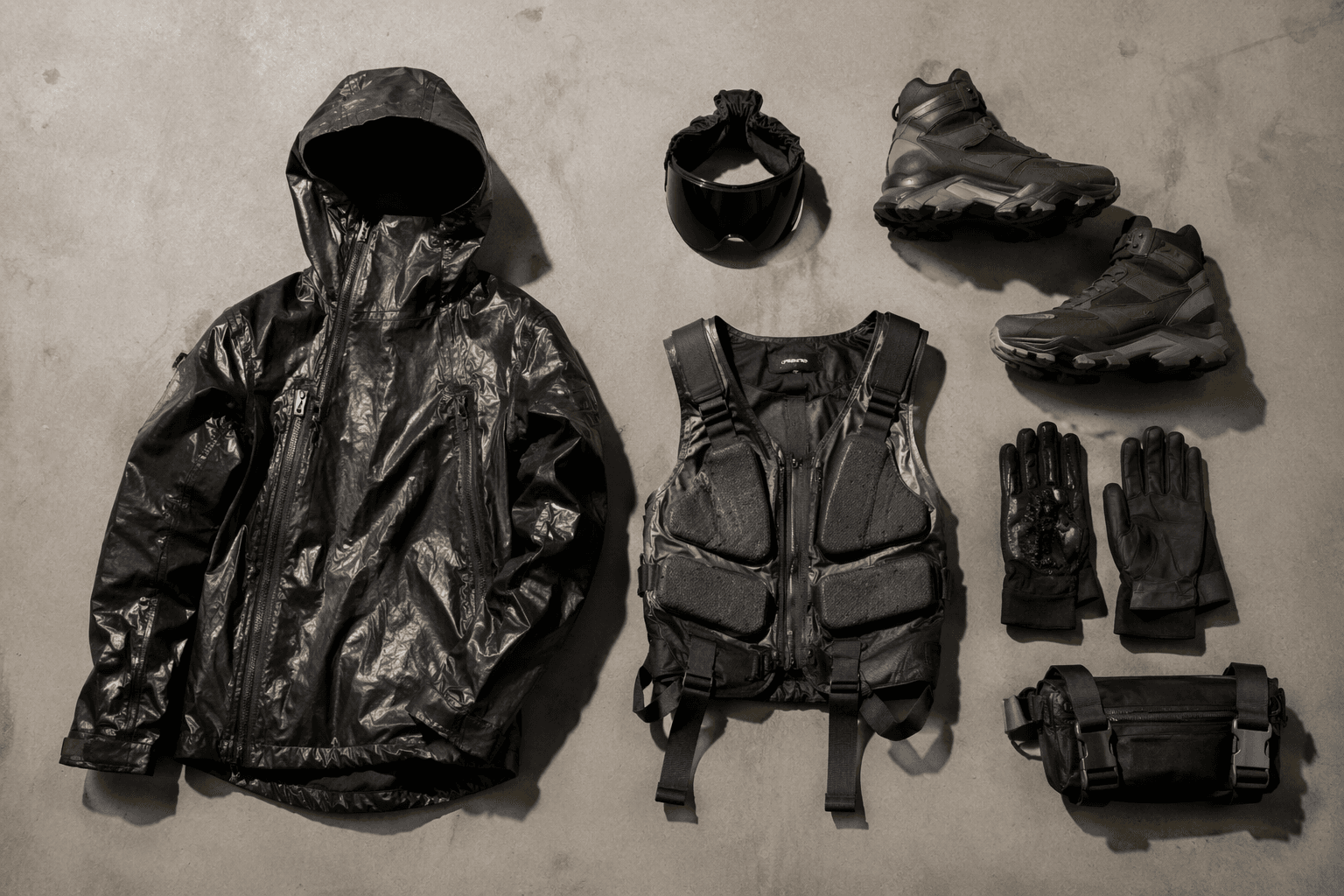
The collection carried the title “Poisonous plants,” and that tension between beauty and threat was present in the clothes themselves. Takahashi drew on Borremans’ paintings of historic soldiers in uniform and still lifes of flowers, then translated that visual language into pieces that felt grounded in movement and protection. Crinkly reversible linen jackets brought an element of tactility and changeability, while paper-and-rayon cardigans softened the silhouette without losing their layered practicality.
What made the show distinctive was the refusal to separate concept from function. Undercover has always thrived when the clothes feel like they are thinking, and here the thinking took the form of fastening systems, outerwear, and fabrics that respond to the body and the weather. Even the collection’s more poetic references were delivered through garments that could actually be worn, not just admired.
Where the utility really lands
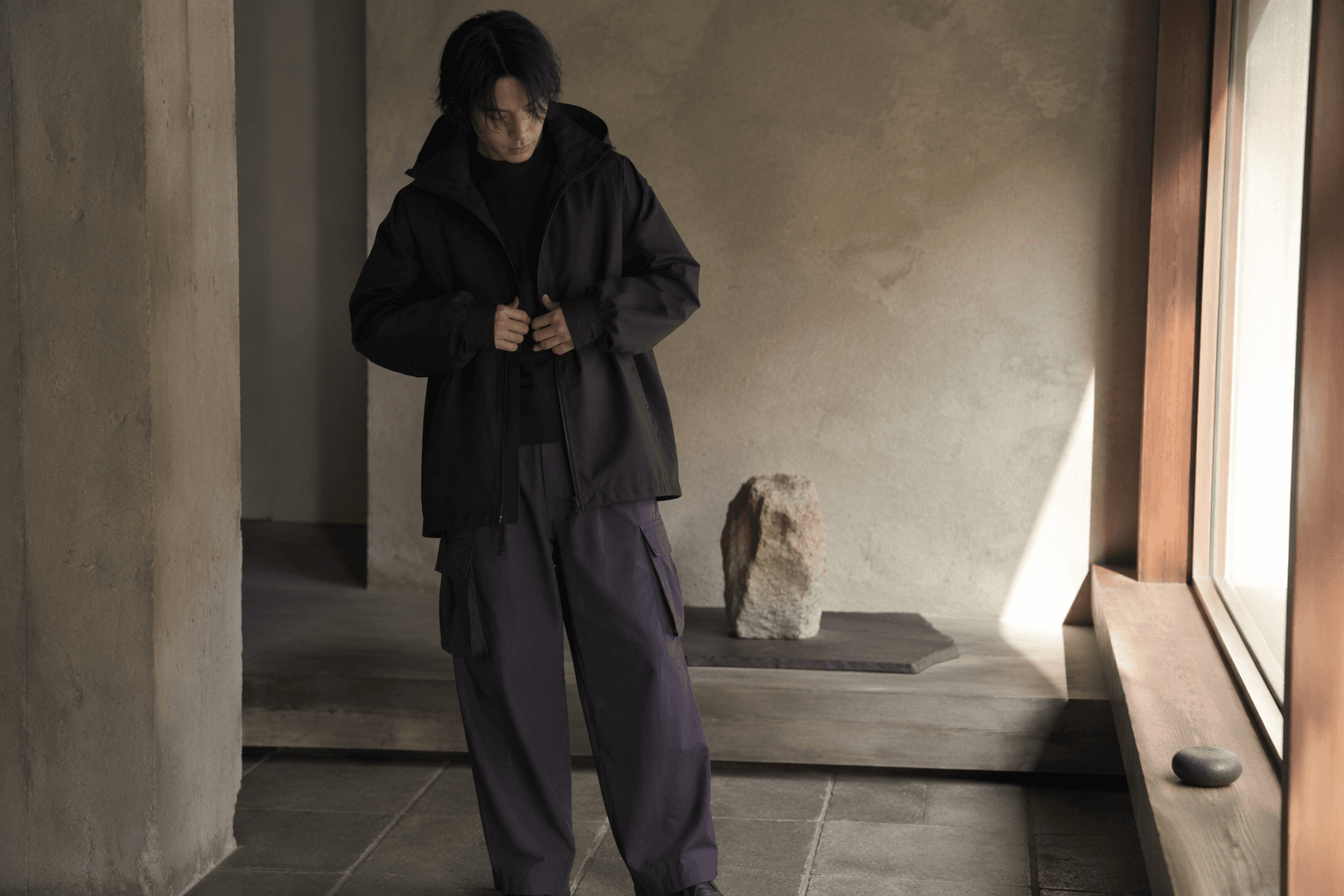
The strongest pieces were the ones that made the technical details feel emotionally charged. Leather jackets came with zippers and clip fastenings, a mix of hardware that gave the garments a clipped, slightly armored presence, while bright nylon anoraks suggested rainy-day practicality without dulling the palette. That is the sweet spot for techwear when it is done well: not an obsession with gadgetry for its own sake, but clothing that looks as if it has been engineered to move through the world with a purpose.
Undercover’s use of reversible linen was especially smart. Reversibility is more than a party trick when it is handled with this much care, because it changes how a garment behaves in a wardrobe and on the body. In a collection inspired by painting, it also echoes the idea of shifting perspective, letting the wearer decide which side of the mood to show.
Borremans and Takahashi, reunited after 11 years
This was Takahashi’s first collaboration in 11 years with Belgian artist Michaël Borremans, and that gap mattered. The reunion carried a sense of rediscovery rather than nostalgia, especially because Takahashi has been spending more time painting himself and has been looking at Borremans’ work with fresh eyes. That change in vantage point seemed to free the collection from the trap of direct illustration; instead of copying the art, it absorbed its unease and restraint.
The Borremans references were not random visual borrowing. Historic soldiers in uniform gave the clothes their disciplined edge, while still lifes of flowers introduced a more fragile, almost unstable beauty. Those two poles, structure and decay, feel native to Undercover, a brand that has long made a language out of tension.
Why the artistic reference strengthens the clothes
The collection’s emotional story works because the utility never cancels the art. If anything, the practical details make the references feel more believable. A reversible linen jacket can carry the ambiguity of a painting; a paper-and-rayon cardigan can suggest fragility without becoming precious; a nylon anorak can turn the idea of “poisonous plants” into something immediate, even urban.
That is where Undercover is still so persuasive. Takahashi understands that contemporary menswear does not need to choose between idea and use. Here, the clothing suggests a man moving through rain, transit, and uncertainty, but doing so with a highly attuned sense of image. The garments do not flatten the artistic source into print or slogan; they give it a body.

Undercover’s long art habit
The Borremans reunion also sits neatly inside Undercover’s longer record of crossing art, culture, and streetwear. The brand has previously worked with Cindy Sherman, Twin Peaks, and French plush artist Anne-Valérie Dupond, and those references help explain why this collection feels so fluent. Takahashi has never treated outside influence as a garnish. He uses it to alter the temperature of the clothes themselves.
That history matters because it keeps Undercover from reading like a designer chasing art-world credibility. The art collaborations have become part of the brand’s grammar, and this season’s painting references feel like a continuation of that grammar rather than a novelty. The clothes still belong to menswear, but they are menswear with a restless mind.
Paris made the context sharper
The collection landed in a crowded Paris men’s season shaped by major shifts in the calendar. Paris Men’s Fashion Week Spring 2027 was scheduled for June 23 to 28, with the Fédération de la Haute Couture et de la Mode setting a provisional slate of 74 brands across 36 runway shows and 38 presentations. In that field, attention was also moving toward Saint Laurent’s return, the first Celine men’s show under Michael Rider, Givenchy’s first menswear designs under Sarah Burton, and Vetements’ debut on the men’s calendar.
That context sharpened the value of Undercover’s approach. Against a week full of resets and firsts, Takahashi offered something less flashy but more singular: a collection that used art to make utility feel charged, and utility to keep art from drifting away from the body. The clothes did not compete by volume. They stood out by making their references useful, which is often the harder and more lasting trick.
This article was produced by Prism’s automated news system from verified source data, official records, and press releases, then run through automated quality and moderation checks before publishing. The system is built and supervised by the people who set the standards it runs under. Read our full AI policy.
Did this article answer your question?