Auralee’s wool blouson makes a case for seasonless workwear
Auralee’s $1,130 wool-twill blouson solves the real warm-weather problem: not heat, but cold offices, wet commutes, and in-between days.
The jacket that makes summer layering feel smart
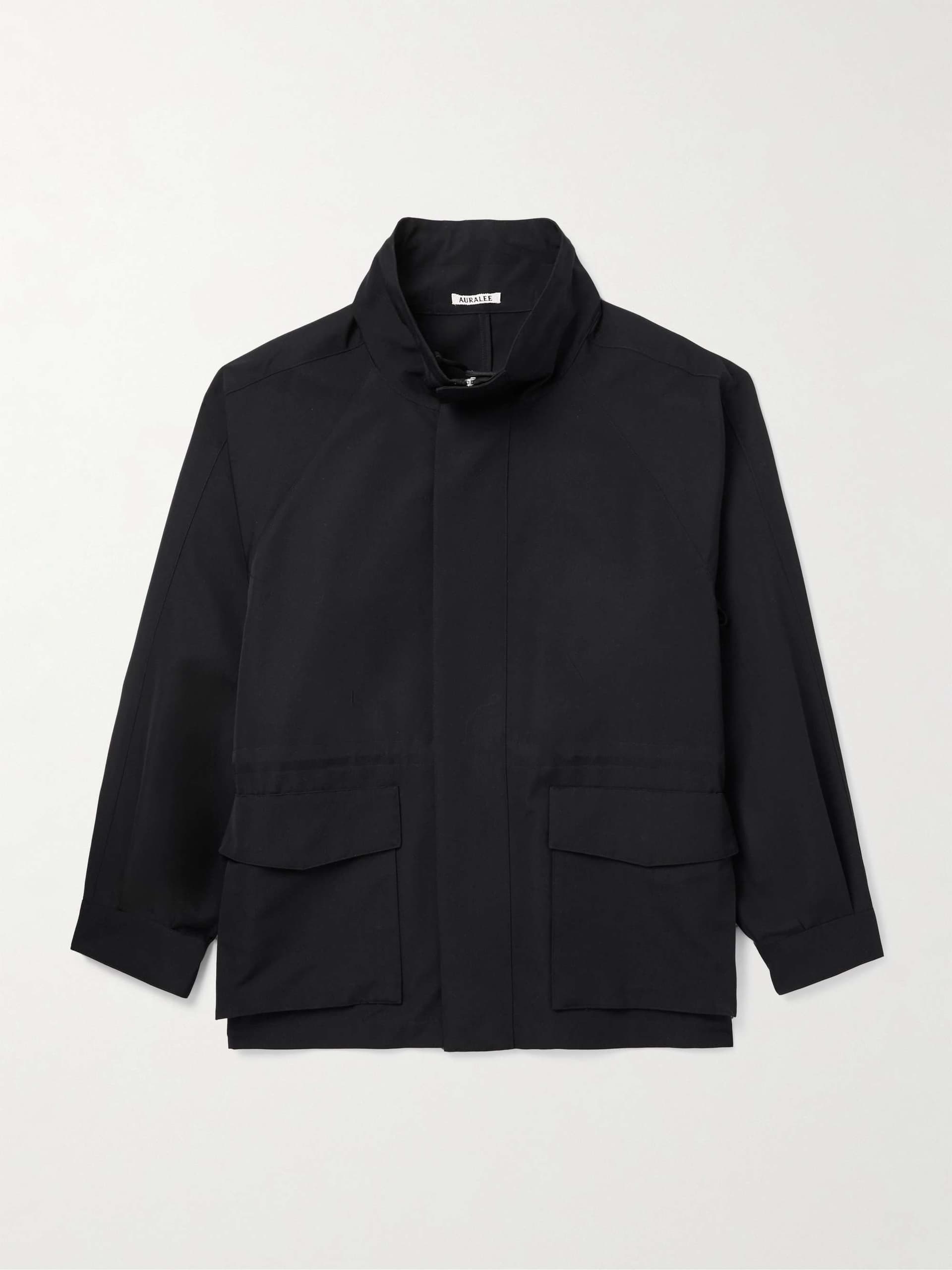
The best warm-weather layer is the one that never looks desperate, and Auralee’s wool-twill blouson has that part figured out. In black, at $1,130, it is expensive enough to make you pause and practical enough to justify the pause: lightweight, breathable, adjustable at the waist, and built for the places where a standard overshirt falls flat.
This is the anti-seasonal jacket story in one clean silhouette. You are not buying wool to stay warm in July. You are buying wool because the temperature swings are absurd, the office blast-furnace AC is non-negotiable, the train platform is damp, and the evening breeze hits the second the sun drops. A good overshirt can look right. This one actually works.
Why wool makes sense when the weather does not
The contradiction is the whole point. Wool, especially in a lighter twill construction, has a natural ease that heavy outerwear cannot match in transitional months or summer-adjacent weather. It takes the edge off air conditioning without trapping you the way a lined jacket can, and it has enough structure to keep its shape when the day turns messy with rain, humidity, or a long travel schedule.
That is why this kind of piece earns daily-use status. It is not a special-occasion layer, and it is not a throw-on-and-forget overshirt either. The wool-twill build gives it texture and polish, but the breathability and lighter weight keep it from reading like a winter holdover. In other words, it solves the exact problem most workwear wardrobes keep sidestepping: how to look composed when the environment is doing the least.
What Auralee got right
Auralee’s version of the blouson is cut with a high neckline, an internal drawstring waist, a streamlined placket, and a loose shape. That combination matters. The neckline gives it a little more coverage than your average chore-style layer, while the drawstring lets you control the fit instead of committing to a boxy shape all day. The loose silhouette keeps it relaxed, but not sloppy, which is exactly where workwear looks best now.
The black colorway sharpens that effect. It keeps the jacket from drifting too far into rugged nostalgia and makes it easier to wear with tailored trousers, washed denim, or technical pants. At $1,130, it is squarely in luxury territory, but the value argument lives in the details: this is not just a logo play or an archival nod. It is a carefully tuned garment with enough adjustability and versatility to justify the niche.
Why this is more useful than an overshirt
An overshirt is often sold as the answer to everything, but the truth is simpler: many of them are too light to matter and too bulky to disappear. Auralee’s blouson lands in the better middle. It has more protection than a shirt-jacket, more intention than a windbreaker, and more visual depth than the usual cotton utility layer.
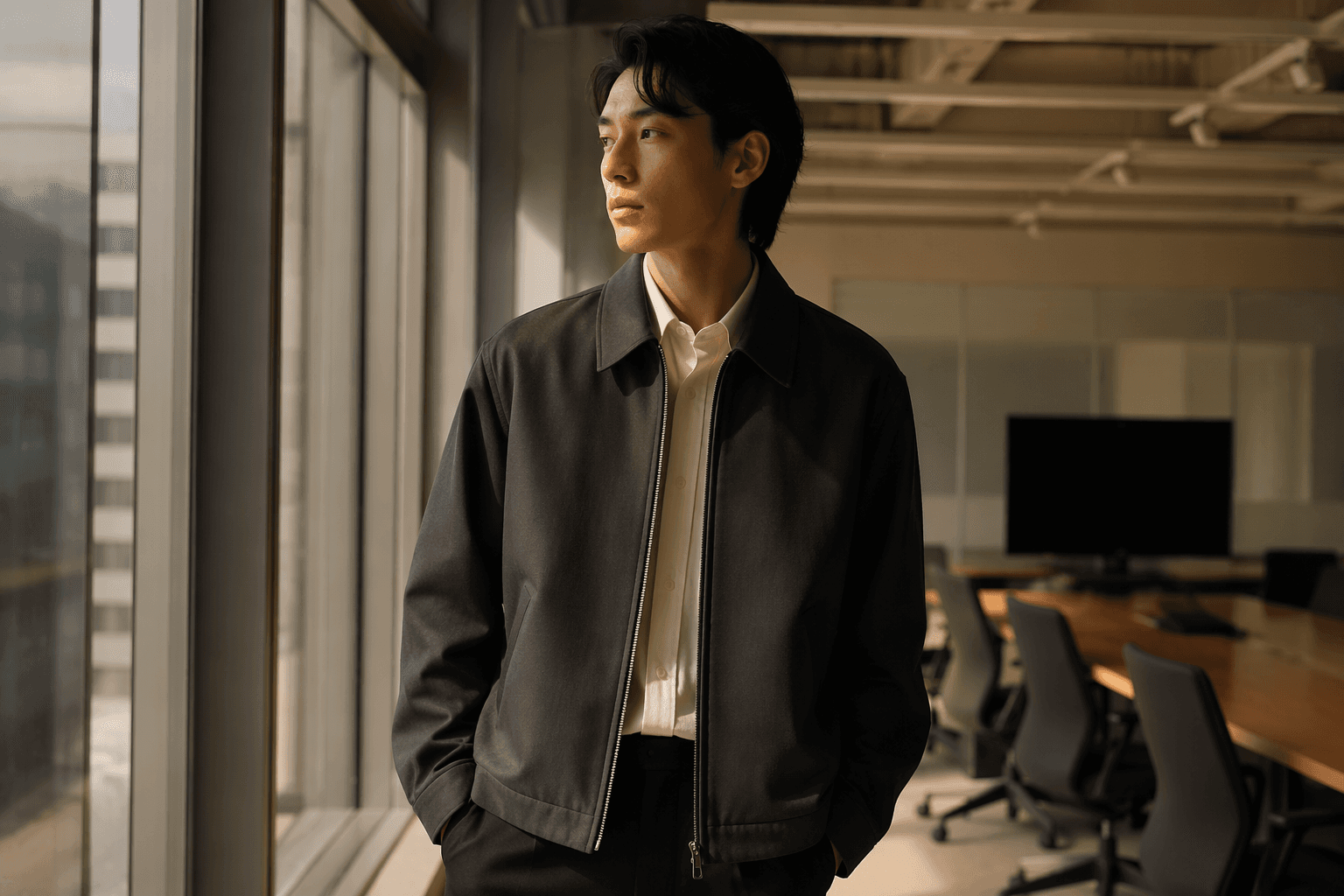
That makes it especially strong for workwear wardrobes that need to move between polished and casual without looking overstyled. Wear it over a tee in a cold office, over a knit when the weather turns, or over a collared shirt when you want a little more shape than a blazer but less formality than one. The point is not to replace every layer you own. The point is to become the one you reach for when the day refuses to stay in one season.
The Auralee context: fabric first, always
Auralee was founded in 2015 by Ryota Iwai, who was born in Kobe in 1983 and studied at Bunka Fashion College. That textile-first mindset is the brand’s entire operating system. Iwai’s approach has been described as slow fashion with a heavy emphasis on fabric development and production in Japan, and you can see that discipline in the way Auralee treats outerwear as a material problem before it becomes a silhouette problem.
The brand started with its first collection in Spring/Summer 2015, opened its flagship shop in Aoyama in 2017, and has been showing collections at Paris Fashion Week since 2019. That trajectory matters because it explains why Auralee has become such a reliable name for understated clothes with real engineering under the surface. The label does not shout. It calibrates.
Why the outerwear lineup matters
The wool-twill blouson is not an isolated hit. Auralee’s outerwear lineup regularly leans into wool, cashmere, and technical blends, which tells you this is a brand obsessed with transitional dressing, not just seasonal spectacle. That is exactly why the jacket feels credible in a workwear conversation: it belongs to a larger system of lightweight layers built for the in-between.
That broader focus also keeps the piece from feeling like a one-off fashion flex. If a brand keeps returning to wool-based jackets and blousons, it is saying something clear about what it values: movement, comfort, and fabric behavior in real life. Those are not throwaway qualities. They are the reason a piece gets worn, not just admired.
How to wear it without overthinking it
The easiest way to style the Auralee blouson is to let the shape do the work.
- Pair it with wide trousers and a plain tee for the cleanest read.
- Layer it over a fine knit when the AC is punishing.
- Wear it with denim and leather shoes to keep the wool from reading too precious.
- Cinch the internal drawstring slightly if you want more definition at the waist, or leave it relaxed for a softer, modern silhouette.
What makes this jacket appealing is that it refuses the false choice between utility and elegance. It is practical enough for commuting, polished enough for city dressing, and weirdly ideal for the months when everyone else is still pretending a cotton overshirt will save them. Auralee’s wool blouson does something better: it treats warmth, breathability, and adjustability as style features, and that is how expensive pieces become everyday pieces.
This article was produced by Prism’s automated news system from verified source data, official records, and press releases, then run through automated quality and moderation checks before publishing. The system is built and supervised by the people who set the standards it runs under. Read our full AI policy.
Did this article answer your question?