Carhartt WIP’s Brader Blazer turns workwear into tailored polish
Carhartt WIP’s Brader Blazer fuses chore-coat utility with blazer polish, signaling a market that wants workwear to read refined, not rugged alone.

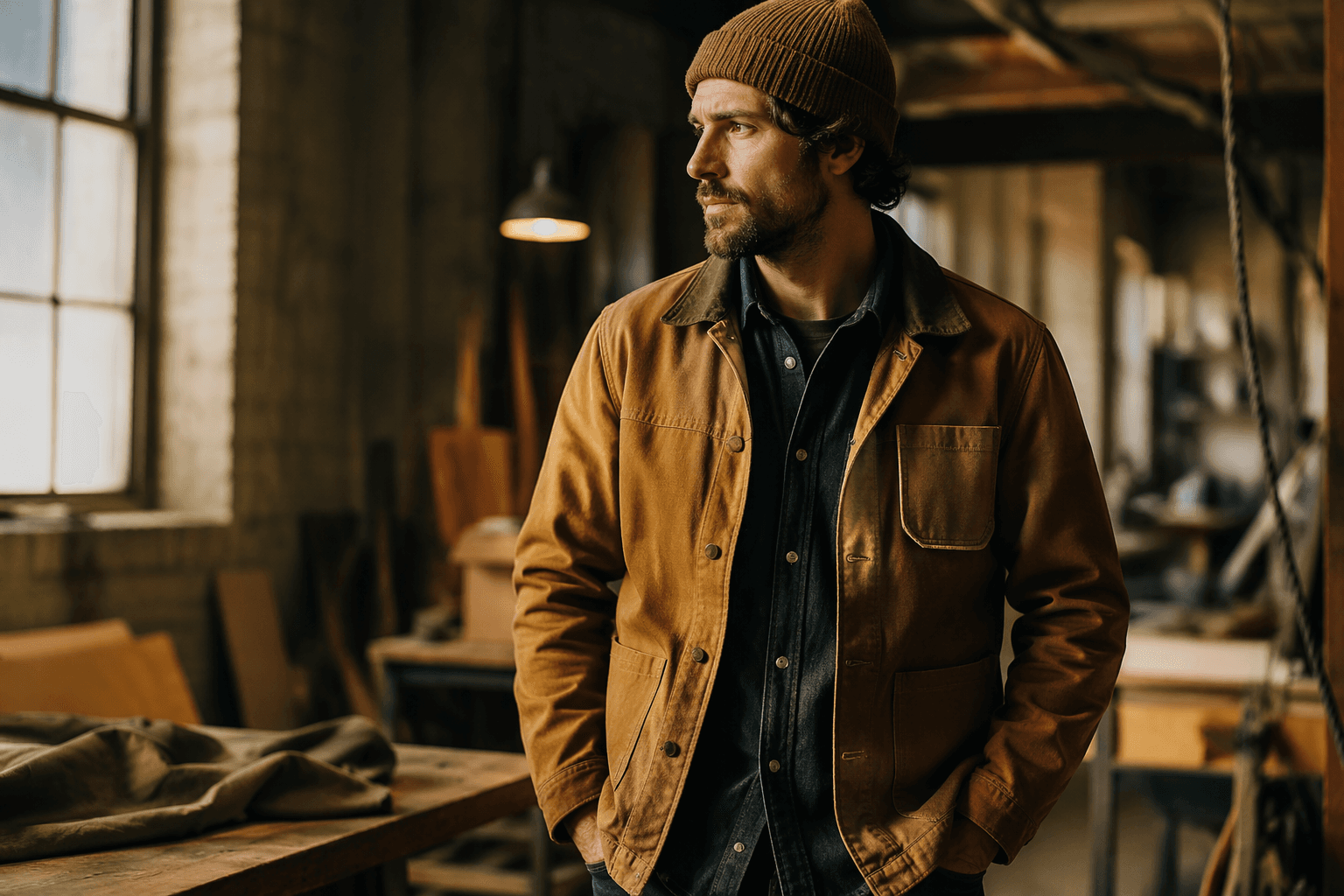
The Brader Blazer recuts a chore coat into a tailored jacket. It keeps the language of labor, then sharpens the silhouette until the result feels less like site gear and more like an everyday uniform for people who want utility to look edited.
A blazer built from workwear DNA
In Carhartt WIP’s F/W26 preview, the Brader Blazer gets at something brands keep chasing and rarely get quite right: it makes workwear look intentional without sanding off its identity. It carries structure at the shoulder and polish at the lapel, but still reads rooted in durability rather than dress codes.
The jacket is unlined and cut from midweight cotton twill, so it keeps the body and substance you want from workwear while staying lighter and less rigid than a conventional tailored blazer. Carhartt WIP has given it notched lapels, a three-button front, four front pockets, and a woven Square Label, details that keep the piece anchored in its own visual system rather than pretending to be something from Savile Row.
Why utility-shaped tailoring is having a moment
Brands are betting on utility-shaped tailoring because the market has moved toward clothes that can carry more than one register at once. A blazer like this can sit in the wardrobe where a chore coat, a casual suit jacket, and a heavy overshirt might otherwise compete for space. It answers a consumer who wants polish, but not stiffness; structure, but not preciousness.
The Brader Blazer also lands inside Carhartt WIP’s larger seasonal logic. The brand releases Preview Collections twice a year as bridges between seasons. The F/W26 preview arrives “on the cusp of summer,” framing the piece as a transition item built around texture, feel, finish, and new fabrics, washes, and prints.
Modern workwear is increasingly about silhouette and use case, translating a rugged vocabulary into city life, travel, and daily dressing. The Brader Blazer combines the authority of a jacket, the practicality of pockets, and the ease of something that does not look over-engineered.
What Carhartt preserved to keep it credible
The blazer works because Carhartt WIP did not erase the grammar of the original garment family. The four front pockets matter. The three-button closure matters. The Square Label matters. Even the choice of midweight cotton twill keeps the piece connected to the tactile heft that people expect from Carhartt-adjacent clothing.
That credibility is rooted in a long industrial lineage. Carhartt dates to 1889, when Hamilton Carhartt began building a reputation around durable workwear and outdoor apparel. The brand remains associated with staples such as the Detroit Jacket and Bib Overalls, garments whose appeal comes from function first and style second. Carhartt WIP, established in 1994 by Edwin Faeh, took that core American identity and adapted it for European and broader cultural contexts, modifying the house codes rather than discarding them.
Carhartt WIP has spent years turning rugged utility into lifestyle clothing, and the Brader Blazer pushes that language in a more refined direction through a chore-coat-to-blazer hybrid.
How the Brader Blazer wears in real life
The oversized fit is part of the appeal. The style runs large, which gives the jacket the sort of ease that keeps it from looking precious. On the body, that room will matter: it lets the blazer sit over a T-shirt, a fine knit, or a crisp shirt without fighting the layers underneath, and it softens the formality of the lapels.
Because the jacket is unlined, the drape should feel less corporate and more lived-in. That makes the Brader Blazer especially useful for people who like tailoring but do not want the dense architecture of a traditional suit coat. The cotton twill gives it enough texture to stand on its own, and the four-pocket layout makes the front feel functional rather than decorative.
- Pair it with straight or slightly relaxed trousers so the silhouette stays grounded.
- Keep the shirt or tee simple and let the lapels do the speaking.
- Use sturdy footwear, from leather derbies to work boots, to echo the jacket’s utilitarian base.
- If you want to lean dressier, keep the rest of the outfit pared back so the blazer reads as the statement.
A piece like this works best when the rest of the outfit respects its mixed signals:
At $208 in the United States, the Brader Blazer sits in a range that keeps it accessible within contemporary fashion while still signaling thoughtfulness in construction and fabric choice.
This article was produced by Prism’s automated news system from verified source data, official records, and press releases, then run through automated quality and moderation checks before publishing. The system is built and supervised by the people who set the standards it runs under. Read our full AI policy.
Did this article answer your question?