Easy summer workwear formulas for a more relaxed office dress code
The best summer office outfits now work like a capsule: lighter layers, softer tailoring, and three formulas that stay polished in heat.
Workwear has loosened its collar
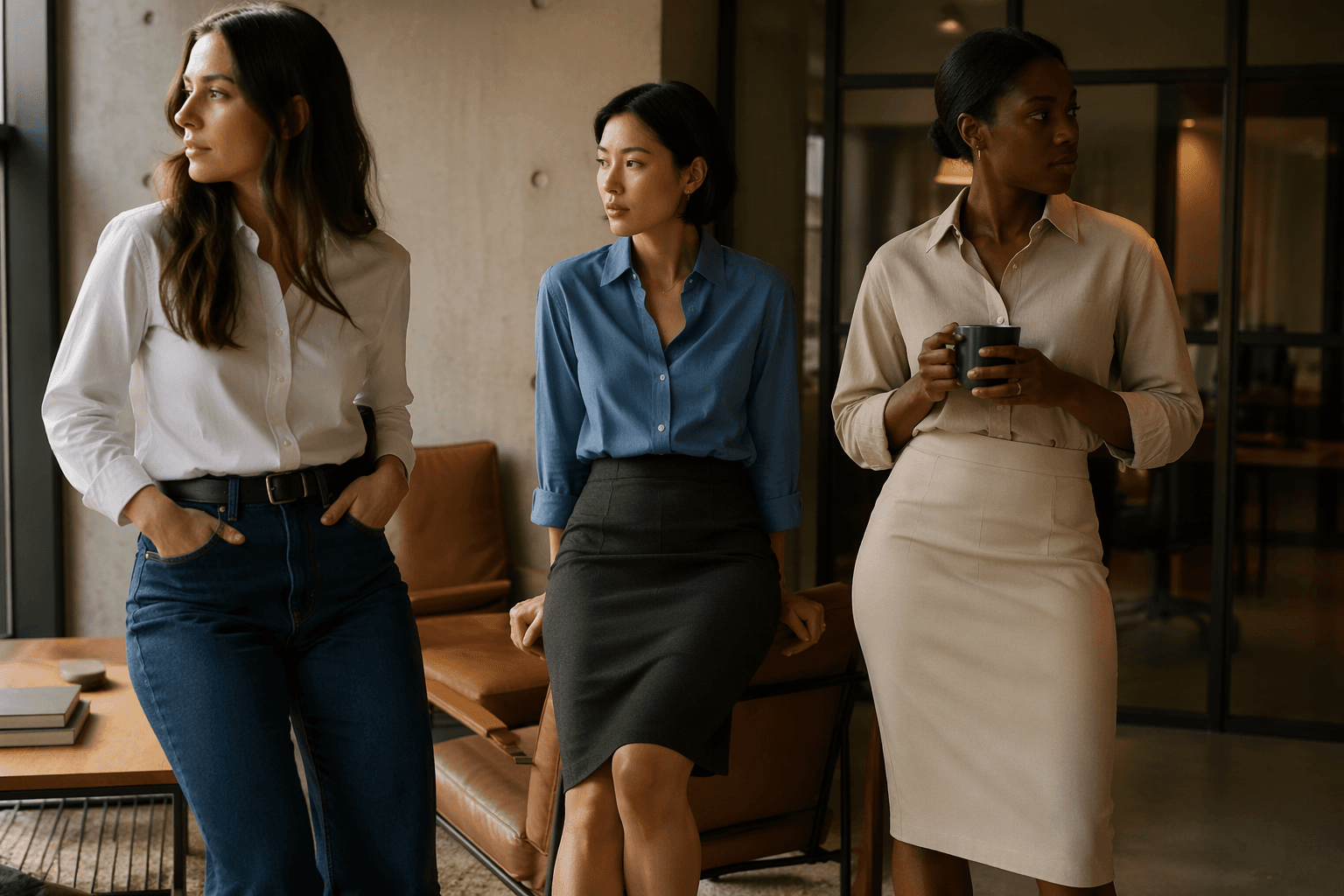
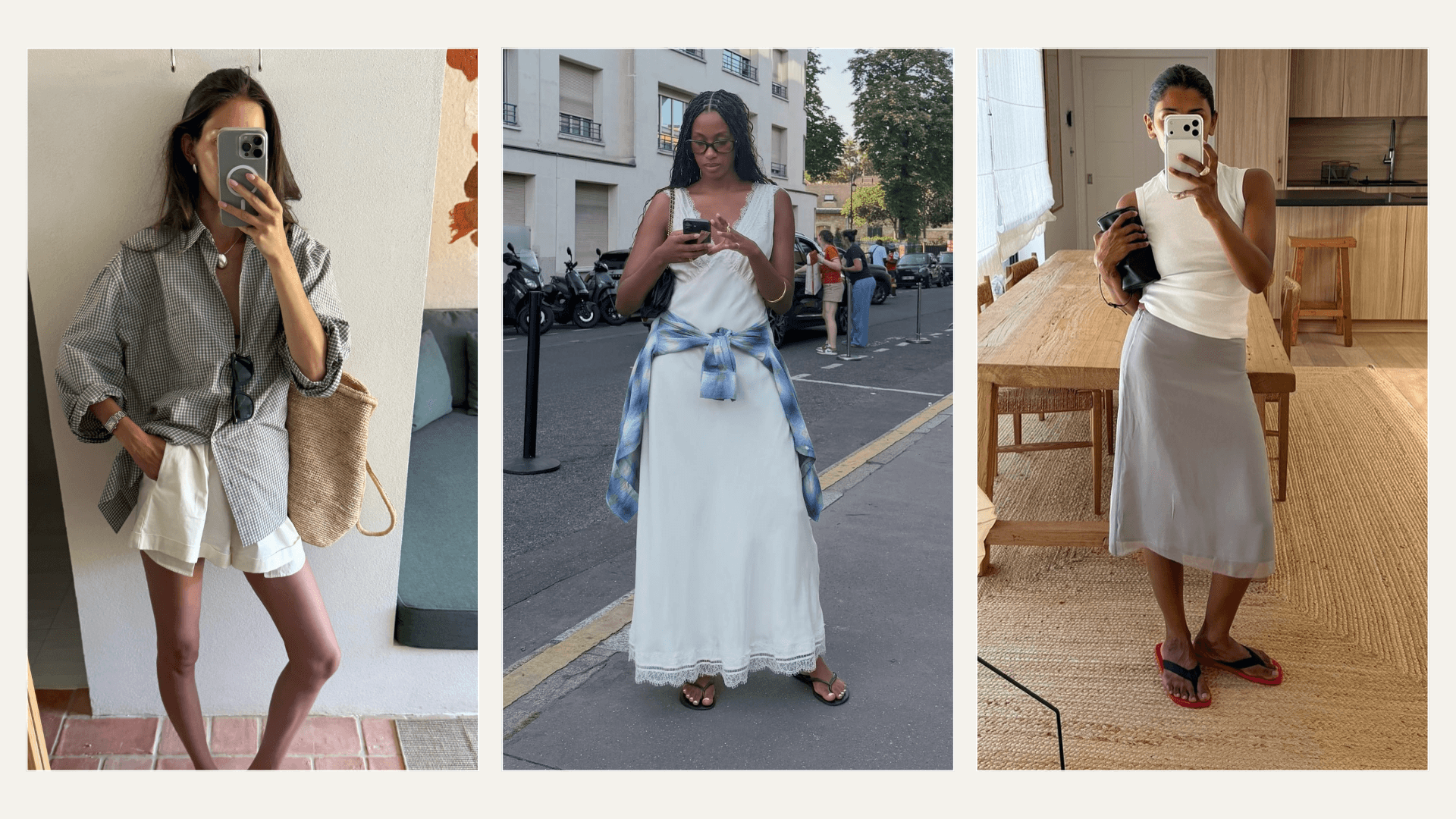
The smartest summer office wardrobe is not trying to win a formality contest with the weather. The June outfit board gets that right by building seven looks around easy combinations that can handle heat, a hybrid calendar, and the odd last-minute dinner without looking like they were assembled in a panic.

That shift is already visible in the broader workwear conversation. Who What Wear’s January office-trend roundup argues that office dressing is moving away from “ultra formal and overly polished” looks and toward comfort, versatility, and soft layering. Gallup’s most recent U.S. work-attire poll backs up the cultural change: 41% of workers now wear business casual, 31% wear street clothes, 23% wear uniforms, and only 3% wear business-professional clothing. Among women, business casual is even more dominant at 51%, with 30% in casual street clothes, 14% in uniforms, and 3% in business professional attire.

Those numbers matter because they explain why the June board lands the way it does. This is not rigid office dressing in summer clothing. It is a capsule built for real life, where your day might begin at a desk, pass through a train carriage or airport lounge, and end with dinner in the city. Gallup also found that workplace attire has become more casual since 2019, with business casual up 7 percentage points and business-professional dress down 4 points, while its September 2025 hybrid-work analysis showed that 51% of remote-capable U.S. employees were hybrid and hybrid workers spent an average of 46% of the workweek in the office. That is exactly the kind of schedule that rewards clothes with range.
The T-shirt formula is the easiest office reset
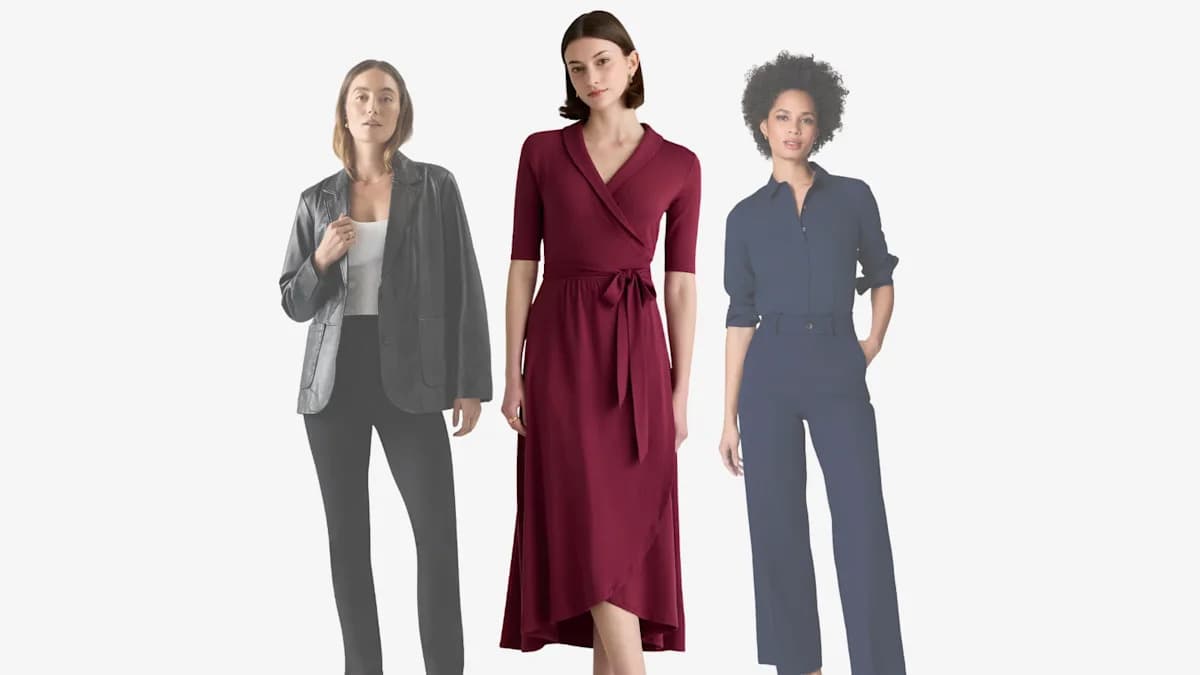
The simplest answer in the group is the T-shirt, kick-flare trousers, and ballet flats combination. It works because every piece does a different job: the T-shirt keeps the look breathable, the kick flare gives the leg a clean line without feeling severe, and ballet flats stop the outfit from tipping into stiffness. It is the kind of formula that makes sense for anyone whose office has relaxed just enough that a blazer is optional but polish still matters.
This is the most useful look for a hybrid week, especially when you are splitting time between home and office and do not want to dress as if you are bracing for a board meeting at all times. The silhouette reads intentional even when it is simple, which is the entire point of modern workwear. In a culture where business casual is now the dominant dress code, a well-cut trouser and a flat shoe can do more heavy lifting than any overworked suit.
The blazer-and-minidress pairing does the most social work
The blazer with a minidress and woven flats formula is the sharpest answer for days when you need a little authority but not the heat-trapping weight of traditional tailoring. The blazer adds structure and makes the minidress feel office-ready; the woven flats keep the look grounded and summer-appropriate. It is polished without being precious, which is a better fit for a season when many offices have relaxed their old dress codes but still expect employees to show up looking put together.
This is the outfit for the person whose calendar is full of client lunches, presentations, and after-hours plans that never quite allow a full change. The minidress gives ease, while the blazer acts as a visual signal that you are prepared. The woven flat is the important detail here, because it introduces texture and keeps the look from becoming too sleek or too serious. In a season that prizes versatility, this is the formula most likely to carry you from conference room to pavement without a second thought.
The trench and silk-trouser pairing is for climate-control days
The trench coat with silk trousers and toe-loop sandals is the most editorial of the three, but it is also the most practical in a city that can feel like two different climates before noon. The trench gives the outfit a polished outer shell, silk trousers add drape and movement, and toe-loop sandals keep the whole thing from feeling heavy. It is the right formula for offices with aggressive air conditioning, for travel days, and for anyone who wants to look composed while moving through heat, transit, and meetings in one stretch.
What makes this combination especially strong is that it understands summer workwear as a layering problem. You are not dressing for one room, one temperature, or one social setting. You are dressing for the gaps between them. That is why a fluid trouser can matter as much as a jacket, and why a sandal with a simple, architectural shape can make an outfit feel finished without adding bulk.
Why this kind of dressing feels more serious now
There is also a less obvious reason these formulas resonate. McKinsey’s 2025 Women in the Workplace report, which surveyed about 10,000 employees and collected pipeline data from 124 organizations employing roughly three million people, says only half of companies are prioritizing women’s career advancement. It also notes that some employers have scaled back remote work, formal sponsorship, and targeted career development. In that context, polished but adaptable dressing takes on extra meaning. It is not about performing old office rules; it is about looking credible in workplaces that are asking for more visibility, more presence, and often less structural support.
That is why the June board works best when you read it as a service piece, not a style fantasy. The seven looks, including the T-shirt and kick-flare trousers, the blazer and minidress, and the trench and silk trousers, all solve the same modern problem: how to look sharp when the office is relaxed, the commute is real, and the temperature is unforgiving. The answer is not more formality. It is better formulas, lighter layers, and clothes that can keep pace with how people actually work now.
This article was produced by Prism’s automated news system from verified source data, official records, and press releases, then run through automated quality and moderation checks before publishing. The system is built and supervised by the people who set the standards it runs under. Read our full AI policy.
Did this article answer your question?