Europe's Workwear Recycling Market Eyes 10% Annual Growth Through 2036
Europe's workwear recycling market was valued at $220M in 2025, heading to $640M by 2036, as EPR rules force procurement teams to rebuild PPE contracts around end-of-life.
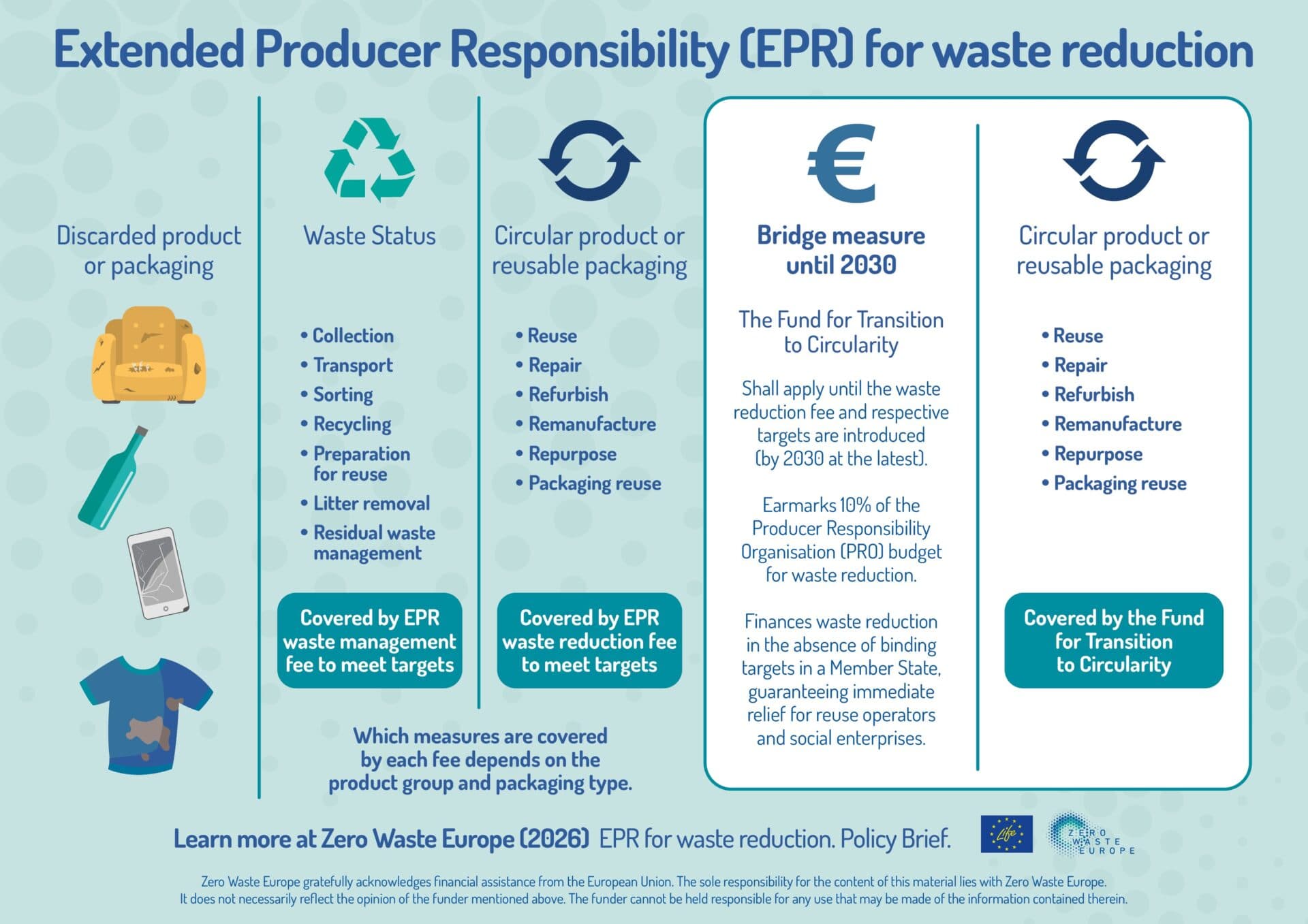
The number that matters for anyone buying flame-resistant trousers, high-vis jackets, or polycotton coveralls in bulk: Europe's workwear and PPE recycling market was worth USD 220 million in 2025 and is tracking toward USD 640 million by 2036, a compound annual growth rate of 10.3% that a Future Market Insights analysis published Tuesday attributes directly to extended producer responsibility pressure and corporate procurement targets.
That trajectory is changing what a supply contract looks like for someone like Pieter Holst, a facilities manager responsible for outfitting 500 warehouse workers at a Dutch logistics firm. Until recently, end-of-life meant a skip. Now, his procurement process requires him to answer questions his garment vendor never asked two years ago.
The most immediate is cost allocation: who pays for the return logistics? In rental-linked service models, which the FMI report identifies as one of three primary structures alongside brand take-back programmes and producer schemes, collection costs can be bundled into the lease rate. In direct-purchase arrangements, they typically are not, meaning facilities managers must either negotiate a separate line item or absorb collection internally. For 500 full sets of annual PPE, that gap is not trivial.
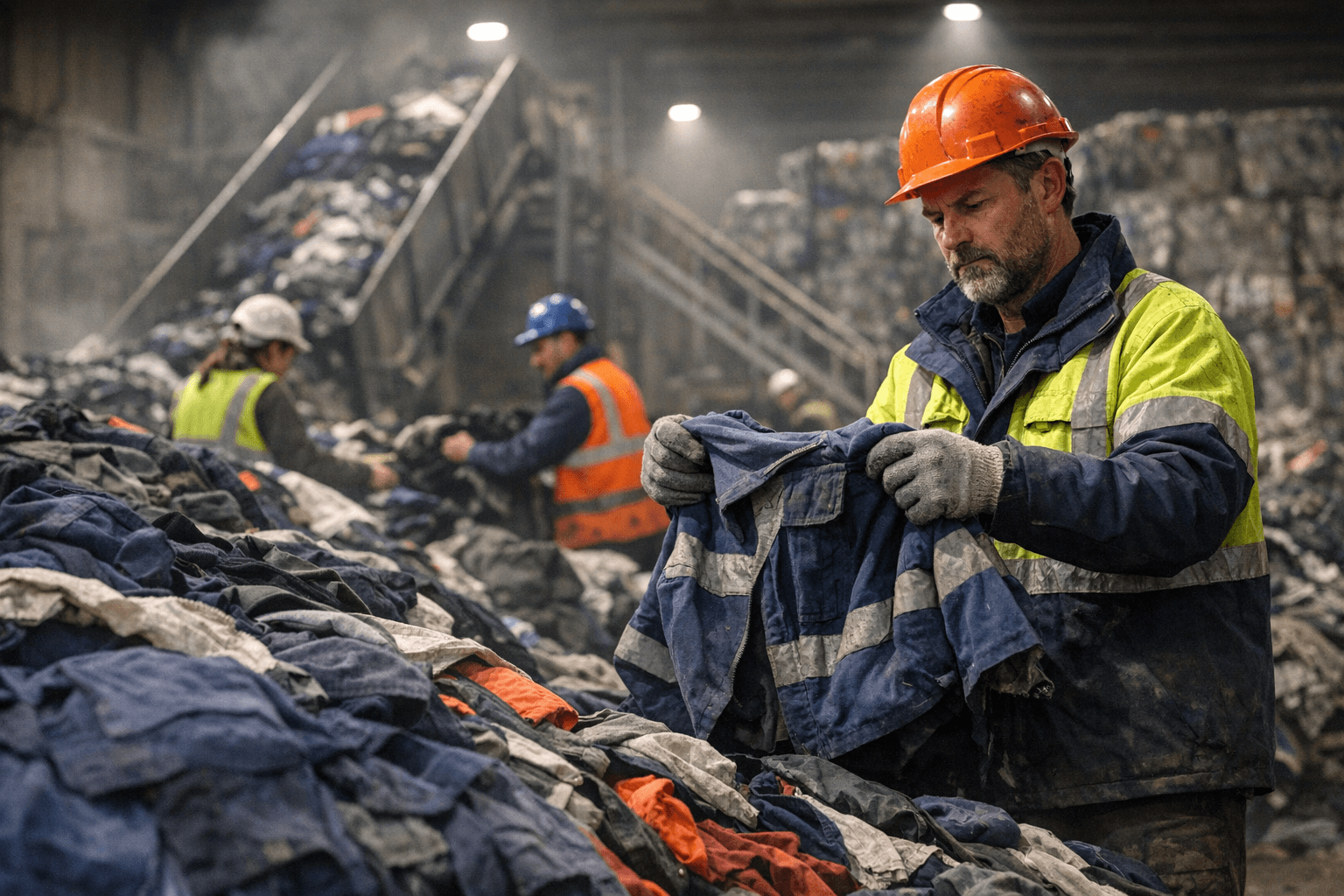
Contamination is the second pressure point. High-vis blends and aramid-based flame-resistant garments arrive at sorting hubs carrying oil, chemical residues, and in some cases the remnants of the hazardous environments they were built to withstand. Aramid fibers present a particular challenge: they cannot be incinerated because of benzene embedded in their polymer structure, which means mechanical recycling is the only viable reintroduction route. That requires carbon and alloy blade-based cutting systems, reinforced tearing drums, and twin carding systems, none of which are standard infrastructure. The contract needs to specify at what contamination threshold a garment is refused, what the facility does with refused stock, and who absorbs that cost.
Third is documentation. As EU textile EPR legislation moves toward implementation timelines of late 2026 or early 2027 across member states, procurement teams are beginning to demand traceability records: auditable proof that garments entered a certified sorting hub and were processed rather than landfilled. The FMI study identifies traceability platforms as a discrete market segment, meaning vendors who can provide chain-of-custody documentation will carry a structural advantage in competitive tender processes over those offering only collection logistics.
The material complexity underneath all of this is significant. The four categories the report examines, polycotton, polyester, aramid blends, and high-vis composite blends, each carry different recycling pathways. A polycotton coverall is a fundamentally different sorting challenge from a Class 3 high-vis jacket with reflective tape bonded to a recycled-polyester shell. Procurement teams managing multi-SKU uniform programmes need to establish whether a single vendor can process the full garment mix, or whether the contract requires separate handlers for distinct material streams.
The market's current USD 220 million valuation reflects what is still an early-adoption phase, concentrated among large enterprises with explicit sustainability mandates. As producer schemes expand and smaller companies are pulled in by compliance requirements rather than voluntary commitment, pricing pressure on collection and processing capacity will intensify before infrastructure catches up. For buyers locking in three- or five-year uniform supply contracts now, building recycling terms into the initial agreement, not adding them at renewal, is where the real cost control sits.
Know something we missed? Have a correction or additional information?
Submit a Tip