Techtextil and Texprocess 2026 Unite 1,700 Exhibitors Around Workwear Innovation
Performance Apparel Textiles at Techtextil 2026 is doubling its floor space, with 130 exhibitors bringing wash-resistant stretch and closed-loop fibres that could reshape workwear specs within a year.

The Performance Apparel Textiles segment at Techtextil 2026 is doubling its footprint in Hall 9.0, and if you buy or design uniforms, that expansion is the single most important square footage in Frankfurt this April.
When Techtextil and Texprocess open at Messe Frankfurt on April 21, more than 1,700 exhibitors from 49 countries will fill the halls: roughly 1,500 at Techtextil and around 200 at Texprocess next door in Hall 8.0. Over 120 are first-time exhibitors, which in trade-fair terms signals genuine new product categories entering the market rather than the same companies reshuffling their booth art. The four-day run closes April 24.
Hall 9.0 is your first stop. The Performance Apparel Textiles area concentrates about 130 exhibitors from 13 countries, including approximately 30 newcomers, and the anchor names read like a workwear spec sheet come to life: Concordia Textiles, Getzner, Kermel, Klopman International, and YKK Europe. When you're walking the aisle, ask each supplier specifically about wash-cycle durability data, not just tensile strength. The garments getting flagged by buyers right now are the ones that hold their spec after 50 industrial washes, and that question will separate the serious players from the marketing exercise.
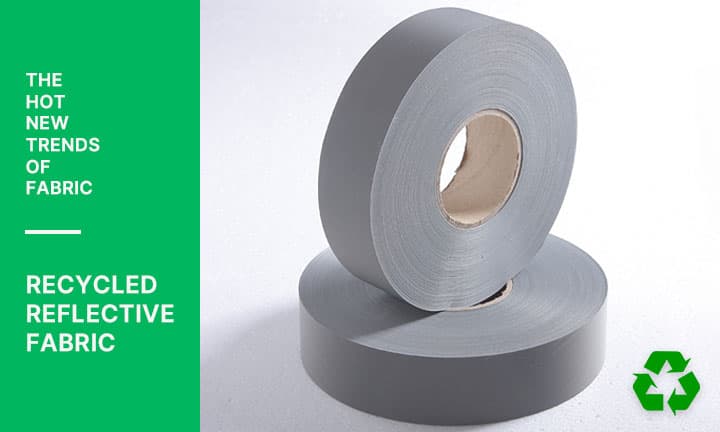
Two products already confirmed for Hall 9.0 deserve sample requests on your agenda. BASF and Fulgar are presenting loopamid, a GRS-certified polyamide produced from textile waste designed for closed material cycles, which means a uniform program could eventually source a recycled-content stretch yarn without sacrificing performance data. Alongside it, ECOlastic Workwear is showing recyclable, stretchable high-visibility fabric engineered for shape stability and wash resistance in one construction. For hi-vis uniform buyers, that combination, stretch plus wash-proof plus recyclability, has historically required three separate fabric calls. ECOlastic presenting it as a single material is the conversation worth having in detail. The Lenzing Group is also on the floor with inherently flame-retardant cellulose fibres, where the heat protection is built into the fibre itself rather than applied as a finish that degrades.
Wolfgang Quednau of the BTTA noted that "sustainability, functionality, comfort and fashion requirements increasingly converge" in the performance segment, and the exhibit list bears that out. The era of choosing between a garment that performs and one that can be responsibly disposed of appears to be ending.
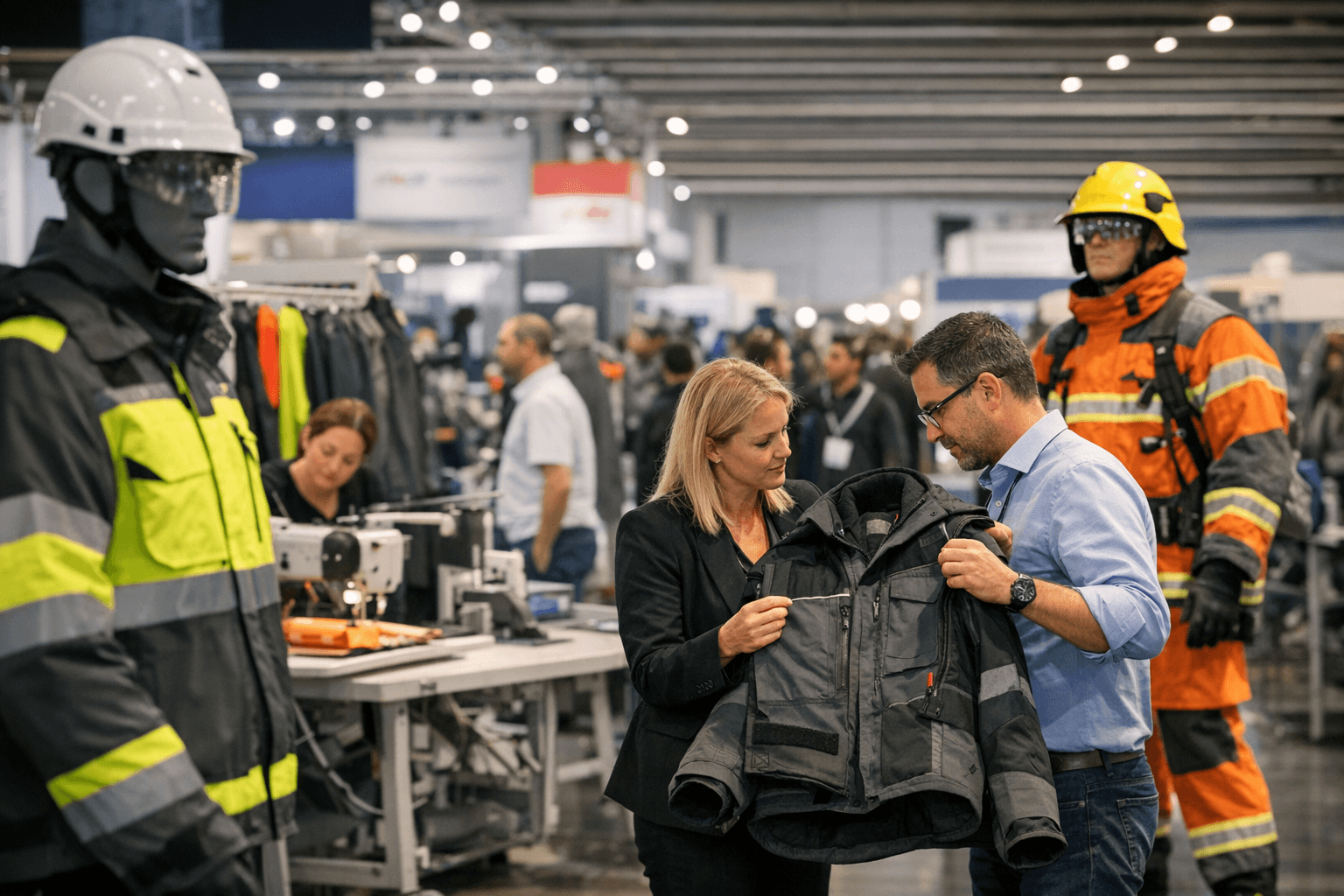
Texprocess in Hall 8.0 is where the fit-consistency argument gets settled. Adjacent to Techtextil, Texprocess serves as the platform for textile processing technologies and demonstrates how textile innovations can be efficiently transferred into production at scale, from automated processes to AI-supported manufacturing. Confirmed exhibitors include Brother International, Zünd, Cutting Edge Automation Machines from Italy, and the Swedish embroidery tech company Coloreel. The question to put to every automation booth: what is the size-run deviation on a 500-unit run versus a 5,000-unit run? Automation that genuinely tightens fit consistency across a large uniform order is the operational argument that converts workwear buyers who have been skeptical of newer production models.
Pakistan's textile sector has been tracking the Frankfurt shows closely as a direct pipeline to international buyers, given the country's position in technical garment manufacturing. Bangladesh is sending three companies to exhibit, reflecting the broader shift in sourcing conversations from commodity volume to performance specification.
The one technology most likely to reach mainstream workwear procurement within 12 to 18 months is wash-resistant stretch wovens built for industrial laundering, the category ECOlastic Workwear represents in Hall 9.0. The market pressure is already there: facility managers want garments that survive commercial wash cycles without a reorder spike, and sustainability procurement policies are pushing brands toward recyclable constructions simultaneously. That intersection of durability and circularity is where the next generation of corporate uniform specs will be written, and the suppliers showing the earliest production-ready versions of it will own the category before most brands have finished their RFP process.
Know something we missed? Have a correction or additional information?
Submit a Tip