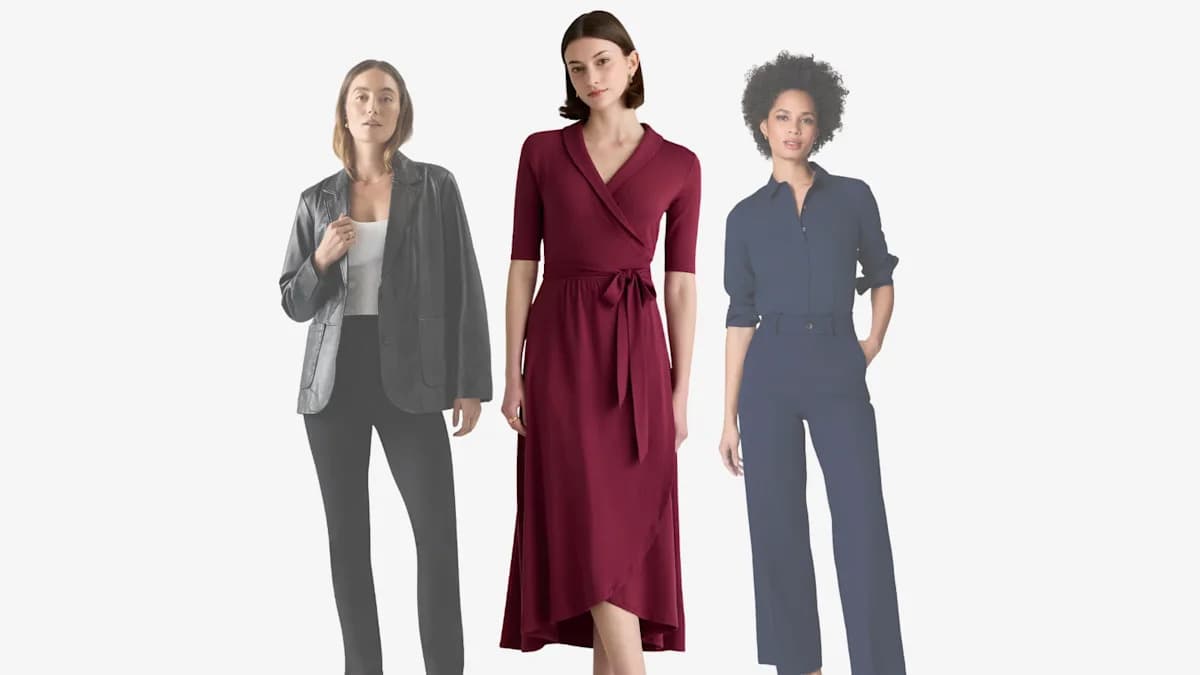
Four Spring Jacket Trends That Modernise Your Work Wardrobe Instantly
Spring's four strongest jacket trends come with real runway credibility and serious office utility. Here's the work-ready formula for each one.
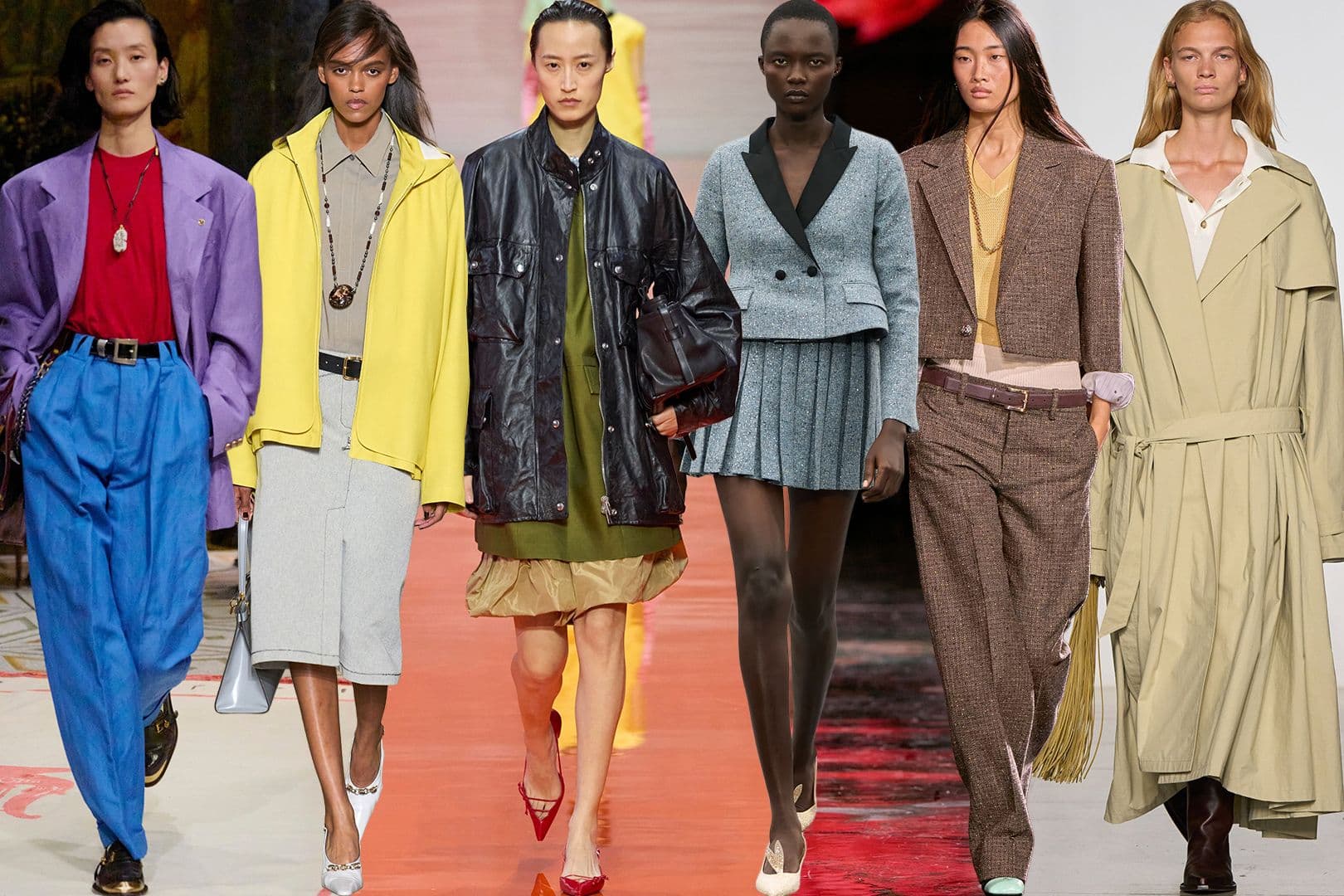
Sarah Bonello, founder of fashion consultancy The Park, summed up the current jacket moment with characteristic precision: "There's a real focus on versatility. Jackets have become the outfit, not just the finishing layer. There's a desire to feel put-together but not overworked." That sentiment runs through every SS2026 collection that mattered, from Dior's quietly shrunken tailoring to Isabel Marant's utility-forward silhouettes, and it describes exactly what is happening in wardrobes navigating hybrid work schedules. Four jacket categories have emerged from the runway with genuine office credentials. Each requires a specific version and a specific pairing to land professionally, and each has one very clear mistake that will blow the brief entirely.
The Trench Coat
Few garments carry as much institutional weight as the trench. Its origin story is genuinely contested: Aquascutum, the Mayfair label founded by clothier John Emary, traces its claim to 1853, when Emary patented a water-repellant fabric and renamed his company from the Latin "aqua" (water) and "scutum" (shield). Burberry counters with its 1902 commission to design the British Army's field uniform. What is not disputed is the garment's next chapter. Developed as an alternative to the heavy serge greatcoats worn by soldiers in WWI, the trench became a civilian wardrobe staple when veterans refused to surrender it post-demobilisation. That crossover from functional military kit to mainstream fashion is essentially the template for everything happening in workwear right now.
For SS2026, the silhouette has been decisively edited. The long, belted khaki classic is being cropped to hip length and reworked in lighter-weight fabrics. Wardrobe Oxygen, tracking Paris Haute Couture and Copenhagen Fashion Week street style in early 2025, called it "a big year for the trench coat," and that momentum has carried hard through every major collection since.
- Work-ready version: Hip-length with a proper belt (double-D ring or self-tie), clean lapels, minimal hardware. Camel, stone, and oyster white are the most office-compatible colours. Avoid metallic iterations or exaggerated collar constructions for a desk setting.
- Styling rule: Belt it. A trench worn open and unbuckled is a weekend coat; cinched at the waist with a silk blouse tucked underneath, it becomes a complete outfit with genuine authority.
- Best for: Client-facing meetings where the classic silhouette signals polish without effort; commute-heavy schedules where it handles weather without compromising the look; and travel days that run from airport security to a boardroom without a wardrobe change.
- Common mistake: Sizing up too dramatically for the oversized moment. On a trench specifically, excess volume without structure reads slouchy rather than considered, and the office proportions collapse completely.
The Cropped Blazer
Dior's decision to shrink its iconic jacket for SS2026 is not a small editorial gesture. This is the house that defined structured tailoring in the postwar period, and its SS2026 move toward a shorter, more compact silhouette is a direct signal about where proportion is heading. Alexander McQueen and Ann Demeulemeester reinforced the message with cropped military-style jackets on their own runways; Who What Wear noted that proportion play dominated the spring/summer 2026 season, with the cropped jacket sitting at the centre of that conversation. Tory Burch and Chloé both showed relaxed, layering-friendly versions that confirm this is a broad consensus rather than a single-house edit.
The texture angle matters equally. Classic suiting materials like tweed are being reworked with tactile finishes and artisanal detailing, meaning a cropped blazer can now read fashion-forward and professional in the same breath. The broader shift in office aesthetics, shaped in part by Gen Z workers who layer androgynously and pair tailoring with wide-leg trousers, has fundamentally expanded what "professional" looks like on any given floor plan.
- Work-ready version: Mid-torso length hitting at or just above the natural waist, structured shoulders, single- or double-button closure. Clean lines only: no cutaway hems or extremely shrunken proportions. Charcoal, cream, camel, and classic navy all translate without effort.
- Styling rule: The cropped blazer needs a high-waisted counterpart to work in an office context. Wide-leg trousers or a tailored midi skirt anchors the proportions and keeps the look assembled rather than accidental.
- Best for: Creative offices where the dress code carries some flexibility; client-facing presentations where looking current matters as much as looking correct; and any day that runs straight from desk to dinner without a costume change.
- Common mistake: Pairing with low-rise anything. A visible gap between blazer hem and waistband reads club, not conference room, regardless of how sharp the blazer itself is.
The Chore Jacket
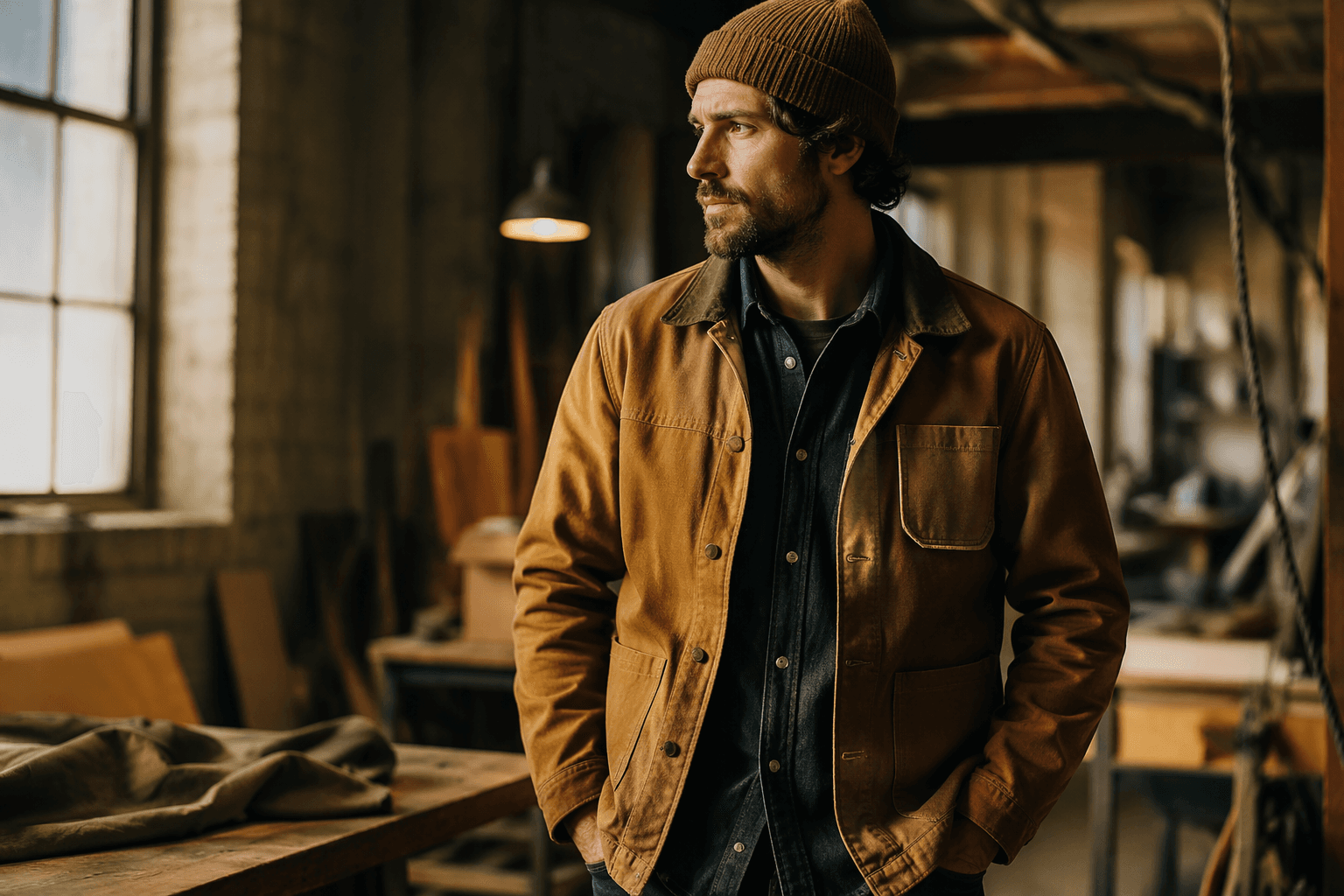
The chore jacket has the most honest origin story of the four. Originally worn by French agricultural and manual labourers, it was designed entirely around function: patch pockets for tools, a boxy cut for freedom of movement, cotton duck or drill fabric for durability. No ornamentation, no styling consideration. The 2025 resurgence, which built through a high-fashion reentry in fall 2024 and has carried into spring in lighter fabrics, takes that utilitarian skeleton and rebuilds it in refined cottons and canvas, with expanded colour palettes well beyond the traditional navy and khaki. In its elevated form, the jacket now spans from casual to semi-formal territory with genuine ease.
The critical detail for an office context: even in refined versions, the wind-shielding collar and oversized patch pockets are being retained. The workwear DNA is visible rather than erased, and that is precisely the point. The jacket's industrial heritage gives it a structural seriousness that a simple overshirt cannot replicate, and when cut in a polished fabric with clean topstitching, it occupies exactly the layering space between a blazer and a casual top that hybrid schedules demand.
- Work-ready version: Hip-length or shorter, in refined cotton, canvas, or lightweight denim. Sage, stone, washed navy, or ecru read office-appropriate. Clean topstitching and plain buttons; avoid exposed zippers or hardware with visible wear.
- Styling rule: Wear it over a fitted knit or crisp shirt and keep everything below the hem tailored. The jacket's relaxed structure only reads professionally when the foundation underneath is precise.
- Best for: Hybrid schedules where the day runs from desk to casual lunch to evening without a change; creative offices; and any day when you want the ease of a casual layer combined with the visual authority of a proper jacket.
- Common mistake: Buying the actual workwear version. Heavy canvas, rigid construction, and hardware that looks like it has seen a building site all belong there. The office-appropriate chore jacket lives entirely in refined fabric territory, and crossing back into the original registers immediately.
The Lightweight Sport Jacket
The sport jacket as a serious work layer is no longer a stylistic stretch. Who What Wear identified sporty outerwear as a standout SS2026 category, noting it is actively replacing more traditional blazers for a growing number of consumers. The technical-fabric evolution driving this is substantive: where performance materials once carried obvious athletic associations, the current generation of advanced textiles maintains clean, tailored aesthetics while delivering stretch, breathability, and packability that no structured wool blazer can offer. The 2026 workwear conversation is increasingly centred on advanced textiles that maintain polished aesthetics while eliminating the stiffness that once defined suiting fabrics entirely.
The practical case for office dressing is difficult to argue against. A lightweight sport jacket travels flat, resists wrinkling, handles temperature swings between overheated commuter carriages and aggressively air-conditioned open-plan offices, and looks deliberate rather than thrown-on when styled correctly. The discipline required is identical to any blazer substitute: the pieces underneath need to carry professional weight, and the jacket needs to recede into outerwear rather than announce itself as athletic gear.
- Work-ready version: A clean, unbranded silhouette in a muted palette: charcoal, navy, stone, or a tonal stripe. Structured enough to hold a proper shoulder line. Zip or button closure rather than pull-on. No visible mesh panels, reflective strips, or athletic-specific cut lines anywhere.
- Styling rule: Style it exactly as you would a blazer substitute. Tailored trousers or a structured midi skirt, a polished bag, clean shoes. The jacket's technical origins should register as a subtle upgrade, not as the focal point of the outfit.
- Best for: Commute-heavy days covering significant distance in variable weather; travel schedules where a packable, wrinkle-resistant layer is non-negotiable; and hybrid days that shift between temperature extremes and different professional registers.
- Common mistake: Visible branding or athletic colour-blocking. A sport jacket with a logo panel or a high-visibility stripe is gym kit regardless of the trousers it is paired with. The work-appropriate version looks like outerwear that happens to perform, not performance gear pressed into reluctant service.
All four silhouettes share the same underlying logic: structure without stiffness, polish without rigidity. The office dress code has shifted enough that none of them require justification in a professional context. What they do require is the right version and the right pairing. Get both right, and the jacket genuinely carries the outfit from the first meeting of the morning to the last.
This article was produced by Prism’s automated news system from verified source data, official records, and press releases, then run through automated quality and moderation checks before publishing. The system is built and supervised by the people who set the standards it runs under. Read our full AI policy.
Did this article answer your question?