Spring Office Wear Leans Into Utility, Collarless Blazers, and Soft Tailoring
Collarless blazers from Chloé, The Row, and Loewe signal a quieter, sharper power dressing shift. Here's what will actually land in your wardrobe this spring.

The blazer hasn't died. It has simply lost its collar, loosened its shoulders, and picked up a cargo pocket. Three runway and retail signals are converging to reshape office dressing this spring, and the shift is significant enough that buyers are already placing bets on it. If you shop with any intention over the next 90 days, these are the movements worth your money.
The Collarless Blazer: The Silhouette Buyers Are Backing
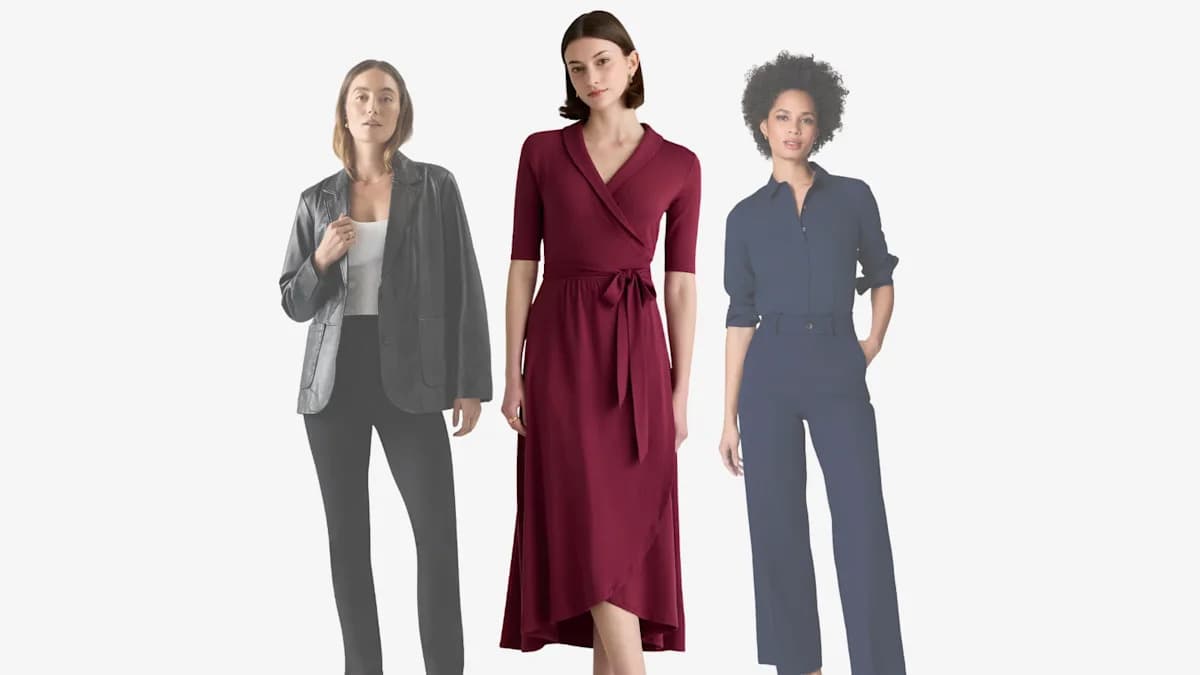
Chloé, The Row, and Loewe have all sent collarless blazers down the runway for S/S26, a styling shift that removes the lapel and replaces traditional tailoring structure with a seamless crew neckline. The effect is quietly transformative: a blazer that reads boardroom without broadcasting it. Who What Wear describes the new wave of collarless blazers as striking "the balance between office-approved and evening-ready," noting that their streamlined silhouette whispers quiet luxury.
This is not a fringe runway experiment. At Khaite and Dior, collarless outerwear took center stage, defined by a seamless crew neckline described as "prim-and-proper" with a distinctly vintage sensibility. Retail buyers are reading this as a clean replacement for the traditional notch-lapel blazer, a piece that has dominated workwear for years. The collarless version doesn't shout authority; it assumes it. Net-a-porter's senior market editor Libby Page put it plainly: "It's about anything that isn't traditional, long-line shapes, collarless details, belting or vintage inspired silhouettes." Expect to see these in ivory, sand, and soft black across both designer and contemporary price points within the next 60 days.
Utility Details: The Fabric and Construction Story
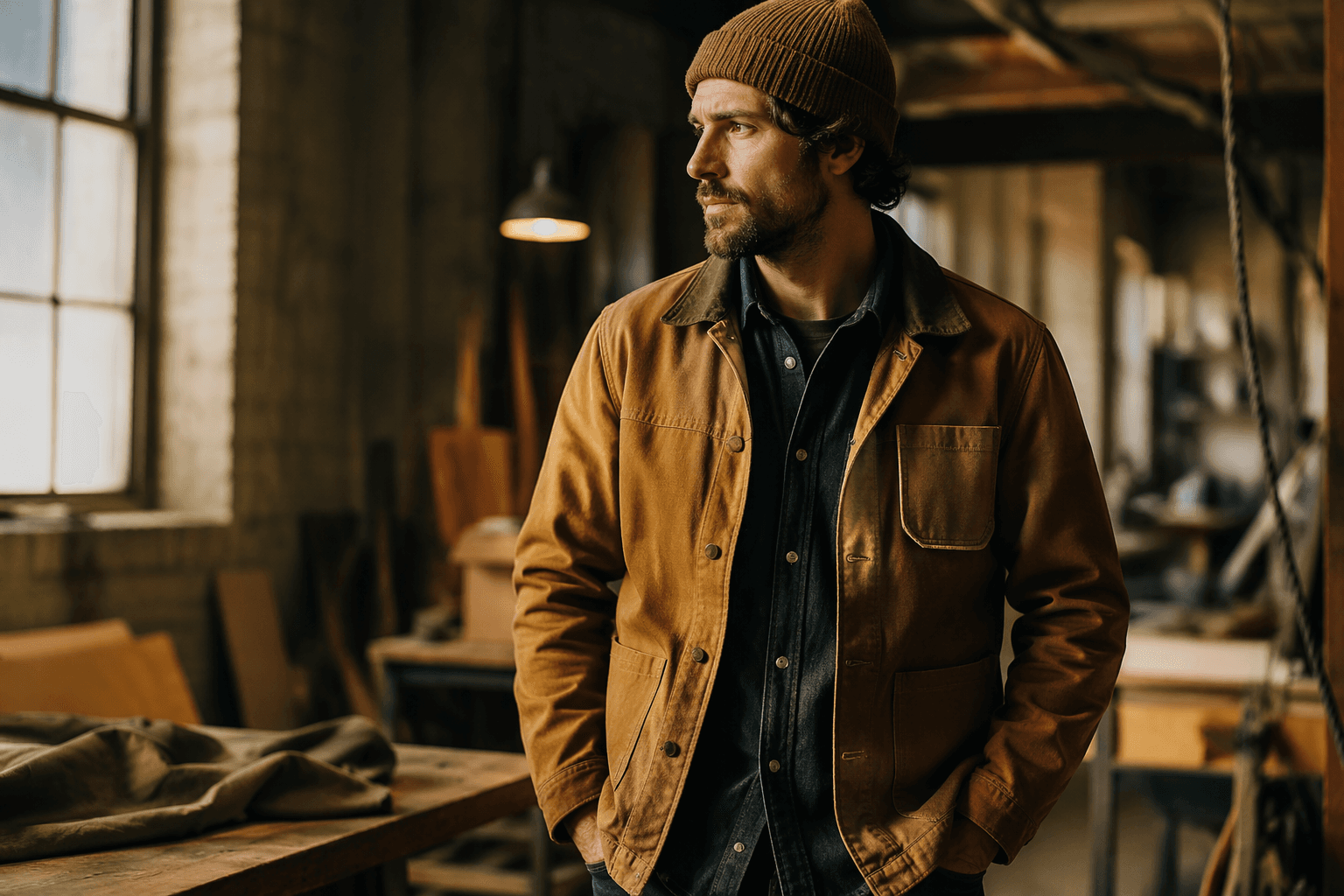
The second signal is harder to reduce to a single silhouette because it's fundamentally about construction. Safari shades are among the biggest trends of the season, but the deeper story is utility: plenty of pockets, zips, and deep green hues making classic workwear staples feel suddenly much cooler. This is not streetwear utility, the kind that reads costume. It's tailored utility: structured pieces with functional cargo pockets, adjustable waist tabs, and contrast stitching that looks intentional rather than decorative.
Retail trend sourcing notes from the SS26 cycle reference functional cargo pockets (not decorative), adjustable waist tabs, and contrast stitching as the hallmarks of the trend, with a lead time of six to eight weeks from production to floor. That positions mid-April through May as the window when utility-influenced workwear will hit shelves in earnest. Milan's SS26 runways specifically emphasized utility-inspired design that elevates functional elements into expressive fashion, and the effect on office dressing is a loosening of the old rules around what "professional" construction looks like. A belted vest worn over a crisp shirt, a cargo-pocket trouser in olive or deep khaki — these are the pieces moving through buying rooms right now.
Soft Tailoring and the Color Shift
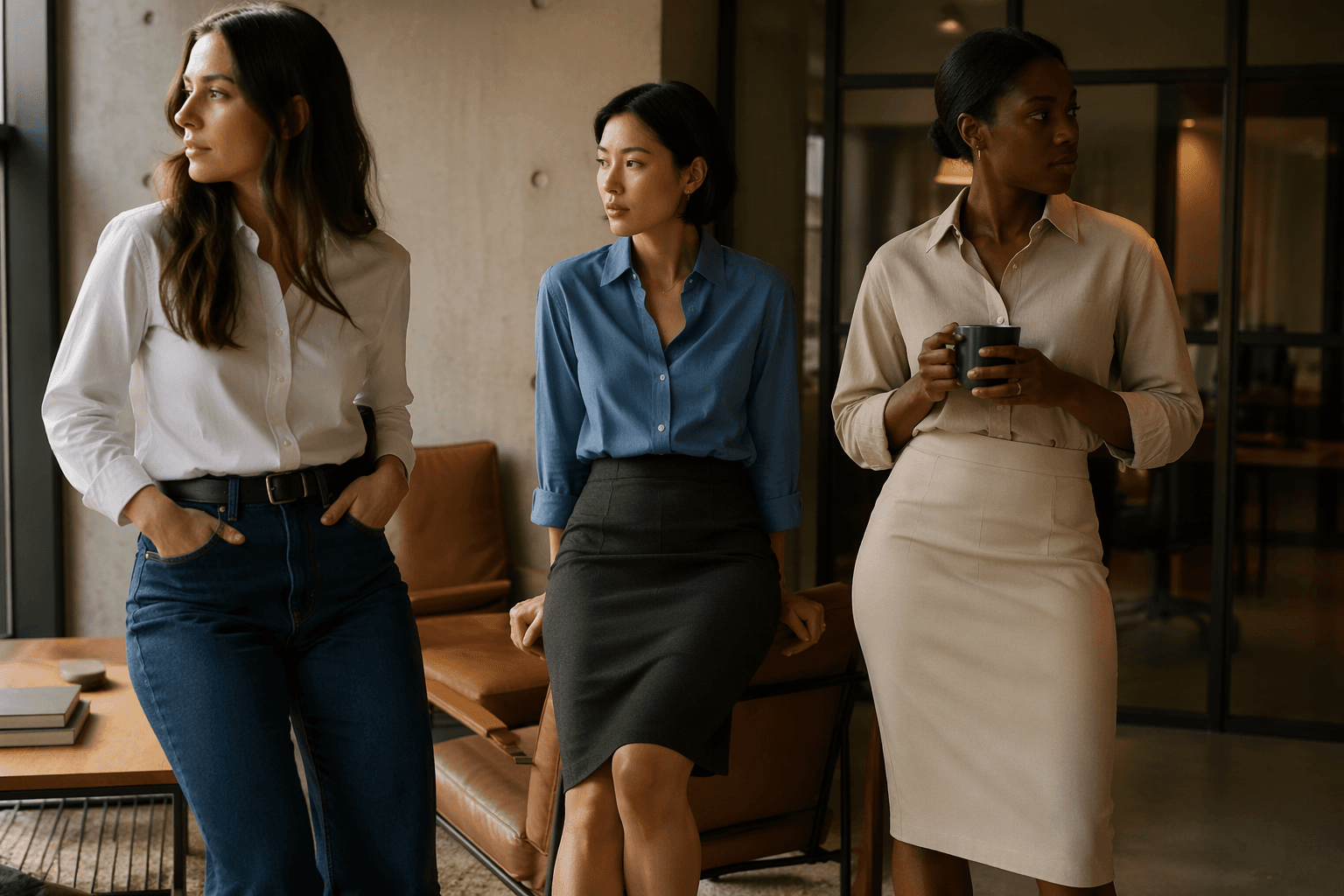
The third signal is the one most likely to change how your office wardrobe actually looks on a daily basis. Tailoring in 2026 has, as one trend analysis put it, "stopped yelling." It is more fluid, less stiff, and often styled with unexpected pieces: a slightly oversized blazer with a fitted top, crisp button-downs with flowy skirts, wide trousers with minimal tops. The structured power suit of three years ago has been replaced by something that requires more confidence to wear precisely because it doesn't rely on rigidity as armor.
Victoria Beckham and Acne Studios both showed this direction on their SS26 runways, and Refinery29's coverage noted the quote directly: "I've been really inspired by how tailoring is becoming softer and more fluid." For the office, this translates to wide-leg trousers in lightweight fabrics, blazers with softer shoulder construction, and separates that mix a structured piece with something more relaxed underneath.
On color, the story is equally concrete. Butter yellow, peach, mint, lavender, and sky blue dominate the SS26 palette, with Pinterest saves for "butter yellow outfit" up 95% year on year. But the workwear-specific color signal is more restrained: collarless blazers and cropped blazers in khaki, butter yellow, and cream are leading the spring blazer retail push, pointing to a palette that reads professional without retreating to navy or grey. Deep green, driven by the utility trend, sits alongside these as a color with genuine shelf momentum.
What Buyers Are Backing vs. What's Just Noise
Buyers at this price point are placing volume behind three clear bets: the collarless blazer, wide-leg or barrel-leg trousers in soft fabrications, and utility-influenced separates in earthy tones. What they are not backing, at least not at meaningful depth, is the more maximalist end of the S/S26 runway: sculptural bags shaped like objects, sheer-over-structured layering, and exaggerated shoulders. Those reads photograph beautifully and will generate editorial coverage, but they are not filtering into workwear buying in any significant way this season.
The real office dressing story is one of refinement over reinvention. The shapes are familiar but the details have shifted just enough to make last season's blazer feel slightly off.
Categories to Watch in the Next 90 Days
- Blazers: Collarless and cropped silhouettes are the primary retail bet. Look for clean crew-neck cuts in ivory, khaki, and soft black. Long-line and belted versions will also appear, though in smaller depth.
- Trousers: Wide-leg and barrel-leg cuts in lightweight fabrics, often with a high waist. Cargo-influenced styles in olive and khaki carry the utility signal into tailored separates.
- Shirts: Standout shirting is identified as one of the core 2026 workwear categories, with structured shirts and relaxed button-downs both serving as the key layering piece under collarless blazers. This is the moment to invest in a well-cut oxford or a subtle print shirt rather than the plain white staple.
- Shoes: Footwear is shifting away from sneakers in favor of more formal options: leather loafers, low-heeled closed-toe shoes, ballet flats, and slingbacks for warmer days. The loafer is the single strongest bet for office-appropriate spring footwear.
- Bags: Structured shapes hold, but the emphasis is on intentional investment rather than trend-chasing. The emphasis on accessories across SS26 reflects changing shopping behavior: fewer purchases, greater intention, with structured pieces creating maximum impact at accessible price points. A clean structured tote or a boxy shoulder bag in a neutral leather will carry this season's workwear direction without competing with the softer tailoring story.
Spring office dressing in 2026 is asking something specific of you: buy less, choose shapes more deliberately, and trust that a well-cut collarless blazer in butter yellow says more than a full coordinated suit ever did. The buyers have already decided; the floor sets are coming. The window to shop ahead of the crowd, and not behind it, is now.
This article was produced by Prism’s automated news system from verified source data, official records, and press releases, then run through automated quality and moderation checks before publishing. The system is built and supervised by the people who set the standards it runs under. Read our full AI policy.
Did this article answer your question?