How to make capri pants look polished again
Capri pants can look office-ready when they’re tailored, not tiny, and styled with longline layers, covered-toe shoes, and a crisp shirt.
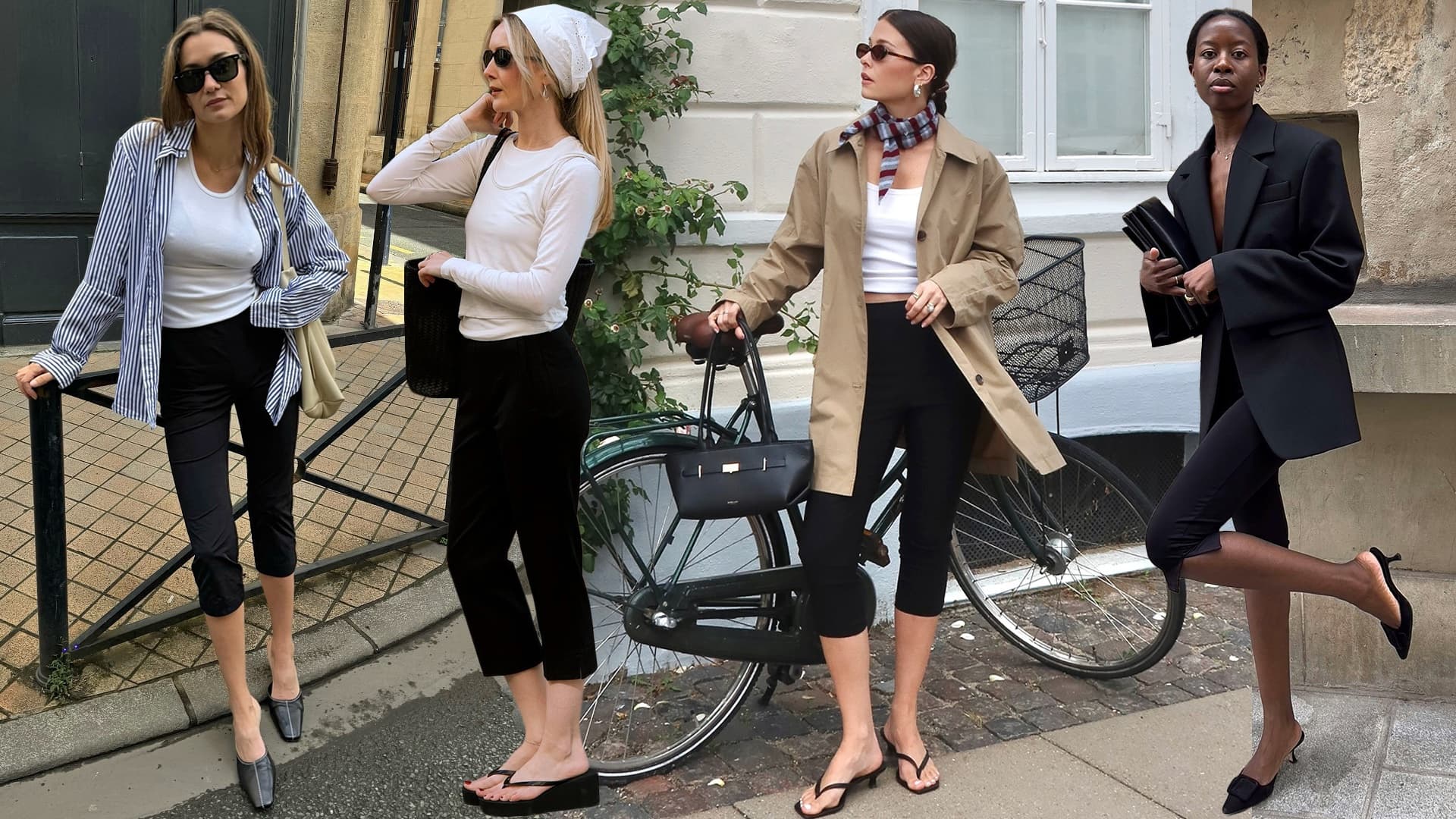
Capri pants work again when they stop trying to be cute and start acting like tailoring. The most convincing versions now are being worn in Copenhagen, Paris, and London with sleek blazers, scarves, slingbacks, and plain tees, which gives the cropped hem a sharper, more grown-up frame. For the office, the message is simple: keep the line clean, keep the accessories restrained, and let the shape feel intentional.
The office formula that works
Capri pants are close-fitting women’s pants that end above the ankle, and that exact proportion is what makes them tricky in professional settings. Left on their own, they can look unfinished; paired with a longline blazer, a crisp shirt, and covered-toe shoes, they suddenly read polished and even a little architectural. WWD reported this spring that capri pants are back “with real momentum,” and the reason is obvious on the street: the silhouette now feels more polished than purely retro.
The most office-friendly capri is tailored, not clingy. Look for matte fabrics, a neat front, and a hem that skims the calf rather than cutting the leg in half too aggressively. Dark neutrals such as black, navy, espresso, and stone are the safest bets because they borrow the seriousness of suiting, while white can work if the fabric is substantial and the rest of the outfit is crisp.
What makes them look polished instead of playful
The styling formula is doing the heavy lifting here. A longline blazer gives capris the proportion they need, a crisp shirt keeps the look sharp at the collar, and covered-toe shoes keep the eye moving in a controlled line from hip to ankle. A simple tee can work, but only when the rest of the outfit is strict enough to offset it.
- Best for work: tailored capris in suiting fabric, crepe, or dense cotton, worn with a blazer that covers the hip.
- Best shoes: loafers, pointed pumps, slim flats, and other covered-toe pairs that keep the outfit disciplined.
- Best accessories: a narrow belt, a silk scarf, or one clean piece of jewelry, not a pile of extras.
- Best tops: crisp shirting, fine knits, and simple tees only when the trousers are clearly elevated.
The street-style set is useful because it shows how little capris actually need. In Copenhagen, Paris, and London, the look is often pared back to a blazer, a scarf, and a minimal shoe, which lets the cropped shape feel deliberate rather than nostalgic. That restraint is exactly what makes the silhouette workable for smart-casual offices and more relaxed workwear dress codes.
Why this silhouette keeps coming back
Capri pants are not new, and that is part of their appeal. Audrey Hepburn, born May 4, 1929, and dead January 20, 1993, remains the shorthand reference for the shape, which has long been tied to mid-century elegance rather than novelty. The Met Costume Institute, whose collection spans seven centuries of dress and accessories, and whose fashion-plates archive runs from 1700 to 1955, is a reminder that fashion keeps revisiting cropped proportions because they balance ease and structure so well.
That historical pull gives the trend more depth than a passing social-media moment. Bella Hadid helped signal the capri-pants resurgence in 2024, and by spring 2026 the shape had moved from celebrity street style to the runway conversation. WWD’s framing that the pants have “real momentum” makes sense because the silhouette no longer reads as a one-off revival. It feels like a proportion fashion people want to keep in circulation.
The runway version is leaner and smarter
Isabel Marant’s Pre-Fall 2026 collection also featured capri pants, which is a strong sign that the silhouette is not being treated as costume. Kim Bekker called them “a subtle elegance to them,” and said the brand was examining customer data from its global fleet of stores, a detail that suggests the appeal is not just aesthetic but commercial. That combination of runway appetite and retail interest is what turns a trend into a wardrobe possibility.
Jordyn Woods gave the shape a more polished Paris-facing read when she wore capri pants with Hermès slingback pumps at Paris Fashion Week Men’s SS26. The styling matters because it shows how to keep the look from feeling off-duty: the shoe is sleek, the silhouette is narrow, and the outfit stays close to the body without becoming casual. Even with slingbacks, the overall effect is controlled because the rest of the look does not compete with the trousers.
Which versions read polished, and which ones feel risky
For work, the safest capri is the one that behaves like a cropped trouser. It should sit close to the leg, stop above the ankle without looking awkwardly short, and pair cleanly with tailoring. If you want the silhouette to look modern in an office, think polish first, trend second.
Avoid versions that lean too hard into beachwear or athleisure. Super-stretch fabrics, loud prints, overly sporty hems, or anything that depends on novelty styling to make sense can read as off-duty fast. The cropped length is already doing something distinctive, so the rest of the outfit should stay disciplined rather than shouting for attention.
How to wear them to work without overthinking it
The easiest route is to treat capri pants like a sharper summer alternative to wide-leg tailoring. Keep the top half crisp, the shoe line clean, and the accessories spare. If the trousers are tailored and the blazer is long enough to anchor them, capris can look surprisingly elegant in an office that allows a little fashion intelligence.
That is the real appeal of the current capri comeback. The shape carries history, runway backing, and street-style credibility, but it only becomes useful when it is styled with restraint. In the right fabric, with the right blazer and the right shoe, capri pants stop looking like a relic and start looking like a very modern way to dress for work.
This article was produced by Prism’s automated news system from verified source data, official records, and press releases, then run through automated quality and moderation checks before publishing. The system is built and supervised by the people who set the standards it runs under. Read our full AI policy.
Did this article answer your question?