How workwear evolved from utility to modern style staple
Workwear keeps winning because it looks honest: built to last, easy to wear, and loaded with history. The best versions balance real utility, fashion polish, and technical edge.

Workwear never really left. It just keeps shedding one identity and picking up another, because the clothes solve a problem fashion can’t fake: they’re durable, useful, and they wear in instead of wearing out. That combination matters now more than ever, when shoppers want pieces that can handle a commute, a weekend, and a full season of repeat wear without looking delicate or precious.
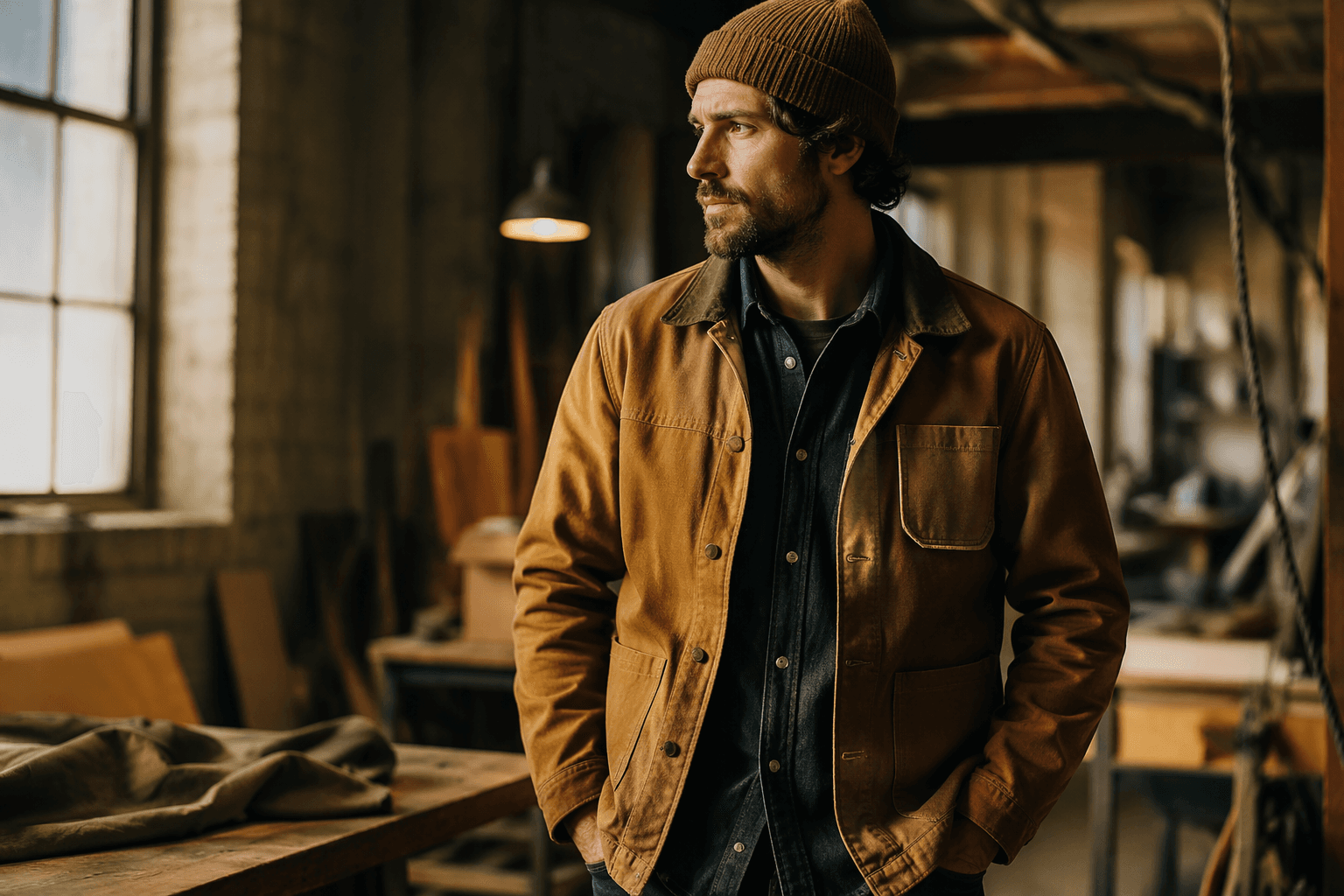
The appeal is part function, part fantasy. A stiff duck canvas jacket, a pair of riveted denim pants, a boxy chore coat, all of it carries the promise of honest labor even when the person wearing it is nowhere near a job site. That tension is exactly why workwear cycles back into style: it gives modern dressing a little weight, a little grit, and a lot of authenticity.
The heritage names still set the standard
Carhartt is the blueprint for this whole conversation. Hamilton Carhartt founded the company in 1889 in a small Detroit loft, and it started by making overalls for railroad workers with two sewing machines and a half-horsepower electric motor. That origin story still matters because the clothes were built for abuse first and image second, which is why Carhartt still reads as the real thing rather than a costume.
The archive backs that up. Carhartt dates its Chore Coat to 1917, and that kind of timeline is exactly what fashion keeps borrowing from when it wants clothes with authority. During World War II, the company made coveralls for soldiers and support personnel, jungle suits for Marines in the Pacific, and workwear for women entering factories on the home front. That spread says a lot: workwear was never just about one type of worker or one silhouette. It was about solving problems fast, with no room for decoration that didn’t earn its place.
Levi Strauss & Co. built a different but equally powerful myth. On May 20, 1873, Levi Strauss and Jacob Davis received a U.S. patent for an “Improvement in Fastening Pocket-Openings,” and the rivets they added to work pants turned into blue jeans. Levi Strauss & Co. also identifies that patent as the official birth of the Levi’s 501 jean, which gives the whole category a before-and-after moment fashion people still obsess over.
The detail that matters most is the fabric. The company says those first riveted garments were made from denim, the traditional fabric for men’s workwear. That’s why jeans never feel like just another basic. They carry a work uniform’s toughness, but they also became the most democratic style object in modern clothing, worn by everyone from miners to models.
From utility to style language
What changed is not the clothes so much as the context. Workwear used to signal labor, class, and function with almost blunt force. Now it signals taste, especially when the pieces are worn with intent rather than as a head-to-toe reenactment of a job site. The shift is subtle but important: a chore coat becomes an outfit anchor, not a uniform; denim becomes texture, not just durability.
That is why heritage workwear still feels strongest when it is allowed to stay rugged. A vintage Carhartt Detroit jacket has a different energy than a fashion brand’s copy of it. The former comes with abrasion marks, faded seams, and that thick, broken-in drape that only time can produce. The latter can look clean and current, but it usually has to work harder to convince you it belongs in the same conversation.
How fashion rewired workwear
Contemporary coverage has made the new styling logic pretty clear. Gear Patrol points out that micro-influencers now pair vintage Carhartt Detroit jackets with Comme des Garçons trousers and Nike Air Jordans. That mix is telling because it is not trying to preserve workwear in amber. It is turning it into a base layer for fashion contrast: rough canvas against sharp tailoring, utility against designer weirdness, heritage against hype.
That hybrid styling is why workwear feels so current on social feeds and in real life. A boxy jacket can ground exaggerated pants, and a pair of hard-wearing jeans can make a designer top feel less fragile. The formula works because it keeps one foot in authenticity while the other foot steps into styling that feels sharp, modern, and a little irreverent.
Where technical newcomers fit in
Then there is techwear, the newer branch that keeps getting folded into the workwear conversation. HiConsumption describes it as durable, performance-driven style that has been around for years, not a brand-new fad. That distinction matters because techwear is often treated like a trend invented by algorithm, when in reality it shares workwear’s core logic: clothes should move, protect, and perform.
The difference is in the finish. Heritage workwear gives you canvas, denim, twill, and the patina of age. Techwear leans into engineered fabrics, modular pockets, weather resistance, and a more futuristic silhouette. It is not replacing workwear so much as translating the same values into a cleaner, more technical register.
How to read the category now
If you want the real thing, start with provenance. Carhartt and Levi’s are heritage anchors because their histories are tied directly to labor, mass use, and innovation that changed how clothes were made. Their value is not just in branding, but in the fact that the clothes were built for a purpose before they became style objects.
If you want the fashion version, look for styling intelligence rather than fake roughness. The best reinterpretations borrow workwear’s shape and sturdiness, then sharpen it with proportions, color, and contrast. That is where brands like Comme des Garçons matter: not because they are workwear labels, but because they can take a utility piece and make it feel strange, modern, and alive again.
If you want technical newcomers, judge them on function first. Pockets should actually hold something, fabric should perform in weather, and the silhouette should feel considered rather than gimmicky. Techwear only works when it behaves like an answer to real life, not just a visual effect.
Workwear keeps cycling back because it satisfies three instincts at once: we want clothes that last, clothes that do something, and clothes that look like they have a history. That combination is hard to beat, and right now it is still shaping the way fashion dresses itself.
This article was produced by Prism’s automated news system from verified source data, official records, and press releases, then run through automated quality and moderation checks before publishing. The system is built and supervised by the people who set the standards it runs under. Read our full AI policy.
Did this article answer your question?