Jonathan Anderson’s first Dior Cruise show mixes Hollywood and workwear
Anderson’s Dior debut turns workwear into something sharper: graphic shirts, silver-thread denim, and a noir coat that can still pass in a boardroom.

The useful part of the fantasy
Jonathan Anderson’s first Dior Cruise show was all Hollywood theater on the surface, but the pieces worth stealing were the ones closest to real life: shirts, denim, and a gray wool coat with enough structure to make tailoring feel less stuffy. He staged Cruise 2027 at LACMA’s David Geffen Galleries under streetlamps, vintage convertibles, and a film-noir glow, then threaded the whole thing through Christian Dior’s old relationship with cinema and Los Angeles dream logic. The result was a collection titled “Wilshire Boulevard” that looked cinematic without collapsing into costume, and that is exactly why the workwear angle lands.
Shirts with gallery energy
The shirts are the cleanest bridge between Dior polish and actual weekday dressing. Anderson brought in Ed Ruscha for four graphic Dior Homme shirts, pulling from works like *We the People* and *Says I, To Myself Says I*, and the mood was less souvenir shop, more art-book restraint. Ruscha’s shadowed lettering and weathered Americana gave the shirts enough attitude to stand alone, but not so much that they start screaming over a blazer.
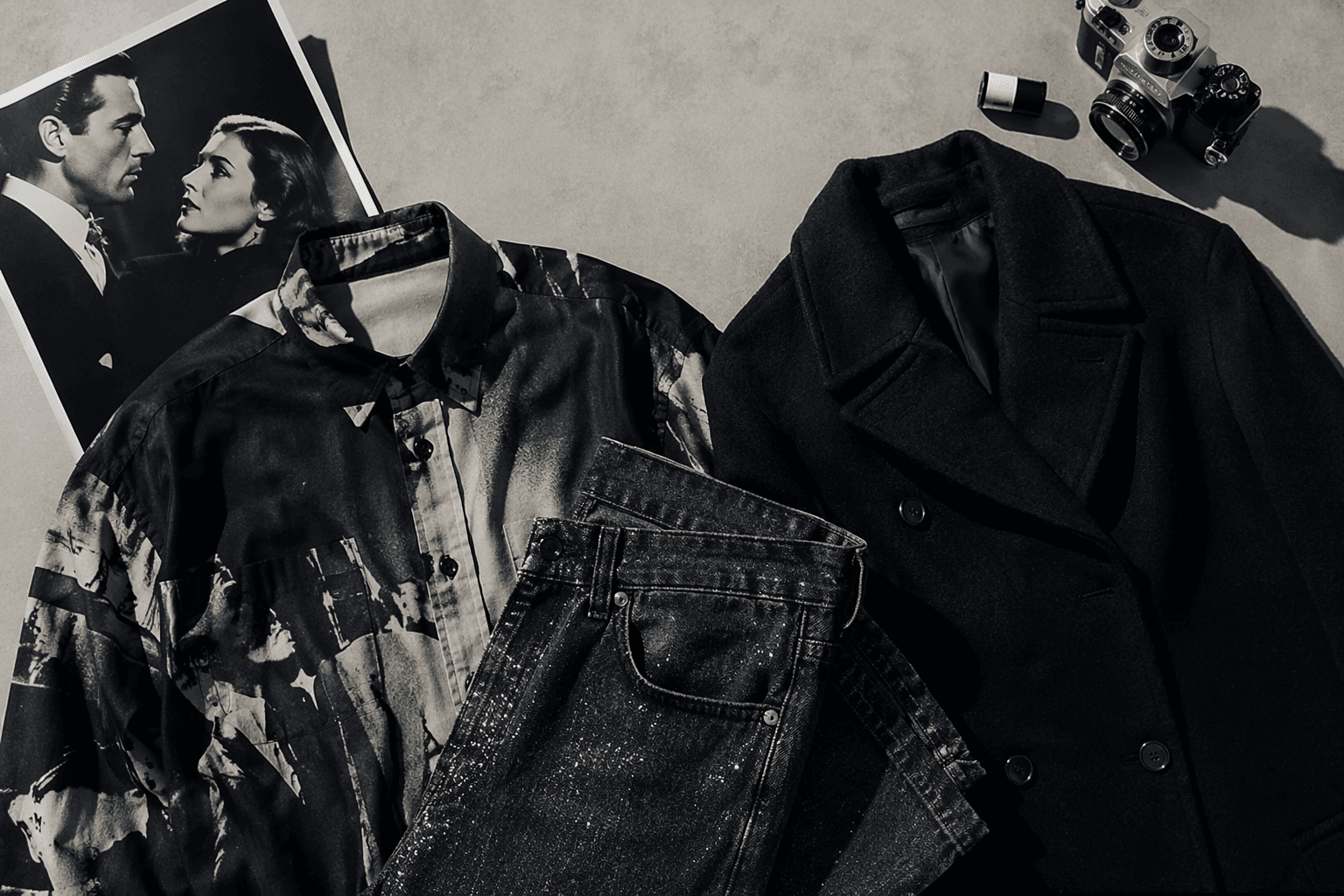
That is the move if you want this idea to work in real clothes. The shirt should be the sentence, not the footnote: think one strong graphic or one unusual surface, then keep the trousers calm. A Ruscha-style shirt under a charcoal suit, a navy work jacket, or even a crisp black trouser set would read modern and expensive, not like you got dressed in the dark after a museum opening.
Denim that can leave the studio
The denim is where Anderson gets sly. Dior’s show notes called it the moment when “the everyday becomes couture,” and the jeans lived up to that line by taking ripped denim and embroidering it with fine silver chains that imitate strands of cotton. That sounds like a lot, but on the runway the effect was controlled, almost forensic, like a work pant that had been upgraded by a jeweler instead of a hype machine.
For professional dressing, this is the useful formula: keep the wash dark, the silhouette straight or slightly loose, and the finish precise. The point is not to turn denim into eveningwear, it is to make it disciplined enough to sit under a blazer, a trench, or a cropped wool coat without looking too casual. If your office already accepts jeans, this is the version that reads intentional rather than default.

Structured wool, not costume wool
The strongest outerwear piece was the Dior gray wool flannel coat striped with the geometric shadows of Venetian blinds, a direct nod to film noir lighting. That’s a fantastic fashion trick because it gives a plain tailored coat a visual hook without adding fake distressing, extra pockets, or any of the “I bought workwear once and decided to cosplay a laborer” nonsense that ruins so many luxury utility references. This coat has discipline. It feels like it could cover a suit, sharpen a pair of trousers, and still hold its shape when you walk into a room late.
Anderson also pushed the tailoring line with the Bar jacket, stretched to mid-thigh and finished with fringe, which matters because it shows how he’s thinking about structure as movement rather than stiffness. Even when he leans into drama, the line stays clean. That is the difference between a fashion costume and a piece that can actually live in a wardrobe: the silhouette still works when the movie set lights are gone.
How to wear the Dior formula now
If you want the Anderson version of workwear polish, keep the styling disciplined and let one piece do the talking. The collection makes three rules pretty obvious:
- Start with a shirt that has character, then keep the rest of the outfit quiet.
- Treat denim like a tailored category, not a weekend fallback.
- Choose a wool coat with a long line and one graphic detail, then skip the extra styling theatrics.
That is why this Dior show feels more useful than the usual Cruise spectacle. Anderson used Hollywood as a lens, not a distraction, and the clothes that matter most are the ones that make luxury dressing look more like editing than dressing up. The real win is that these pieces don’t need a premiere to work, just a sharper eye and a better coat rack.
This article was produced by Prism’s automated news system from verified source data, official records, and press releases, then run through automated quality and moderation checks before publishing. The system is built and supervised by the people who set the standards it runs under. Read our full AI policy.
Did this article answer your question?