JW Anderson leans into utility, repaired denim and creative-world craft
JW Anderson’s SS27 bet is visibly mended denim and boxy utility jackets. The clothes read like luxury workwear, with pottery, stools and collaborators completing the world.

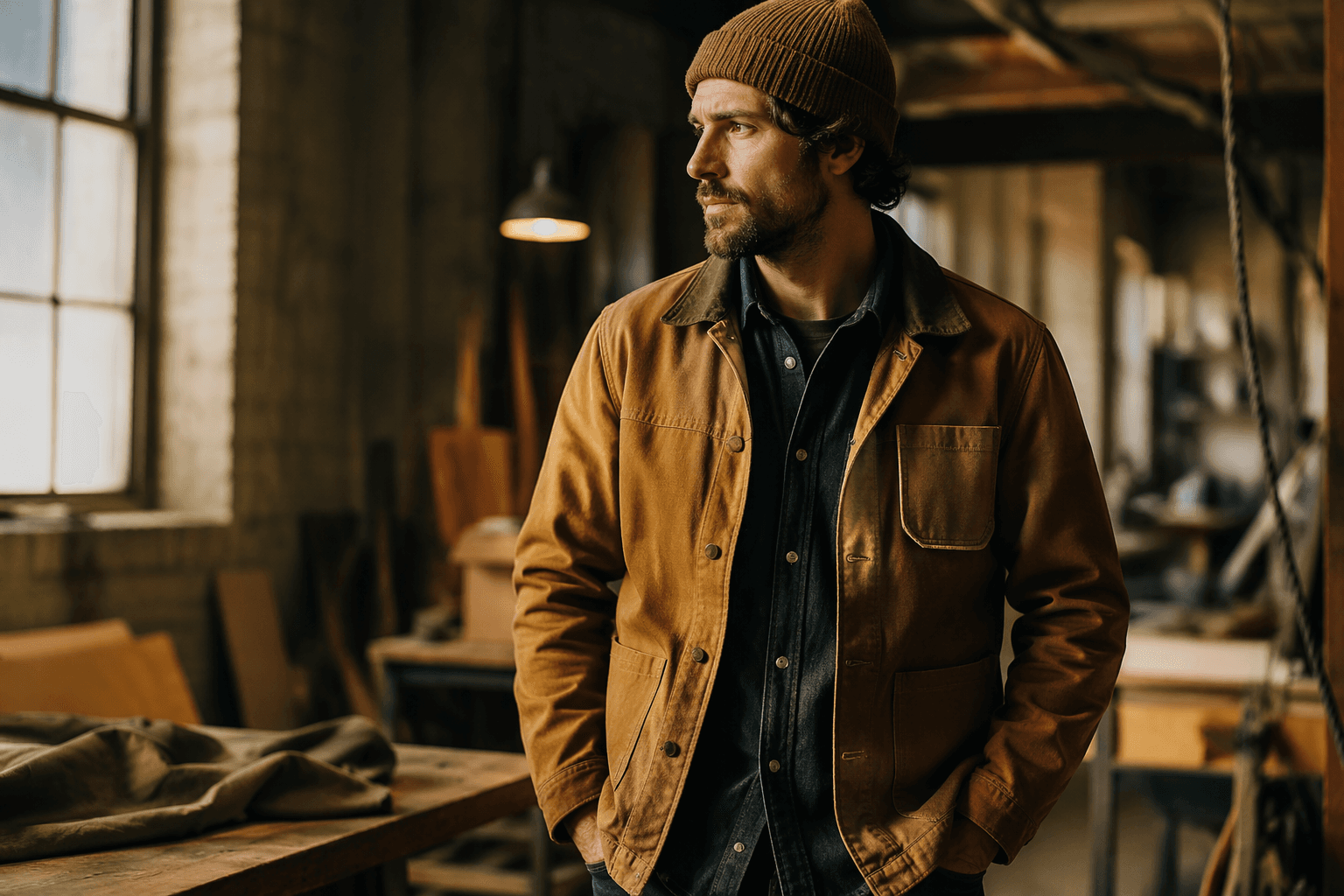
Jonathan Anderson’s sharpest move for JW Anderson’s spring-summer 2027 lookbook is not embellishment, but abrasion: denim that looks properly lived in, repaired, and worn back into beauty. Shot by Heikki Kaski, the collection is built around a luxury-workwear proposition in which heavily repaired Japanese denim, loose camisoles, and boxy utilitarian jackets carry the story with far more force than any runway flourish.
Utility, made aspirational
The key takeaway is the denim. These are not pristine jeans pretending to be rugged; they are visibly mended pieces that treat repair as a finish in itself, the sort of detail that turns scuffed history into desirability. Paired with easy, boxy jackets and camisoles cut with a loose hand, the silhouettes lean into a casual precision that feels closer to a maker’s studio than a boardroom.
That is what makes the collection distinctive. JW Anderson is not simply borrowing workwear codes, it is translating them into a luxury wardrobe language where practicality and ornament are no longer opposites. The repaired Japanese denim does the heavy lifting here, while the utilitarian jackets add structure without stiffness, giving the clothes the kind of relaxed authority that reads modern without trying too hard.
The finishes that define the look
What matters most in this collection is the finish rather than the silhouette alone. Heavily repaired denim brings patchwork, visible mending, and the sense that wear is part of the design, not damage to be hidden. Boxy jackets sharpen that attitude by recalling tool jackets and studio outerwear, the sort of garment that suggests pockets, function, and an ease with movement.
The loose camisoles soften the mix and keep the collection from tipping into pure uniform dressing. Their presence matters because they interrupt the toughness of the denim and jacket pairings with something more insouciant, giving the line a gender-fluid looseness that feels especially JW Anderson. If you are tracking the collection for practical-fashion cues, these are the pieces to notice first: the repaired denim, the easy jacket shape, and the deliberate lack of fuss.
Curation as the point of view
The lookbook is framed as a study of “process, people and craft,” and that framing is not decorative. Jonathan Anderson’s real creative tool here is curation, the careful assembly of clothing, objects, and personalities into one unified world. That approach is visible in the cast as much as in the clothes, with Connor Swindells, ceramicist Akiko Hirai, Dree Hemingway, art collector Ivor Braka, comedian Leo Reich, and writer Dr. James Fox all appearing as part of the collection’s orbit.
The effect is less fashion campaign than creative salon. Rather than staging anonymous models in a neutral setting, JW Anderson presents a circle of collaborators and friends whose presence makes the utility pieces feel embedded in a wider cultural life. That matters because workwear is being sold here not as nostalgia for labor, but as a code for taste, intellect, and proximity to making.
Why the casting changes the read
This cast gives the collection an editorial texture that makes the clothes feel more lived-in and less aspirational in the generic sense. Akiko Hirai brings actual ceramic practice into the frame, while Dr. James Fox, Ivor Braka, and Leo Reich widen the register beyond fashion into art, writing, and comedy. In other words, the clothes are not isolated products; they are part of a scene where making and collecting sit side by side.
That is also why the boxy jackets and repaired denim feel convincing. They read as garments someone in that world would actually reach for, not because they are bland, but because they carry the right mix of use and refinement. JW Anderson understands that in 2026, the new luxury workwear proposition is not about looking corporate. It is about looking as if your clothes belong to a life of process.
Objects, not just outfits
The collection’s lifestyle extension is just as telling as the clothes. Alongside the apparel, JW Anderson folds in Wedgwood pottery mugs, handcrafted stools, and a quirky Squirrel Clutch, pushing the brand further into the territory of collectible object-making. That breadth matters because it shows how the label now treats wardrobe and interior, outfit and artifact, as parts of the same curated universe.
This is where the brand’s history sharpens the read. Jonathan Anderson founded JW Anderson in London in 2008, and the label first drew attention through accessories before it expanded into menswear and womenswear and showed on-schedule at London Fashion Week in 2008. That origin story explains why the brand still thinks in terms of objects as much as garments: a mug, a stool, or a clutch can carry the same design language as a jacket or pair of jeans.

The official site’s current expansion into homeware and lifestyle products only reinforces that direction. JW Anderson is clearly building a world in which utility is not limited to clothing racks, and that gives the SS27 lookbook a coherence that many fashion collections lack. The denim may be the headline, but the mugs and stools tell you how the brand wants to be lived with.
The larger fashion signal
What JW Anderson gets right in spring-summer 2027 is timing. The repaired denim speaks to a market that has grown more receptive to visible wear, while the boxy utilitarian jacket feels like a cleaner, sharper answer to the overdesigned utility trend that has circulated for several seasons. Instead of leaning on cargo excess or rugged theatrics, Anderson opts for refinement through repair, which makes the clothes feel smarter and more enduring.
That is the collection’s real strength: it treats workwear not as costume, but as a vocabulary for contemporary luxury. In JW Anderson’s hands, denim patches, studio jackets, and handmade objects do not compete with one another. They build the same idea from different angles, and that idea is one of craft, curation, and clothes that look better the more life they have already absorbed.
This article was produced by Prism’s automated news system from verified source data, official records, and press releases, then run through automated quality and moderation checks before publishing. The system is built and supervised by the people who set the standards it runs under. Read our full AI policy.
Did this article answer your question?