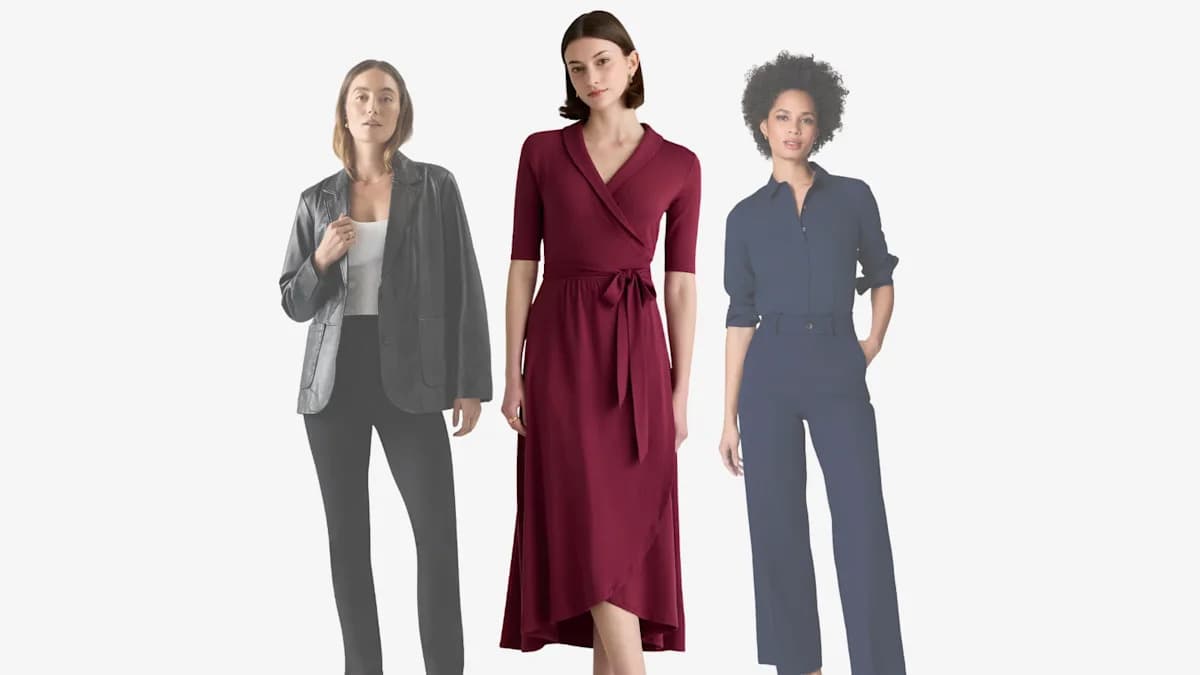
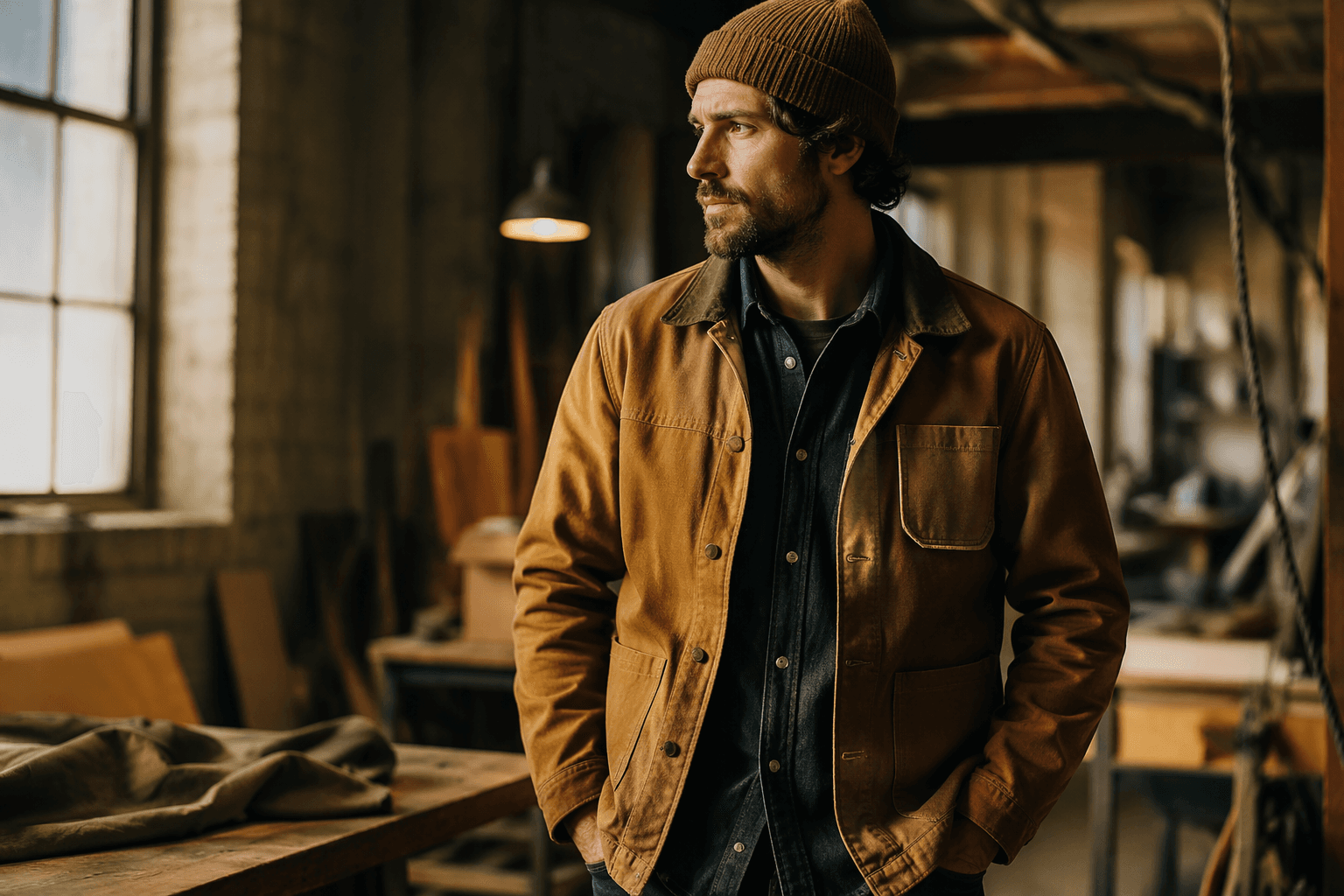
Lea Boberg expands tailor-made suits into relaxed ready-to-wear lines
Issue 01 turns Lea Boberg’s tailoring into a cleaner work uniform, with roomy blazers, deadstock wool ties and fewer barriers to buying.

The new Lea Boberg piece is not a blazer that asks to be admired from a distance. It is built to move, sit, commute and layer, which is exactly why the brand’s first ready-to-wear push matters. Issue 01 takes the label’s sharp bespoke language and loosens it into something you can actually wear every day without losing the attitude.
From atelier sharpness to day-to-day ease
Lea Boberg has built her name on a very specific tension: Savile Row discipline filtered through softer proportions and a more modern body. The blazers are roomy enough to move in, the lapels arrive frayed at the edges, and the whole point is that the garment changes as it wears. That is a big shift in tone from old-school tailoring, which often treats structure like a commandment.
What makes Boberg’s approach interesting is that it does not flatten tailoring into casualwear. Instead, it keeps the precision and strips out the stiffness. The result reads like a contemporary work uniform for people whose days are not neat, linear or desk-bound, but still want the authority of a suit without feeling armored by it.
Issue 01 is the bridge between made-to-measure and real life
Normally, Boberg’s tailoring is custom-built. Issue 01 is the first proper retail step, and it feels like a considered answer to the problem of scale: how do you keep an experimental, hand-shaped brand from staying trapped in fittings and private appointments? The answer here is a quiet edition of stable styles made from leftover materials from previous seasons, produced in only a handful of sizes and sold exclusively online.
That matters because it changes the entry point. If you cannot get to the London atelier for a made-to-measure fitting, the ready-to-wear line gives you voluminous relaxed-fitting blazers and shirts that still carry the brand’s line language. There is even a folded-over double collar, which sounds like a small detail until you see how much it shifts the silhouette. It sharpens the neckline and adds a little tension to pieces that otherwise lean soft.
The capsule also includes the signature RPL blazer, a single-breasted RNL blazer, slouchy matching pants, wide shirts and ties made from deadstock wool scraps. That mix is telling. Boberg is not just scaling up one hero jacket and calling it a day. She is building a small wardrobe around the same logic, which makes the offering feel more like a system than a one-off drop.
The raw edge is not a gimmick, it is the origin story
The R.P.L. blazer, shorthand for Raw Peaked Lapel, is where the brand’s identity gets very clear. Boberg says it came out of her Royal College of Art graduate collection, where a very thick furniture fabric made conventional finishing impossible. Instead of hiding the problem, she leaned into it and left the lapel raw. That constraint became a signature.

The jacket’s hidden front buttons and seamless construction are part of the same idea. Nothing about it looks accidental, even though the raw edge began as a technical limitation. That is the best kind of design move: a solution so good it becomes a code. In Boberg’s hands, the unfinished edge does not read as rough or careless. It reads as controlled and a little severe, with just enough irregularity to keep the jacket from feeling corporate.
There is also a real material logic running through the collection. Deadstock wool scraps are not just a sustainability talking point here, they extend the brand’s exacting, small-scale system. When the clothes are made from leftover materials from previous seasons, they keep the sense that every piece has been carefully placed rather than mass-produced into blandness.
Why the brand has stayed small on purpose
Boberg is a Danish designer based in London, and her timeline says a lot about the brand’s pace. She launched Lea Boberg in 2020, after beginning the project during the March 2020 lockdown, and her first collection debuted in Autumn/Winter 2022. Before that, she studied womenswear in Copenhagen, moved to London for an MA in Fashion Womenswear at the Royal College of Art, and worked as a ready-to-wear designer at Casely-Hayford.
That background shows up in the restraint. Boberg has said she wants small collections and small production so she can stay in control, and she also cut all of her own patterns after teaching herself advanced pattern cutting. That level of authorship explains why the clothes feel so resolved. They are not trying to be all things at once. They are trying to keep a very tight point of view intact.
The brand’s distribution has reflected that discipline too. At one point, the UK was still focused on made-to-order, with retail distribution limited to Japan. Highsnobiety notes that the only stockists outside Asia are New York’s Ven.Space and Neighbour, which tells you this is still a tightly managed label rather than a brand chasing wholesale at full tilt. That scarcity is not just a marketing move. It is part of the operating system.
Why this tailoring feels relevant now
Boberg’s clothes are grounded in ordinary behavior, not fantasy dressing. She has talked about people-watching on the Tube and the rhythms of everyday life as inspiration, and that comes through in the shapes. The garments are designed around the void between body and cloth, the space that lets you move through a busy day without fighting your jacket every time you reach for a strap, a keyboard or a train pole.
That is why Issue 01 lands as more than a retail experiment. It makes the brand’s directional tailoring easier to live in without sanding down the personality. The blazers still have edge, the trousers still slouch, the shirts still carry that relaxed imbalance, but the whole line is now close enough to real professional dressing that it can function as a uniform instead of a mood board. Boberg is not softening the brand so much as making its intelligence usable, and that is where modern tailoring starts to look less precious and a lot more necessary.
This article was produced by Prism’s automated news system from verified source data, official records, and press releases, then run through automated quality and moderation checks before publishing. The system is built and supervised by the people who set the standards it runs under. Read our full AI policy.
Did this article answer your question?