Levi’s denim care guide: wash less, repair more
Wash less, patch sooner, and let denim earn its wear. Levi’s care rules keep work jeans structured, clean-fading, and built to stay in rotation.
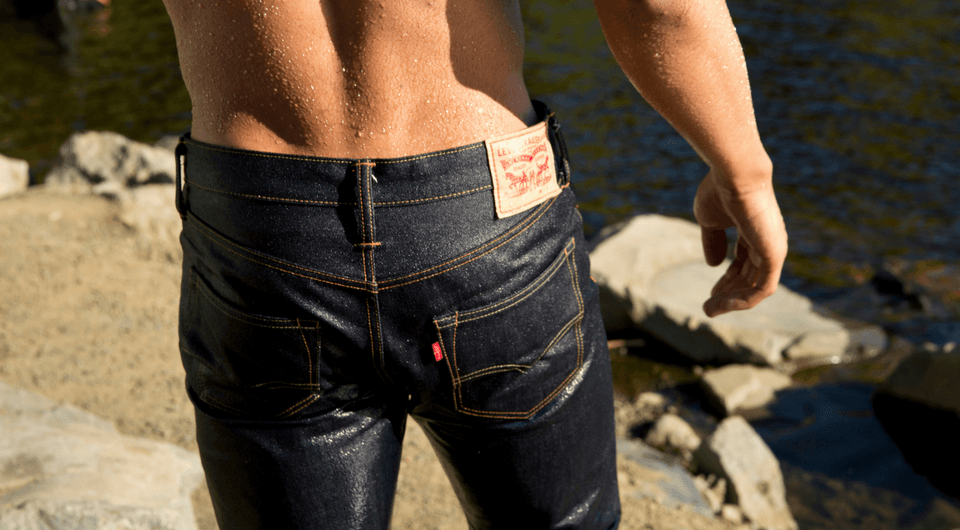
The quickest way to flatten good work denim is to baby it the wrong way. Levi’s own rule is blunt: wash jeans about every 10 wears, spot-clean the messes, then dry them cold and slow so the fabric keeps its shape, its bite, and the kind of fade map people actually want.
Why work denim rewards restraint
Jeans were never meant to live in a wash cycle on repeat. Levi’s says frequent washing stretches and wears denim, which is exactly how a pair loses that sharp, truck-ready silhouette and starts looking tired before its time. If the goal is clean lines, honest wear, and a leg that still hangs right after months of abuse, overwashing is the enemy.
That matters even more for raw denim and heavy work jeans, where the appeal lives in the fabric’s memory. Every crease at the knee, every crease behind the thigh, every rubbed edge at the pocket tells the story of how the pants were used. Preserve the structure and you preserve the whole point.
The washing routine that actually makes sense
Levi’s current help-center guidance is the simplest blueprint in the room: wash denim after about every 10 wears, not after every minor scuff. Before a pair ever sees the machine, spot-clean the trouble spots with a damp cloth or soft brush and mild soap. That handles grime without flooding the whole garment.
When the wash finally happens, turn the jeans inside out, use cold water, and skip the aggressive treatment. Line dry instead of tumble drying, because heat is where denim starts losing its discipline. For everyday work jeans, that routine keeps the knees from bagging out and the seat from going soft too fast.
A clean maintenance rhythm looks like this:
- Wipe fresh stains first with a damp cloth or soft brush and mild soap.
- Wash only when the pair has earned it, roughly every 10 wears.
- Turn jeans inside out before washing.
- Use cold water.
- Line dry, and let the fabric finish on its own terms.
That approach keeps raw denim tight and dimensional, but it also works on the more ordinary workhorse pair that gets worn with boots, chore layers, and whatever else the day throws at it. The goal is not sterile denim. It is denim that still has backbone.
Stacia Fink’s stain logic is all about patience
Levi Strauss & Co. has shown the same philosophy in its conservation work. Archivist and conservator Stacia Fink uses cotton-tipped swabs, blotters, diluted dish soap, water, powdered cleanser, vinegar, and Orvus, a mild pH-balanced cleaner, to lift stains carefully instead of attacking them. The message is clear: denim responds better to patience than punishment.
That is the right mindset for workwear, where a little residue is not a crisis. Some marks fade into the cloth, some stay behind, and some of that ghosting becomes part of the garment’s character. On jeans built to look better with age, the point is not spotless perfection. It is controlled damage, cleaned just enough to keep moving.
Repair is the other half of care
Levi’s Tailor Shop turns that philosophy into something practical. The service menu is wide enough to keep a pair alive through most of what real wear can do to it, from button and rivet replacement to seat and crotch repair, patchwork, hand repairs, darning, and resewing the arcuate. It also covers standard hem, raw hem, tapers, and waist adjustment, so fit can be fixed instead of abandoned.
The customization side is just as expansive: chain-stitch monogram, chain-stitch embroidery, distressing, paneling, studs, and buttons all sit on the list. Red Tab members also get complimentary hemming on select in-store purchases at Levi’s Tailor Shop locations, which makes simple alterations easier to justify before the pants ever start dragging on the floor.
That repair-first logic is exactly what workwear needs. A blown-out crotch, a frayed hem, or a busted rivet should be a pause for repair, not a reason to replace a pair that already fits, breaks in correctly, and carries the right wear.
The environmental case for washing less
Levi’s sustainability figures make the care question bigger than closet maintenance. The company says consumer use and disposal account for 23 percent of the total water used across the life cycle of a pair of jeans, and can make up as much as 40 percent of its climate impact. It also says one pair of jeans can use up to 3,800 liters of water over its lifetime, with 23 percent of that water use coming from the care phase.
That means every skipped wash and every cold cycle does more than protect the finish. It reduces the strain built into the life of the garment itself. When the pair finally gives out, Levi’s pushes the same logic outward through donation, recycling, and circular-care habits rather than a clean break with the closet.
Why the history still matters
Jeans started as work pants for a reason. Levi Strauss and Jacob Davis received a U.S. patent on May 20, 1873, for riveted work pants, the origin point Levi’s marks as the birth of the blue jean. That detail is not nostalgia, it is the DNA of the category: reinforcement, utility, and long wear came first.
The broader waste picture makes that origin feel even less decorative. The EPA says discarded clothing is the main source of textiles in municipal solid waste, and the U.S. Government Accountability Office says textile waste has been increasing in the United States over the past 20 years. In that context, a pair of jeans that gets washed carefully, repaired aggressively, and worn for years is not quaint. It is the best possible use case.
Levi’s care playbook is really a preservation manual for work denim. Wash less, fix more, and let the fabric keep the scars that make it worth wearing.
This article was produced by Prism’s automated news system from verified source data, official records, and press releases, then run through automated quality and moderation checks before publishing. The system is built and supervised by the people who set the standards it runs under. Read our full AI policy.
Did this article answer your question?