Levi’s trucker jacket gets a leather twist from Japan
Japan’s take on Levi’s Trucker swaps pure denim for leather trim, turning a copied classic into sharper, more elevated workwear.

The strongest Levi’s truckers right now do not look like nostalgia pieces. They look like utility sharpened with intent: denim grounded in leather, a work jacket made more tactile, more polished, and far less obvious than the standard blue-jean version hanging in every archive-minded wardrobe.
Leather is the upgrade path
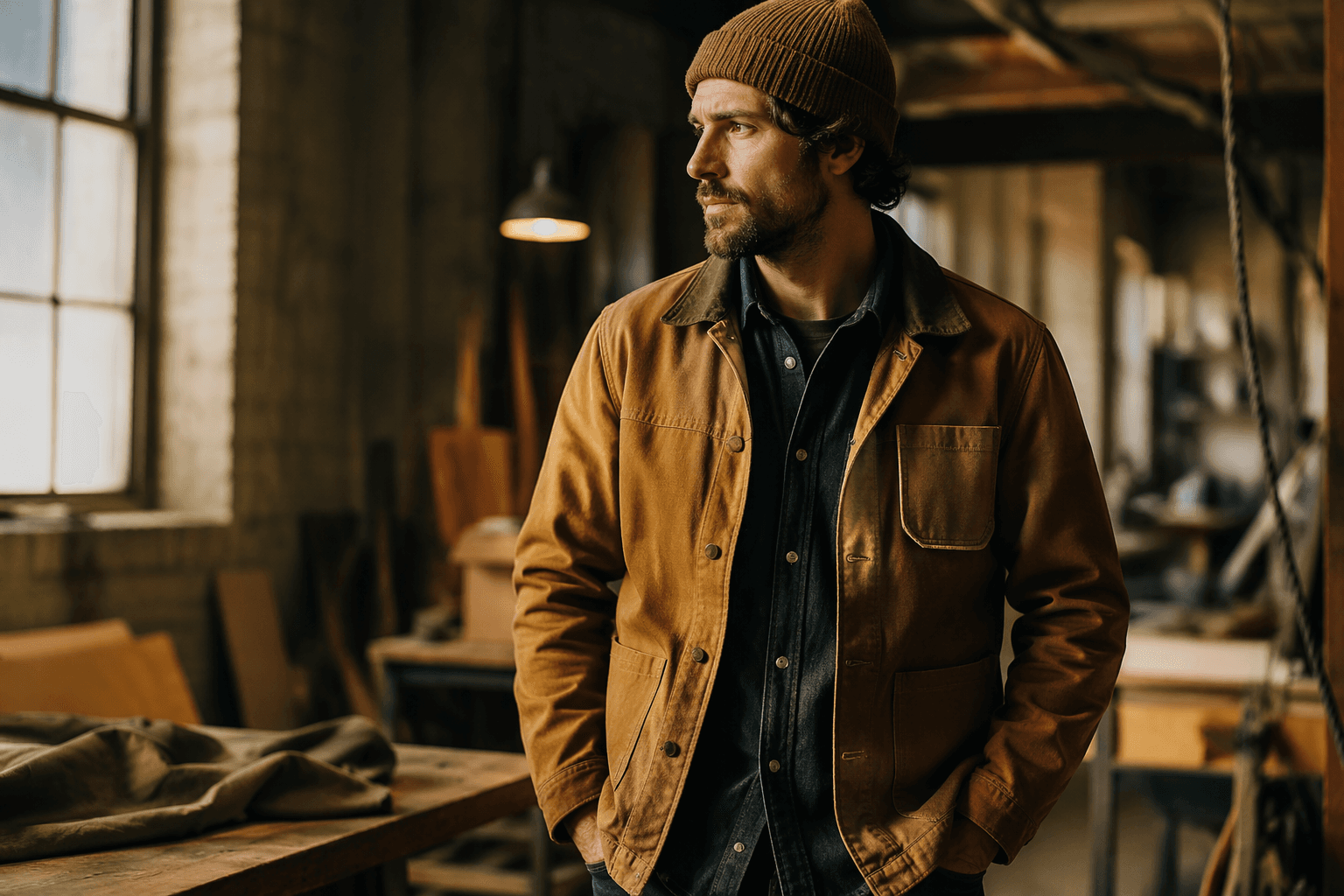
EDIFICE’s interpretation starts with the clearest move of all, a lambskin collar and sleeve lining that change the whole read of the jacket. BIOTOP pushes the idea in another direction with a leather-like polyurethane finish, giving the Trucker a slicker surface and a more directional edge. Together, they make a simple case: when Levi’s most familiar jacket borrows contrast, texture, and polish from leather, the silhouette feels newly alive.
That is why these versions land as more than styling exercises. The Trucker already carries enormous visual memory, so even a small material shift reads loudly. A leather collar against denim, or a coated finish over the familiar trucker shape, changes the jacket from basic outer layer to hybrid piece, the kind of garment that sits between workwear and luxury without losing its roots.
Why the Trucker can handle reinvention
Levi Strauss & Co. says the modern Levi’s Trucker first appeared as Lot 557 in the October-December 1961 catalog. The jacket was made in pre-shrunk XX denim with a slimming, tapered cut, and the brand now describes it as one of the most copied denim jackets in history. That matters because the silhouette was never just a rough layer for hauling or riding; it was designed to fit, flatter, and endure.
The story shifts again in 1967, when Levi’s introduced the 505 zip-fly jean and changed the jacket lot number from 557 to 70505. Levi’s later identified that 1967 Type III Trucker as the version most people recognize today, the one that fixed the jacket’s proportions in the fashion imagination. The current product language still leans on the same idea, framing the Trucker as a year-round staple with a versatile, seasonless shape, which is exactly why fresh material treatment feels so relevant now.
Mixed materials are not a break with the past
The Japanese leather twist can feel modern, but Levi’s own heritage materials show the silhouette has always tolerated variation. Some earlier trucker-style jackets came with blanket-lined options, a practical contrast that softened the denim and added warmth. In other words, lining and mixed materials are not alien to the shape, even if the current versions turn that idea into something sleeker and more fashion-forward.
That history gives the new Japanese readings a cleaner logic. They are not taking a sacred denim object and vandalizing it for novelty. They are working with a jacket that has always been open to adjustment, from blanket linings to the later Type III form, and asking what happens when the contrast moves from utility to refinement. Levi’s archive history even records the brand’s 1973 Denim Art Contest, when entries were invited via slides, which underlines how long the Trucker has been treated as a canvas rather than a fixed object.
What EDIFICE and BIOTOP understand about the market
The appeal of these Japanese versions is not that they are louder. It is that they are more exact. EDIFICE’s lambskin collar and sleeve lining make the jacket feel grounded in real labor but finished like a luxury piece, while BIOTOP’s polyurethane treatment introduces a more graphic surface without abandoning the Trucker’s bones. That is the key shift: the jacket stops being a museum reference and starts reading as product.
This is also why the story feels bigger than one release. When brands add leather to the Levi’s trucker template, they are signaling a broader move toward elevated, hybridized denim outerwear. The market has plenty of plain retro truckers already. What feels fresher is the jacket that carries the same recognizable frame but adds a more tactile, more deliberate material story.
How to read the new Trucker
The details to watch are simple, but they change everything:
- A lambskin collar softens the denim body and gives the jacket a sharper edge at the face.
- Sleeve lining matters because it adds comfort, warmth, and a more substantial interior hand.
- A polyurethane finish shifts the surface from familiar denim texture toward something sleeker and more directional.
- Blanket-lined heritage versions prove that contrast has always been part of the Trucker’s grammar.
- The classic 557, the 70505, and the Type III lineage explain why even small changes feel significant on this silhouette.
The result is a jacket that still belongs to Levi’s history, but no longer depends on nostalgia for its appeal. The smartest versions treat the Trucker as a platform for texture, structure, and subtle luxury, which is exactly how workwear stays relevant without losing its backbone.
This article was produced by Prism’s automated news system from verified source data, official records, and press releases, then run through automated quality and moderation checks before publishing. The system is built and supervised by the people who set the standards it runs under. Read our full AI policy.
Did this article answer your question?