Los Angeles menswear still runs on denim, workwear and tailoring
Los Angeles still dresses like a factory city with a fashion habit, where denim, western wear and tailoring all pull from the same local grammar.

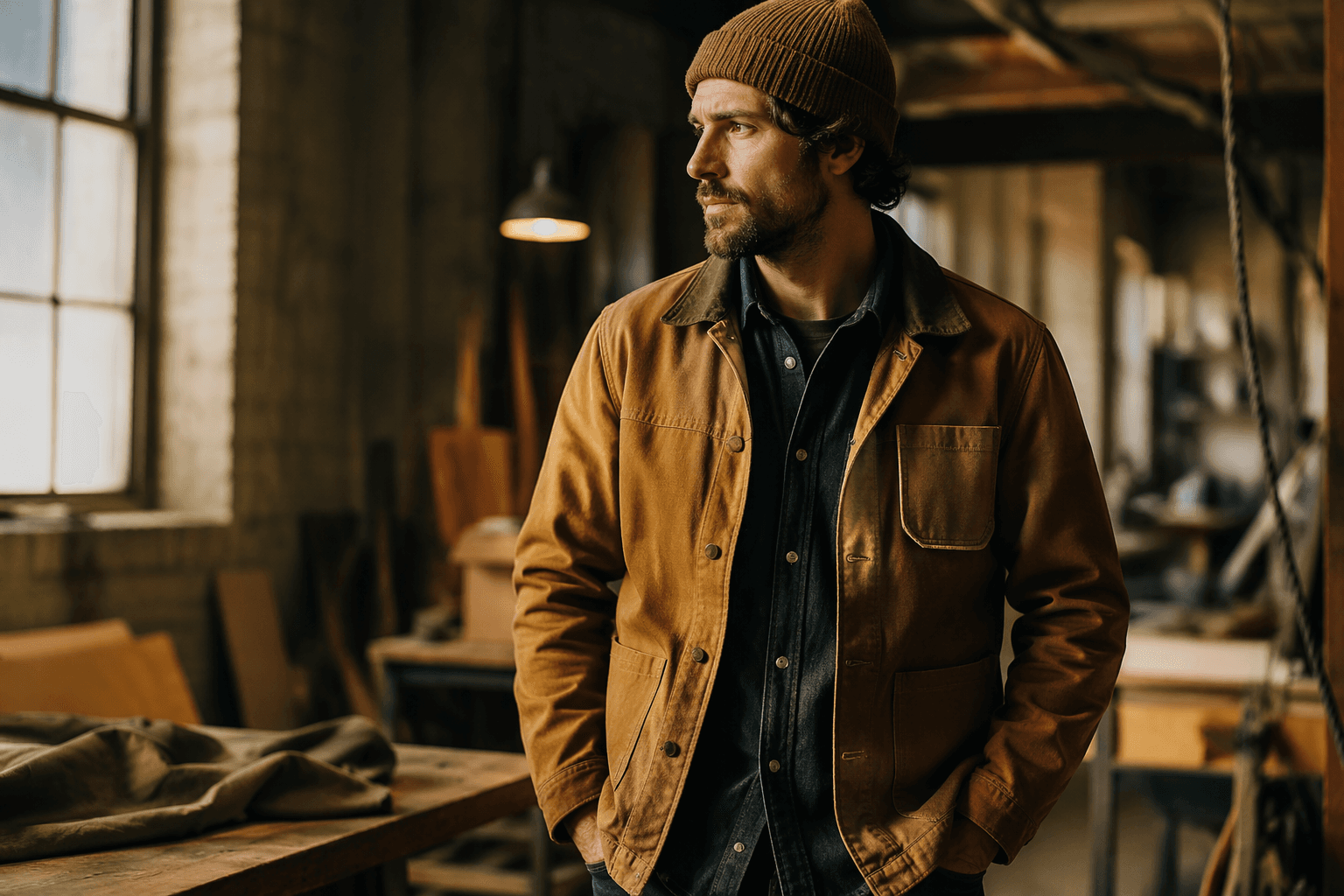
Los Angeles menswear has a specific pulse: jeans with a clean break, a snapped western shirt, a work jacket that still looks ready for a shift, then tailoring cut just sharp enough to keep the whole thing from tipping into costume. Simon Crompton’s read on the city gets this right because LA does not treat workwear as nostalgia. It treats it like infrastructure, the kind of clothes language that still makes sense in a place where things are actually made.
Los Angeles speaks workwear first
The easiest way to understand LA menswear is to stop thinking about it as a style scene and start thinking about it as a geography of labor. Denim, western wear and workwear sit at the center, with military clothing and tailoring acting as the other two load-bearing pillars. That mix feels different from New York, where polish can dominate the street, or London, where tailoring often carries the cultural argument on its own. In Los Angeles, a good outfit can look like it came from a shoot, a warehouse, a vintage rack and a fitting room all at once.
That is why the city keeps returning to garments with a job to do. Jeans, overshirts, utility pants, chore coats, work boots and tailored separates all coexist without needing to apologize for each other. The look is rugged, but not rough. It is practical, but not plain. LA likes clothes that can move from a studio lot to a showroom to dinner without changing their basic attitude.
Why the city keeps making the clothes it wears
Los Angeles County’s apparel industry is still the largest in the United States, with more than 1,500 businesses, 19,000 employees and a $300 million payroll. That scale matters because it keeps the city’s fashion culture tied to production, not just retail theater. The Los Angeles Fashion District, which was the Garment District before its formal name change in 1995, sits at the center of that ecosystem, and by 2005 it was in the middle of a $500 million revitalization.
The district is home to more than 5,000 companies, and its menswear area is built like a working wardrobe in miniature. You can find jeans, business wear, western wear, polos, T-shirts and athletic clothing in the same orbit, which says everything about how LA actually dresses. The point is not to separate workwear from fashion. The point is to make them speak the same language.
Denim is not a trend here, it is origin story
California’s denim story is not some cute branding exercise. Levi Strauss & Co. began in San Francisco in 1853, and in 1873 Levi Strauss and Jacob Davis received the patent for riveted work pants that became blue jeans. California recognizes denim as its official state fabric, which is about as direct a cultural stamp as a garment can get.
That history gives LA denim its authority. A pair of jeans in this city does not just reference Americana, it plugs into the state’s actual industrial memory. When Crompton talks about California as the origin of denim and workwear, that is what he means: the fabric is not imported into the culture, it is part of the culture’s foundation.
The old garment city is still in the clothes
Los Angeles garment history runs deeper than most people realize. The first garment production in the city is commonly dated to 1890, when Morris Cohn & Company made men’s overalls. By 1899, the business was producing workmen’s overalls and trousers, and in 1909 it moved to what became the Cohn-Goldwater building at 12th and San Julian Streets, now a notable historical garment-industry site.
That lineage still shapes the city’s menswear mood. LA never lost the idea that clothing should come out of workshops, factories and small production rooms where people know fabric, pattern and fit by touch. Even now, that history gives local dressing a certain confidence. It is not trying to prove it has taste. It assumes taste is already built into the process.

The current makers still lean on utility
The best contemporary LA labels and manufacturers keep returning to the same core materials because they know the city’s style language runs on utility. 9B Apparel says it operates two Los Angeles factories specializing in workwear and denim, with sewers who have worked in denim and workwear for more than 20 years. That kind of continuity matters. It means the clothes are not just inspired by workwear, they are built by people who understand how those garments are supposed to hold up.
Coldwater Production’s focus on denim and workwear manufacturing for jeans, jackets and utility styles points in the same direction. Twills, canvas and waxed fabrics keep showing up because they are durable, tactile and honest about what they are. In LA, those materials are not old-fashioned. They are the point.
Tailoring and military clothing keep the silhouette honest
If denim and western wear give Los Angeles its base note, tailoring and military clothing keep the proportions disciplined. Tailoring in LA rarely looks stiff or over-decorated. It often feels like a clean counterweight to the city’s more rugged instincts, a way to sharpen the profile without flattening the personality. Military references do similar work, lending structure, pockets, and a sense of function that never feels random.
That balance is part of why LA menswear can handle contradiction so well. A jacket can be built like outerwear and still sit neatly over a shirt and trousers. A pair of pants can feel like workwear and still look considered enough for a dinner reservation. The city likes clothes that can absorb multiple references without losing their shape.
Vintage culture and personal shopping keep the language alive
LA’s style is also driven by how people actually shop. Vintage culture matters here because the city has enough history, enough stock and enough appetite for pieces with a past. Personal shopping matters too, because the best LA wardrobes are often assembled, not bought in one clean sweep. They are patched together from the right pair of jeans, the right western shirt, the right overdyed jacket, the right tailored trouser.
That is why LA menswear feels bespoke-adjacent even when it is not custom. The clothes often read as selected with intent, then worn hard enough to look lived in. The result is a wardrobe that feels local without trying to perform locality. It just looks like the way people dress when production, memory and taste all live in the same city.
The future of LA workwear is not a throwback
The strongest thing about Los Angeles menswear is that it treats heritage as a working tool, not a museum piece. The Denim Institute & Museum wants to preserve and celebrate denim’s story from its 19th-century workwear roots to its later cultural meanings, and that arc makes sense in a city where the past still shows up in the seams. LA’s appeal is not that it keeps its workwear frozen in amber. It is that the city keeps remaking it for real life.
That is the difference. In Los Angeles, workwear is not a costume borrowed from labor. It is part of the city’s actual style system, stitched into the garment district, the factories, the vintage racks and the way men still dress when they want to look practical, polished and unmistakably local.
This article was produced by Prism’s automated news system from verified source data, official records, and press releases, then run through automated quality and moderation checks before publishing. The system is built and supervised by the people who set the standards it runs under. Read our full AI policy.
Did this article answer your question?