Martin Lours spotlights vintage workwear’s real patina in Paris
Martin Lours argues for the look luxury keeps trying to fake: real wear, visible repairs, and work jackets with a life already lived. In Paris, that patina feels sharper than any showroom distress.
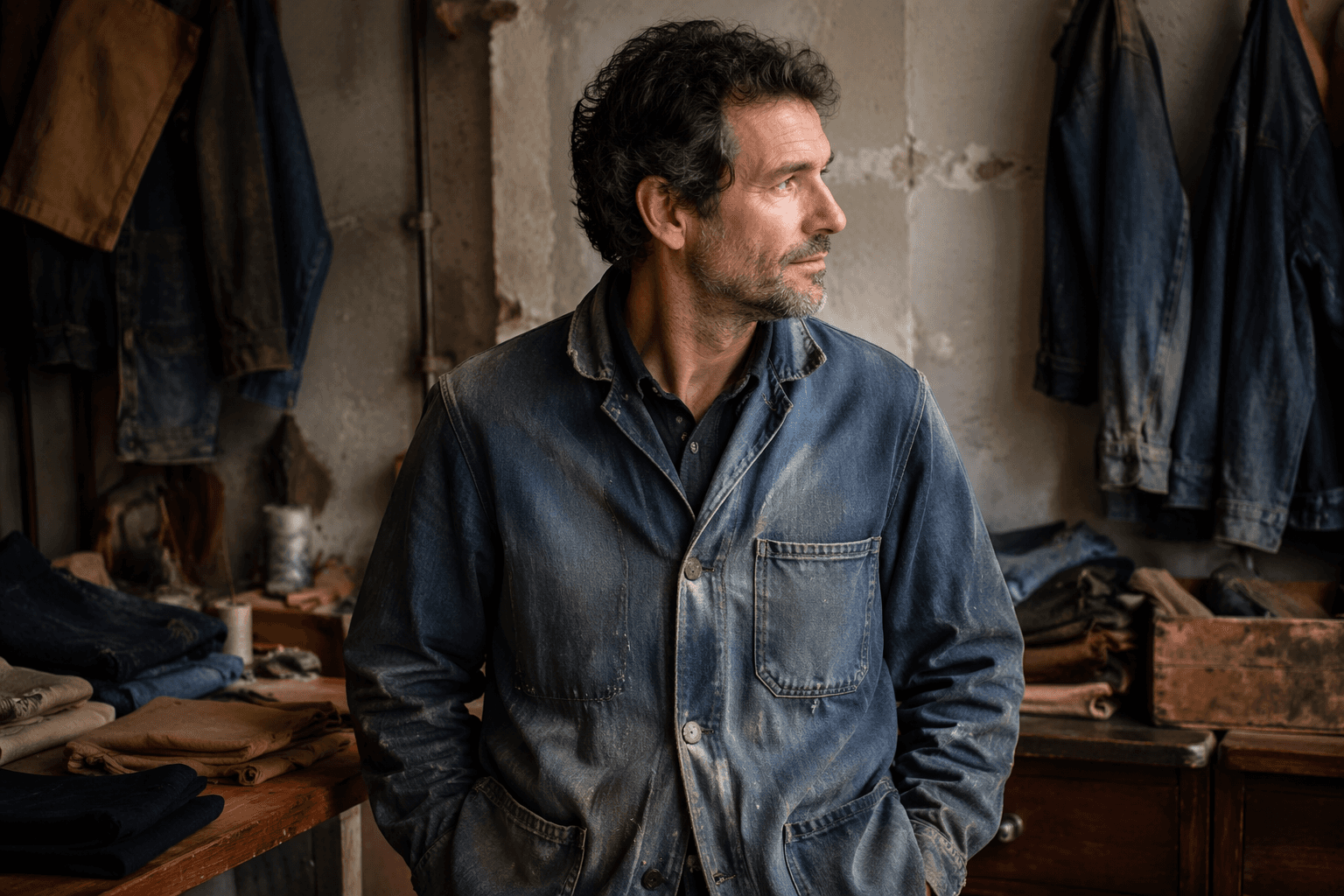
In Paris, Martin Lours’ pop-up put worn cotton, patched seams, and functional cuts ahead of polished luxury. Real patina carries more visual force than any factory-made distressing. As older pieces in good condition become harder to find over the next decade, the best vintage is turning from style reference into prized evidence.
Real wear beats manufactured damage
The appeal here is not nostalgia for its own sake. It is the authority of garments that have already done the job: jackets softened at the elbows, trousers shaped by movement, repairs that sit plainly on the surface instead of hiding in the construction. Lours’ edit of authentic vintage garments and furniture treats mending as part of the design language, not a flaw to be corrected.
The current appetite for workwear is moving toward honesty. Buyers are looking for clothes that show use without performance, and the difference is obvious in the details: faded cloth with depth, cuffs that have rubbed smooth, pockets built to carry weight, and seams reinforced after years of service.
The blue jacket still sets the standard
French workwear still centers the bleu de travail, the blue worker’s jacket that emerged in the 1800s from the need for practical, comfortable, long-lasting, cheap clothing for industry. Its logic has aged well because it was never decorative to begin with. The shape is direct, the purpose obvious, and the construction tuned for labor rather than display.
The fabric story is just as important. Traditional versions were cut in hardwearing cotton twill, cotton drill, corduroy, moleskin, and indigo linen, materials that age with character instead of collapsing into shapelessness.
Inside Not in Paris 6
Lours’ pop-up sat inside Highsnobiety’s sixth Not in Paris event, which ran from June 18 to June 23, 2024, at 15 Rue du Louvre in Paris 1er. The broader project brought together curated collaborations across Parisian culture, fashion, music, literature, art and film, and gastronomy.
Set among fashion-week chatter, the pop-up centered garments with provenance: clothes and objects that have been used, repaired, and kept alive.
Why the scholarship keeps pulling fashion back
AVANT’s French workwear project focuses on 19th- and 20th-century France through workers, farmers, and peasants. That lens turns the clothing into social history, not costume, and explains why the silhouettes still feel legible now: roomy enough to move in, structured enough to last, plain enough to be used hard.
French workwear has been booming in Japan in recent years, and the AVANT issue includes six Japanese experts on the topic. The draw is a precise appreciation for construction, wear, and utility, especially when those qualities have been preserved in original pieces rather than recreated from mood boards.
Denis Bruna, the chief curator of fashion and textile collections at the Musée des Arts décoratifs and a specialist in the history of clothing and fashion, sits squarely in that lineage of authority.
What contemporary workwear brands should borrow
The clearest takeaway for today’s brands is that authenticity has to be built, not styled on later. The strongest vintage pieces in Lours’ orbit share a few traits that modern labels can study without copying literally:
- Functional cuts that allow movement, not just shape
- Fabrics with substance, especially twills, drills, moleskin, corduroy, and indigo linen
- Visible mending that strengthens the garment instead of disguising its life
- Pockets, cuffs, and seams designed for daily strain
- Color that feels lived in, especially the deep, workmanlike blues that define the category
What to skip is equally clear: artificial abrasion, over-processed fading, and decorative distressing.
This article was produced by Prism’s automated news system from verified source data, official records, and press releases, then run through automated quality and moderation checks before publishing. The system is built and supervised by the people who set the standards it runs under. Read our full AI policy.
Know something we missed? Have a correction or additional information?
Submit a Tip