Milan men’s fashion week spotlights practical workwear with tailored polish
Milan’s menswear reset favored linen, cognac denim and soft tailoring over spectacle. With 75 appointments and just 16 physical runways, the week’s real story was wearable polish.

Milan men’s fashion week came dressed for the real world: 75 appointments, only 16 physical runway shows and 6 digital ones, and enough breathing room for buyers and editors to leave the front row and work the city. That lighter schedule mattered in a heatwave, because the clothes had room to breathe too, and the message from Milan was unmistakable: quality, tradition, innovation and sustainability were the point.
The schedule favored clothes, not theater
The official calendar ran from June 19 to June 23, 2026 and stacked 44 presentations, 2 presentations by appointment and 7 other events into four tightly packed days. That structure shifted attention away from spectacle and toward the kind of pieces that actually build a wardrobe, the jackets, trousers and shirts that can move from showroom to street without a costume change.
The concentration of names across Milan also reinforced how commercial the week really was. Ralph Lauren, Bikkembergs, Jacob Cohën, Massimo Alba and other labels were threaded through key venues and showrooms, with the city itself acting like part of the product story. Even the addresses tell the tale, from via Bovisasca, 87 to via San Vittore 21 and Piazza Duomo, 31, a spread that turned menswear into a citywide exercise in practicality.
Massimo Alba made softness look authoritative
Massimo Alba’s Spring 2027 presentation took place at the brand’s Milanese headquarters-cum-store, a setting that felt closer to an elegant lived-in home than a hard-edged fashion stage. Furniture, design pieces, books and embroidered textiles filled the space, exactly the kind of backdrop that makes a quiet brand feel even more assured. The atmosphere matched the clothes: linen, summery shirts with tonal floral embroidery, and loose tailoring in faded hues that looked washed by sunlight rather than engineered for effect.
The collection’s strongest move was restraint. Massimo Alba said he does not want to dictate style, but instead wants to create objects that accompany people through life and can be interpreted freely, and that is precisely what the clothes suggested. The brand describes itself as making “emotional comfort through clothes crafted in Italy,” a phrase that sounds like a manifesto only because the clothes are already doing the work.
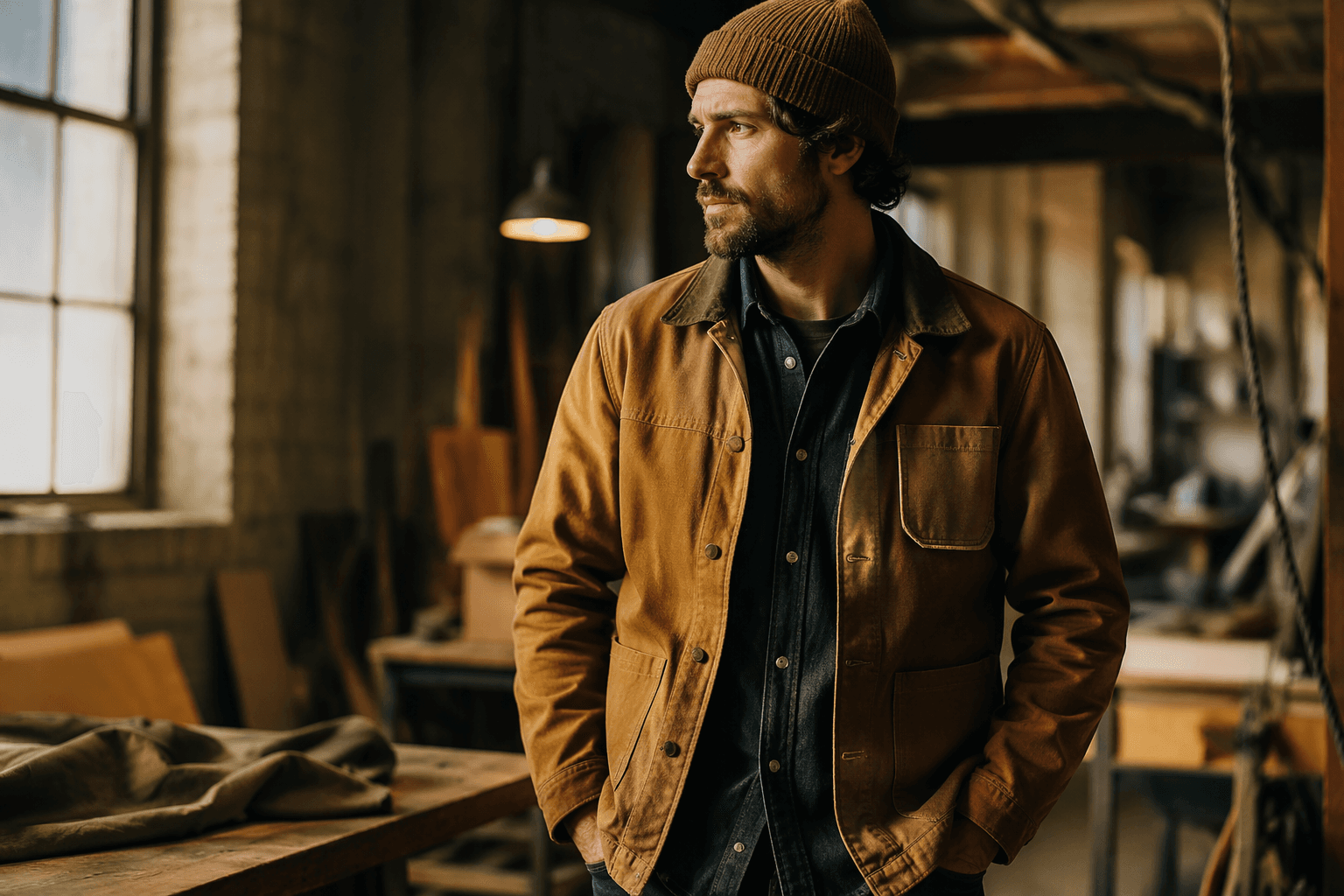
What made the presentation compelling was the way it translated comfort into polish. Linen can go slouchy in a second, but here it was sharpened by clean lines and subtle embroidery, so the result felt less bohemian than considered. This is the version of workwear luxury buyers want right now, clothing that can sit beside a desk, under a blazer or on a train without losing its ease.
MCM used denim to reset the brand’s language
MCM took a different route, but the same direction. Under Dirk Schönberger, the Spring 2027 collection marked a new creative chapter and pulled the brand back to earth after a space-age turn linked to Salone del Mobile and the “From Munich to Mars” mood. The new direction mixed high and low, fluidity and structure, workwear and tailoring, and it did so with a much more grounded visual code.
The key move was the introduction of the MCM Diamond shape as a new brand identifier, rendered in the house’s signature cognac color. It appeared on fitted denim jackets and barrel-legged jeans with graphic side pockets, a combination that made the workwear cue feel intentional rather than nostalgic. Denim was doing the heavy lifting, but the cut kept it elevated: sculpted through the leg, precise at the shoulder, and far more refined than a straight throwback to utility dressing.

That balance was reinforced by the collection’s references to biker and martial-arts influences, which gave the clothes a tougher pulse without tipping into aggression. Schönberger’s version of luxury workwear was not about costume toughness or vintage Americana, but about translating industrial and athletic energy into modern menswear language. The result was a collection that looked built for movement and sharp enough for a showroom meeting.
Why Milan’s workwear turn reads as a market signal
What tied Massimo Alba and MCM together was not aesthetic sameness, but a shared correction in mood. Across the season, other major houses leaned into lighter tailoring and softer silhouettes, which made the practical turn feel broader than any single brand story. Milan was not staging a nostalgia play; it was showing how menswear is competing on believable versatility now.
That matters because the most persuasive luxury pieces this season were the ones that looked immediately usable. Linen tailoring, faded hues, cognac denim and barrel legs are not dramatic on a runway, but they are legible in life, and that is where the market is heading. In a week defined by 75 appointments, the smartest clothes were the ones that could leave the showroom and go straight to work.
This article was produced by Prism’s automated news system from verified source data, official records, and press releases, then run through automated quality and moderation checks before publishing. The system is built and supervised by the people who set the standards it runs under. Read our full AI policy.
Did this article answer your question?