Polished summer workwear for board meetings, commutes, and casual Fridays
Summer workwear now has to survive the commute, the boardroom, and dinner. The smartest outfits stay polished, breathable, and flexible enough for hybrid days.

The best summer work outfit has one job: make it from a packed train to a conference room without looking wrung out. Hybrid work is the most common style for remote-capable employees, Gallup found, with fully on-site work dropping from 60% in 2019 to 20% in 2023 and fully remote rising from 8% to 29%. When the day moves that fast, rigid suiting feels like a relic; polished clothes with room to breathe are the new baseline.
The office has loosened, but it has not gone soft
After the pandemic, the business dress code evolved, and tolerance for conformity and discomfort changed once people spent two years working in whatever sat closest to the laptop. Harvard Business Review made that point in September 2022. Its 2020 data visualization called business casual the safest choice, and that still feels right because it gives you structure without making you look like you are headed to a wedding. Forbes frames modern office clothing as polished yet laidback, and Business Insider’s 2026 workwear coverage keeps returning to the same standard: comfort that still reads professional.
That is the trick this summer. Not casual, not stiff. You want clothes that say you know the room, but also know how hot the platform is, how cold the office AC is, and how quickly a lunch meeting turns into post-work drinks.
What polished actually means in heat
Workplace clothing perceptions are complex, shifting across individuals, situations, cultures, and time. The American Psychological Association’s review of workplace clothing research still comes back to three universal pressure points, formality, provocativeness, and fashionability, and those are exactly the tensions a good warm-weather outfit has to manage. In other words, the best summer look is not just cool to wear, it is controlled enough to hold authority.
That balance matters because the office no longer has one uniform expectation. The APA’s 2025 Work in America survey, fielded online by The Harris Poll from March 26 to April 4, 2025 among more than 2,000 working adults, reflects the same fluid workplace. When the workplace is this fluid, clothes that can flex from on-site to hybrid to client-facing days do more than look nice. They reduce friction.
The formulas that do the heavy lifting
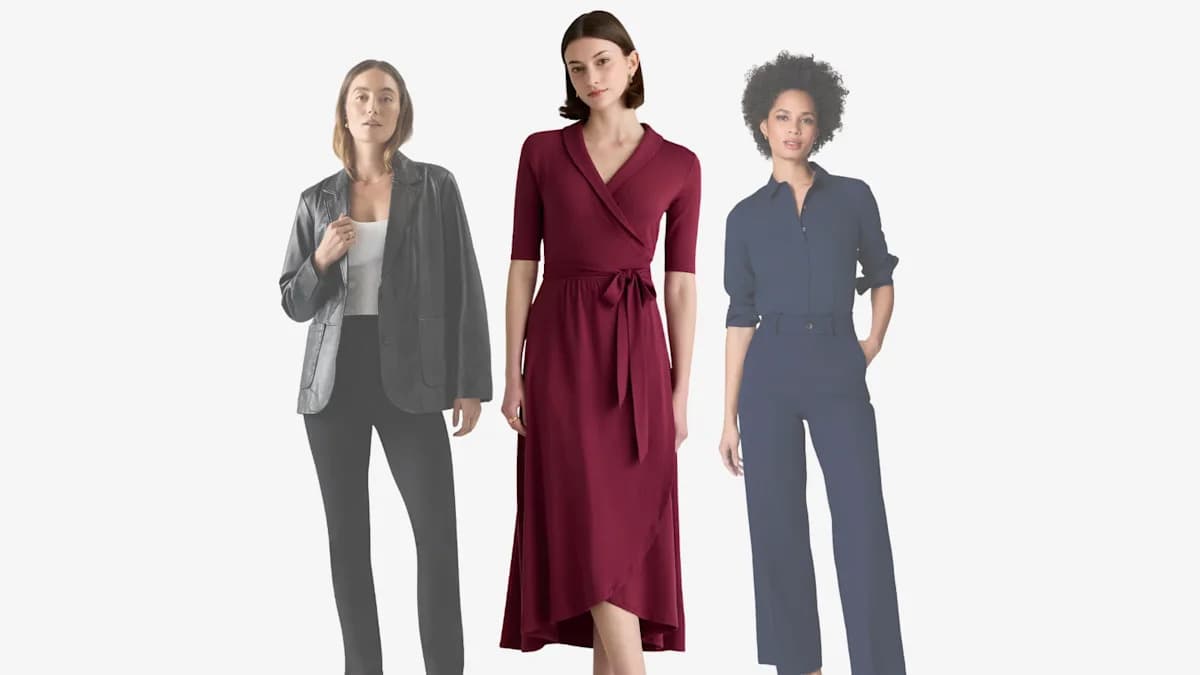
The easiest summer formula is the one that starts with a sharp base and keeps the rest relaxed enough to move. Think a clean tank or fitted tee under an unstructured blazer, paired with trousers that skim instead of cling. The blazer gives you formality for a board meeting, the lighter layers make sense on the commute, and the whole thing still looks intentional when you peel the jacket off at lunch.
Another reliable route is a polished shirt with trousers that behave more like engineered comfort than old-school tailoring. Business Insider’s stretchy-work-pants coverage centers on the same promise: they look polished while feeling as comfortable as sweatpants. That does not mean sloppy. It means a leg that falls cleanly, a waistband that does not fight you on the train, and fabric with enough give that you can sit through a long meeting without thinking about your clothes.
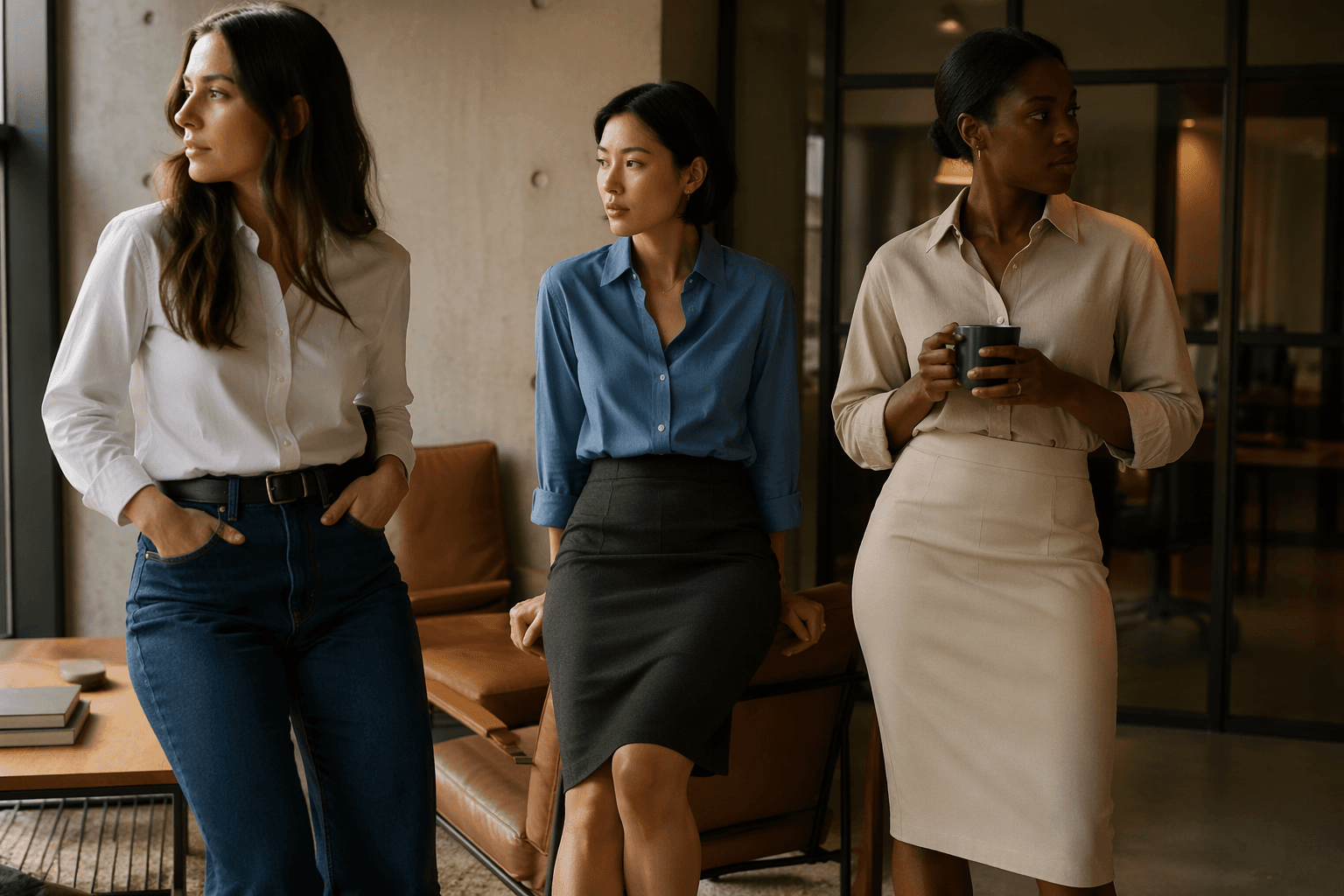
A third formula leans into the relaxed side of the dress code without dropping the polish. A midi skirt with a crisp top, or a dress with enough structure at the shoulder or waist to hold shape, reads right for casual Friday and still works when the calendar fills up. The key is proportion: if the fabric is fluid, keep the silhouette tidy; if the cut is relaxed, make sure the finish looks deliberate.
- Keep one structured piece in the outfit, usually a blazer, collar, or tailored waistline.
- Let the other pieces breathe, with softer trousers, a fluid skirt, or a lighter top.
- Build around fabrics that do not panic in heat or wrinkles, because the commute will expose everything.
The pieces that earn repeat wear
If there is one item doing the most work right now, it is the polished trouser with stretch built in. That is the sweet spot between business casual’s safety and the new expectation that office clothes should not feel punishing. You are dressing for a day that starts in transit, lives in air conditioning, and may end somewhere louder than your desk.
A sharp knit or a clean button-front shirt plays the same role on top. It signals professionalism fast, and it avoids the overbuilt feeling of a heavy suit jacket in summer. Keep the silhouette close enough to look edited, but not so tight that it becomes precious. The best versions sit neatly on the body and still look good after a commute, which is the real test.
Even accessories should earn their keep. A structured bag, low-profile shoe, or streamlined belt does more than decorate. It keeps the outfit from sliding too far into weekend territory, especially on Fridays when the temptation is to dress for the office you wish you had instead of the one you are actually walking into.
How to make it through the full day
Summer workwear fails when it only works at 8 a.m. The outfit has to hold up after a sweaty platform, a freezing conference room, a quick salad run, and whatever comes after 6 p.m. That means choosing pieces that stay crisp in motion and read polished without needing constant adjustment.
This article was produced by Prism’s automated news system from verified source data, official records, and press releases, then run through automated quality and moderation checks before publishing. The system is built and supervised by the people who set the standards it runs under. Read our full AI policy.
Did this article answer your question?