Spring 2026 menswear leans into soft tailoring and elevated workwear
The strongest menswear signal for spring 2026 is quiet but clear: softer tailoring, technical outerwear and workwear details are moving closer to real life.

The new utility is built for everyday wear
The sharpest menswear shift for spring 2026 is not a costume change, it is a refinement. WWD’s May 22 trend report, anchored by Pitti Uomo in Florence, points to wardrobe versatility as the season’s defining idea, with workwear and soft tailoring leading the conversation. That matters because Pitti remains a traditional barometer for menswear, and this time the mood was less about provocation than about pieces men can actually live in.
Buyers and industry operators saw a clear turn toward ease: relaxed tailoring, artisanal textures and elevated workwear all sat in the same conversation. Bruce Pask, who buys for Saks Fifth Avenue and Neiman Marcus, called the packed halls a “great indication of the optimism and enthusiasm in the market.” LuisaViaRoma’s Alessio Aramini described the crowd as a reflection of hopes for renewed momentum and recovery. In other words, the clothes were answering a mood as much as a trend brief.
Soft tailoring is doing the heavy lifting
If there is one silhouette shaping the season, it is the softer suit. WWD’s earlier Pitti Uomo coverage for spring 2025 already flagged the move: the suit had become softer and looser, while workwear was growing more flexible. Spring 2026 pushes that idea further, swapping rigidity for clothes that move easily between office hours, travel and the off-duty stretch in between.
That is why this trend feels so commercially important. Soft tailoring is not asking men to abandon structure altogether; it is simply loosening the grammar. Jackets are less armored, trousers hang with more ease, and the overall effect is less boardroom authority than controlled nonchalance. For readers, the takeaway is simple: the best version of this look should skim, not constrict.
Workwear is being edited, not exaggerated
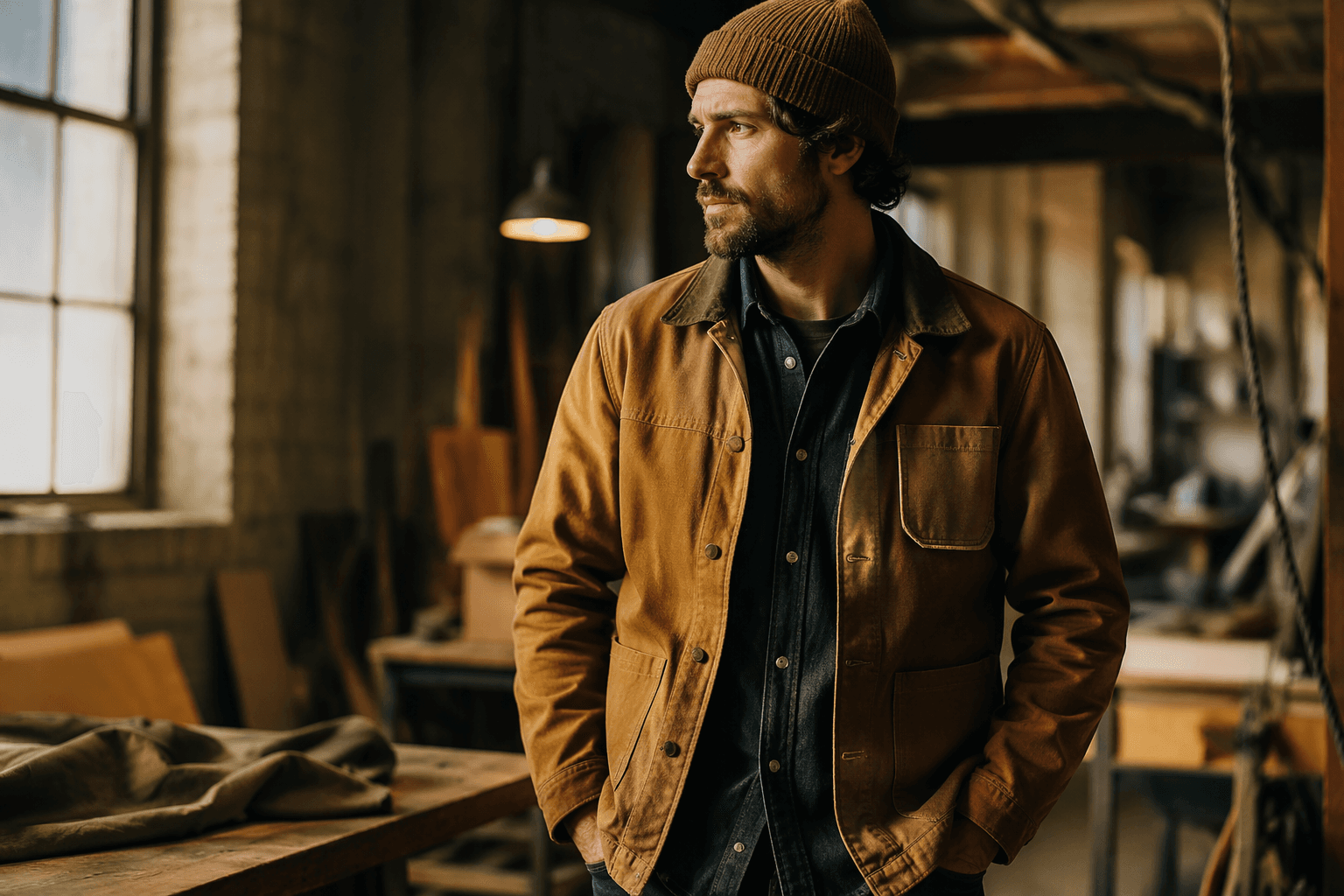
The utility story this season is not about hard, technical gear for its own sake. WWD’s spring 2026 report highlights chic utility and elevated workwear through technical parkas, utility jackets, cargo details and functional outerwear in lightweight fabrics. That combination is the key. The pieces still borrow from workwear’s practical roots, but they are being softened through lighter construction and cleaner lines so they can sit inside a modern wardrobe, not outside it.
Enny No-Kim, the Bergdorf Goodman buyer, called the direction “urban sophistication,” a useful shorthand for what is happening here. The best work jackets in this market are not bulky or overly literal; they are polished enough to wear with tailoring, but still carry pockets, structure and ease. Skip anything that feels like a costume or a survival kit. The point is utility with restraint.
What the season is really selling: precision and purpose
Daniel Todd, Mr Porter’s buying director, described the mood as one of “precision and purpose,” centered on fabrication, form and function. That is the most useful lens for reading the season. Spring 2026 menswear is not simply making things softer; it is making them more deliberate, with every pocket, panel and fabric choice serving a clear role.
That emphasis is what allows elevated workwear to cross over into mainstream wardrobes. Lightweight technical fabrics keep parkas and overshirts from feeling heavy. Cargo details add function without tipping into excess. Relaxed tailoring keeps the look from becoming overly rugged. The overall effect is practical, but still edited enough to feel modern in a city context.
The runway proof goes beyond Pitti
This is not just a trade-fair talking point. WWD’s spring 2026 utility gallery placed Prada, Burberry and Balmain among the strongest runway examples, which confirms that the trend is spreading across the market rather than staying confined to one buying room. When houses with very different aesthetics arrive at the same utility language, you are looking at a wider shift, not a niche mood.
Prada, under Miuccia Prada’s influence, has long made a case for cerebral utility; Burberry brings a more literal outerwear authority; Balmain translates the idea through sharper, more fashion-forward edges. Together, they show how adaptable the theme is. Some labels will commercialize it through technical parkas and work jackets. Others will turn it into softer suiting with cargo-adjacent details or stripped-back layering pieces.
Why buyers think this season has staying power
WWD’s July 2025 roundup of the top 10 men’s collections for spring 2026 added one more clue: buyers and press agreed the season was among the strongest in years in terms of trends. That kind of consensus matters because it suggests the utility and soft-tailoring story is not a flash point, but a broader reset toward easy dressing, comfort and practicality.
That is also why the workwear angle feels more durable than a novelty trend. After years of fashion oscillating between hyper-technical product and rigid formality, spring 2026 lands in the middle. It offers clothes that can be styled with intention but worn without effort. The best pieces will be the ones that look good in motion: a relaxed jacket over a fine knit, a lightweight utility layer over tailored trousers, a softened suit worn like it has already been lived in.
The menswear message is clear. Spring 2026 is not rejecting polish, it is softening it, and the brands most likely to win will be the ones that turn workwear into something civilized, versatile and easy to wear.
This article was produced by Prism’s automated news system from verified source data, official records, and press releases, then run through automated quality and moderation checks before publishing. The system is built and supervised by the people who set the standards it runs under. Read our full AI policy.
Did this article answer your question?