Uma Wang reimagines workwear with textured linen and soft tailoring
Uma Wang turns rumpled linen, patchwork texture, and soft tailoring into luxury workwear, then asks whether the look can escape the runway.
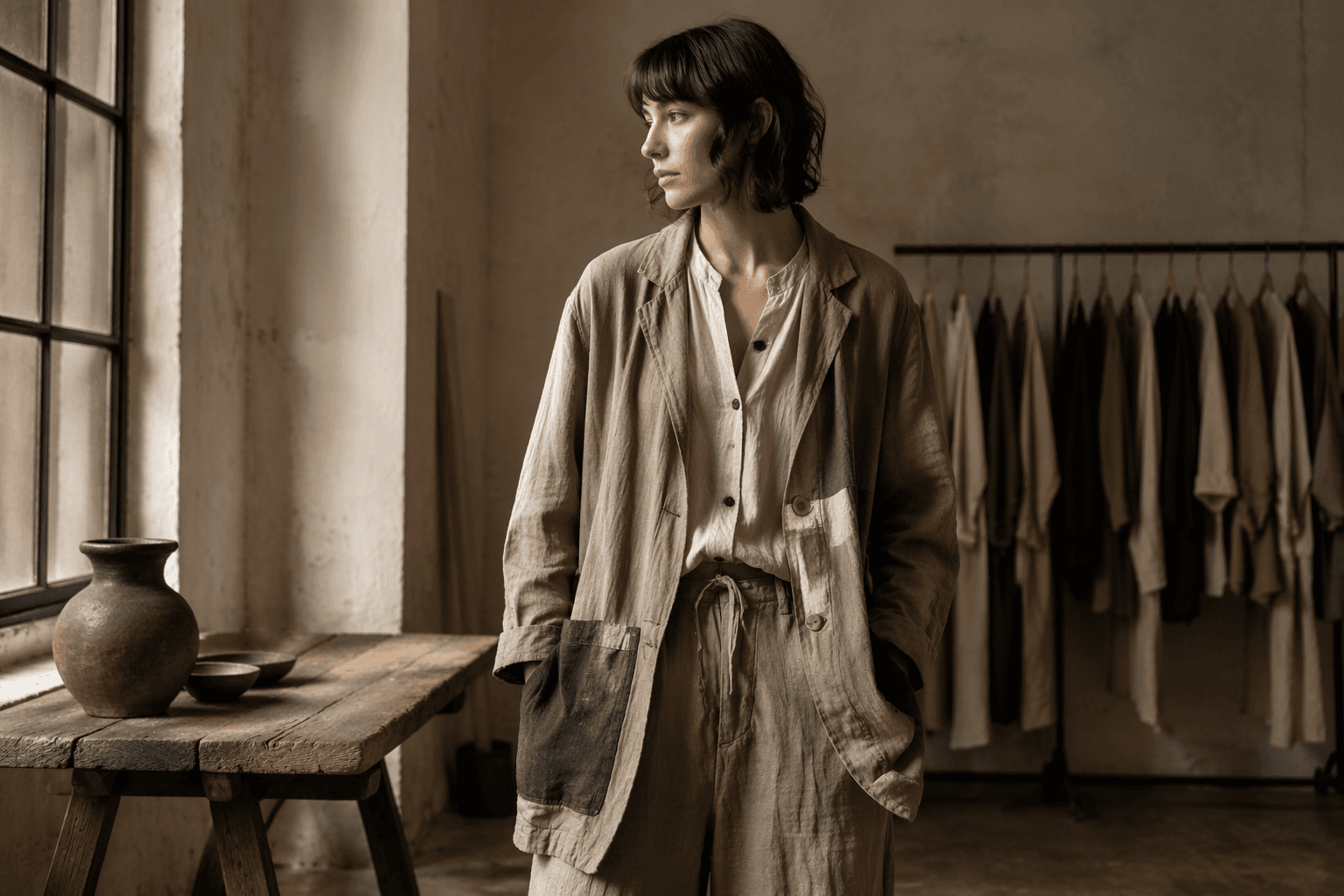
Uma Wang is making workwear look expensive by making it look touched by weather, stone, and time. Her men’s spring 2027 collection trades clean minimalism for roughened surfaces, slouchy shape, and a kind of cultured damage that feels deliberate from the first glance. The result is less boiler-room grit than gallery-bred utility, but it still carries the authority of clothes built to be used.
Imperfection is the point
Wang’s hook this season is not nostalgia for old uniforms. It is a sharper, more seductive idea: luxury that wears its flaws in public. She drew from wilted poppies and the crumbling 16th-century stone walls in her Verona garden, then pushed those references into fabrics that looked weathered without looking tired. That distinction matters. A rumpled finish can read like neglect; Wang makes it read like intention.
The cleanest proof is the linen blend she developed with an Italian textile developer. Wang photographed the stone walls near Piazza Bra, had that texture translated into cloth, and landed on a rumpled, patchwork-like surface that feels almost geological. She said she plans to use that fabric in her women’s collection in October 2026, which tells you this is not a one-off runway trick. It is a material language she intends to keep using.
Peter Beard on the rack, Armani in the drape
The collection’s rough edge came through Peter Beard references in the cut: unstructured, band-collared sports jackets and multipocket pieces that nodded to the late photographer’s lived-in wardrobe. These were not costume safari jackets, and they were not cargo hype pieces either. They sat in that narrow lane where utility feels cultured, with the kind of easy structure that lets the body relax instead of armoring it.
Then Wang turned the volume down with viscose and Cupro, fabrics that gave the clothes a liquid drape associated with Giorgio Armani. That mix is the real move here. She is not choosing between hard utility and soft elegance. She is splicing them, so the jacket can carry workwear signals while the trouser or shirt falls with a smoother, more urbane line. It is workwear translated through a luxury filter, not copied from a factory floor.
Fresh summer colors kept the look from sinking into pure brown-and-khaki period mood. WWD framed the pieces as a cleaner version of Beard-inspired workwear, built for younger customers who want the vibe without the wear, tear, and grime. That is the tension running through the whole collection: the fantasy of labor, stripped of actual labor.
The hangtag says what the clothes are too polite to say
The brand even built a specialized hangtag to spell it out. Color differences and surface inconsistency are not defects here. They are part of the product’s originality, character, and handmade quality. That kind of messaging matters because Wang is not asking customers to mistake irregularity for accident. She is asking them to buy into it as a value system.
That is where her version of imperfect luxury becomes more than texture play. In a market obsessed with crisp branding and polished sameness, she is selling the opposite signal: clothes that look considered precisely because they are not too polished. The hangtag turns that philosophy into retail language, and it makes the garment’s unevenness feel like proof of care rather than evidence of a missed QC pass.
Why this lands now
The collection arrived in a Milan menswear week that was crowded enough to make restraint look radical. Monocle’s spring/summer 2027 roundup put Wang’s show in the same competitive frame as Ralph Lauren and Saul Nash, which underscores the pressure on any designer trying to define the season’s mood. Wang’s answer was not louder graphics or bigger silhouette theater. It was texture, tactility, and controlled looseness.
That choice also fits her recent menswear runway run. After her Milan debut the prior season and a spring 2026 men’s outing built around Bhutan, Wang has clearly moved beyond the idea that menswear needs to be explained through hard utility or heritage shorthand. She is building a more fluid vocabulary now, one where surface, drape, and irregularity do the heavy lifting.
A lookbook of about 17 photos was enough to make the message legible. The collection does not try to convince you that a rumpled linen suit belongs on an actual job site. It wants to convince you that workwear can be aspirational even when it looks softened by use, translated through art, and made precious by the hand of a very exacting designer. That is the real shift: not workwear as nostalgia, but workwear as luxury code, stripped of grime and reissued in better cloth.
This article was produced by Prism’s automated news system from verified source data, official records, and press releases, then run through automated quality and moderation checks before publishing. The system is built and supervised by the people who set the standards it runs under. Read our full AI policy.
Did this article answer your question?