why bleu de travail is the missing workwear essential
Bleu de travail adds a French indigo layer to denim, duck canvas and military green, bringing a new fade story, sharper utility and a cleaner workwear uniform.

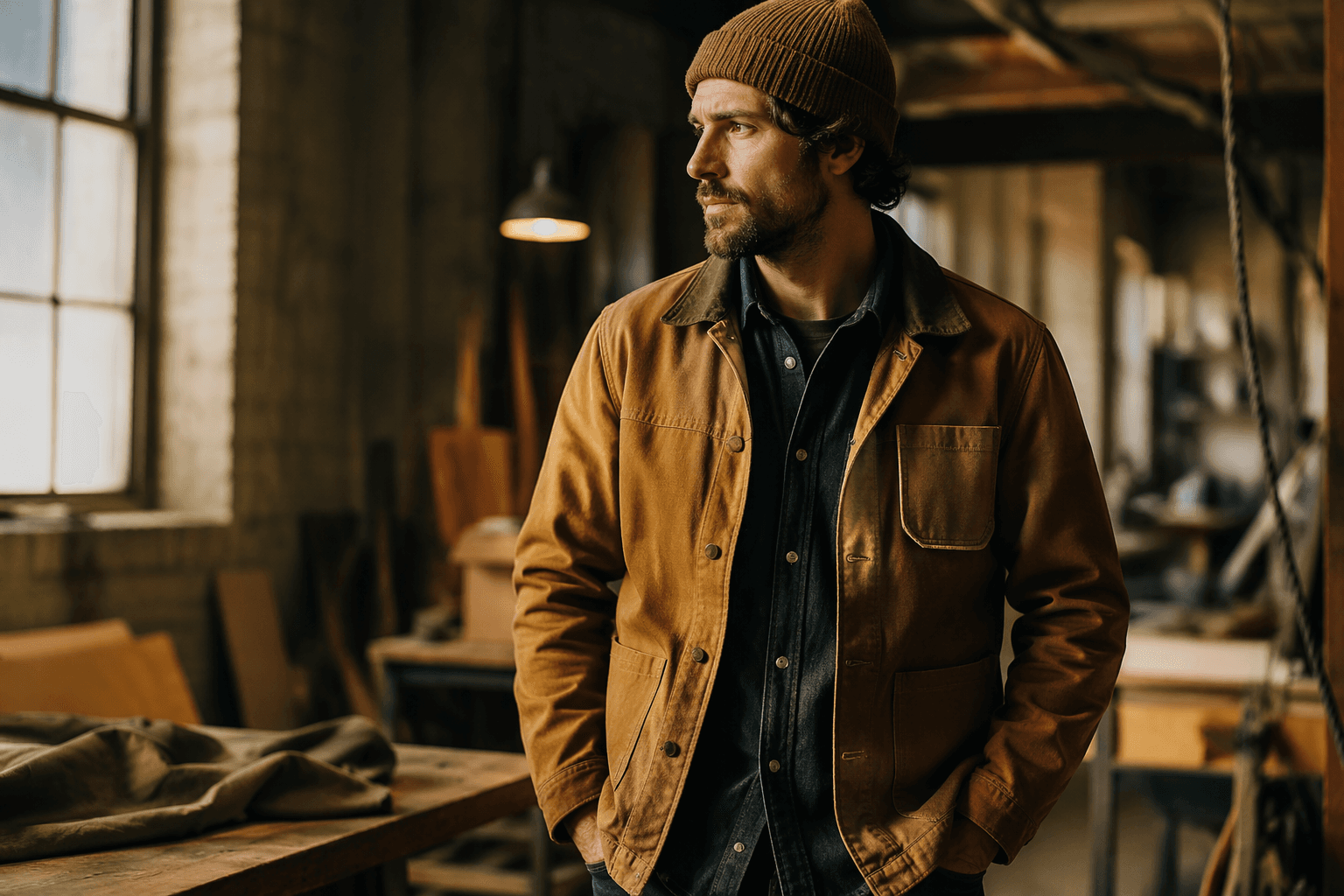
A French chore jacket in industrial indigo does something denim, duck canvas and military green do not. Denim gives you American ease, duck canvas gives you toughness, military green brings utility, but the French work jacket adds a distinct indigo lineage, a cleaner silhouette, and a fade story that reads more refined than rugged alone.
The missing fourth pillar
For years, the best workwear wardrobes have rested on three materials. Blue denim carries the casual uniform, duck canvas brings the dense, broken-in body, and military green adds a utilitarian, field-ready edge. Bleu de travail fits beside them, not beneath them, because it is built around a different idea of labor dressing: the French chore jacket and its matching trousers were designed as a practical, standardized uniform, not just as a handsome jacket in workwear drag.
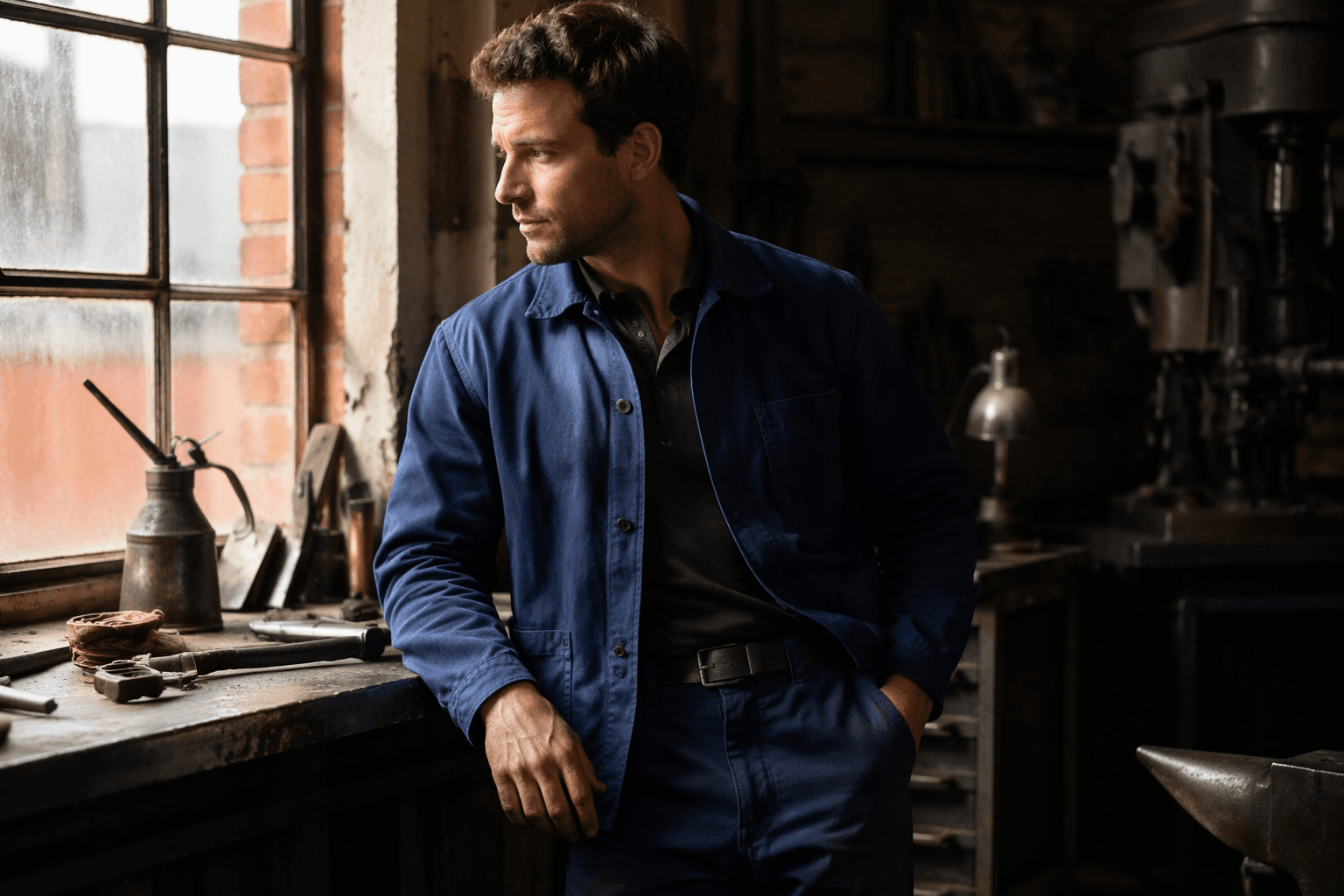
Permanent Style treats bleu de travail as a fourth category because it changes the color story. It is blue, but not denim blue. It is an industrial indigo that sits somewhere between workshop uniform and tailored outerwear.
Where the French work jacket comes from
French archival histories place bleu de travail in late-19th-century industrialization, when workshops, railways, and factories needed clothing that was durable, inexpensive, and standardized. Tourneur Goods traces its emergence to that period, when laborers needed garments that could take punishment without looking precious, while French archival and historical sources describe it as protective clothing for workers in factories and workshops, including farm laborers.
The practical logic was simple. The blue dye helped hide dirt, grease, grime, and sweat stains, while the cut stayed loose enough to wear over other clothes. Cotton moleskin and drill were common fabrics, with a firm hand, enough body to hold shape, and enough resilience to survive hard use.
Why the color matters as much as the cut
Blue in France was never just a color choice. A University of Paris 1 exhibit says blue became a symbol of the working class in the 19th century and helped unify workers visually, turning a practical garment into a social sign. CNRS-linked material traces a deeper backstory: France had been central to the European and Atlantic indigo trade in the 18th century, with Saint-Domingue as the main producer for Europe. That history helps explain why blue carried such weight when it entered industrial clothing.
How it works in a modern capsule
Bleu de travail plugs easily into a modern wardrobe built on repeatable uniforms. Permanent Style’s styling examples treat workwear as a system, not a costume: a Type II jacket with fatigues, a Carhartt chore coat with 501s, or a jungle jacket with carpenter trousers all show the same principle. Keep the silhouette functional, let the fabric do the talking, and avoid overbuilding the look.
The chore jacket itself is an ideal intermediate layer. Traditionally, it is made from hard-wearing twill or moleskin, dyed indigo to disguise dirt, and easy to size up for a crewneck tee and selvedge jeans, as MR PORTER describes.
If you want to wear it now, keep the formula direct:
- Start with a white or blue T-shirt.
- Add the work jacket over fatigues, 501s or carpenter trousers.
- Let the jacket carry the color and texture instead of stacking multiple loud layers.
- Choose a roomier fit so the jacket can sit over knitwear without looking tight or precious.
The fade story is the point
Denim, duck canvas and bleu de travail all age differently, and that difference is what gives a capsule its range. Denim goes whiskered and pale in the right places. Duck canvas develops a lighter, sun-faded straw tone. Bleu de travail softens from deep indigo into a jacket with pale cuffs, worn seams and edges that look almost brushed by light.
The classic French work jacket was washable, long-wearing and resistant to grime, flames, burns, snags and soot. Lafont says its blue moleskin jacket became widespread by the end of the 19th century in the automobile industry and coal factories.
Lafont also dates its own workwear expertise to 1844 and says it has been making work clothing for 170 years.
From labor uniform to fashion object
Bleu de travail has already made the trip from workshop uniform to fashion shorthand. Lafont links the indigo moleskin jacket to Jean Gabin in *La Bête humaine*, a reference point that helped fix the garment in French visual culture. More recently, French archival material notes that a 2020 study day at the Archives nationales du monde du travail led to a 2021 exhibition at the former Cavrois-Mahieu mill, along with a 160-plus-page publication intended as a reference book on the garment.
Fashion has followed. Modern reinterpretations have appeared at The Row, Velasca, Polo Ralph Lauren, SS Daley, Uniqlo, Zara and Mango, with the luxury end pushing the jacket into rarefied territory. A The Row version was priced at €1,790.
This article was produced by Prism’s automated news system from verified source data, official records, and press releases, then run through automated quality and moderation checks before publishing. The system is built and supervised by the people who set the standards it runs under. Read our full AI policy.
Did this article answer your question?