Pita (essay) — personal essay referencing a housewarming gift
Most housewarming gifts get donated within a year. The ones that stay are the ones that taste like memory, carry a story, or mark who someone actually is.
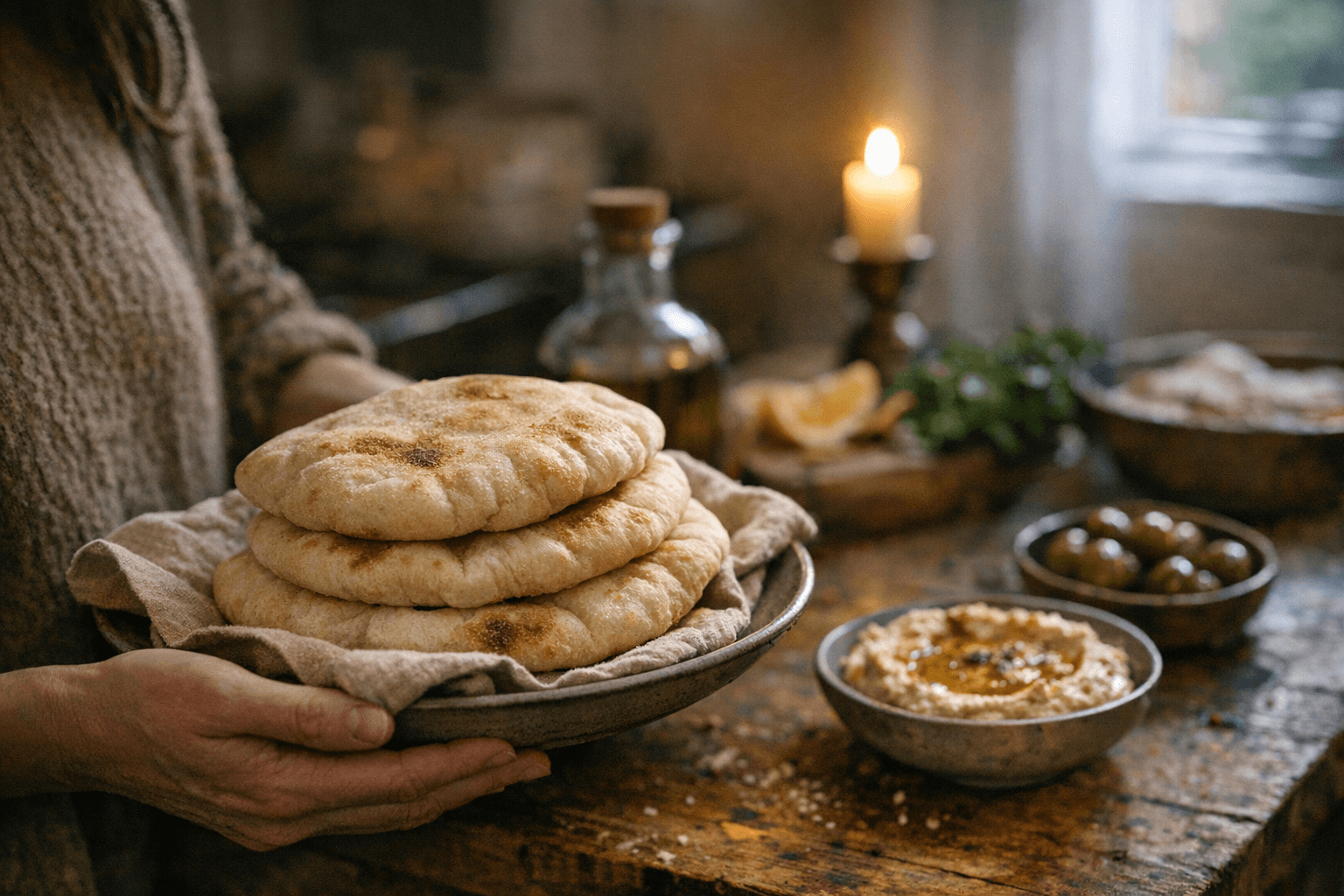
The housewarming gift sitting on a countertop six months after the move-in party is almost never the scented candle. It is almost never the monogrammed doormat or the wax-sealed bottle of something generic. What survives — what gets used, displayed, passed around at the first dinner party — tends to be the thing that carried a story inside it before it was even unwrapped.
That is the argument at the center of the essay "Pita," a short literary piece that uses a single gifted object as a lens for examining how families shift, how homes accumulate meaning, and how the act of giving something at the threshold of a new life is never really about the object itself. The pita in the essay is food, yes — but it is also a placeholder for memory, for identity, for the specific texture of a relationship between giver and receiver. Reading it as a gift guide editor, I kept circling back to one question: what would it look like to give a housewarming gift that functions the way that pita does?
Here is the answer, organized around three prompts you can use before you buy anything.
The Shared Memory Gift
The most durable housewarming gifts are ones that reference something the giver and recipient already share. Not an inside joke on a throw pillow, but something functional that carries the weight of a specific moment: the trip you took together, the grandmother whose cooking defined every holiday, the neighborhood you both lived in before anyone owned anything.
A cookbook like Tamar Adler's *An Everlasting Meal* works in this register: part instruction, part comfort reading, it is a gift designed for settling into a kitchen. But the version that lands hardest is the one you annotate before you give it. Write the recipe you make together in the margins. Dog-ear the page you know they will reach for first. A copy of *Salt, Fat, Acid, Heat* with a handwritten note costs the same $35 as a copy without one and communicates something entirely different.
Samin Nosrat's follow-up, *Good Things*, named the 2025 Barnes & Noble Gift Book of the Year, collects 125 recipes built around connection and communion, retailing at $45. That price point, with a handwritten note tucked inside the cover, is one of the highest-value gifts per dollar in this category.
Card script: *"I wrote in the one recipe I think you'll make the first week. Call me when you do."*
The Everyday Ritual Gift
The second category is about what the person does every single morning, or every Friday night, or every time someone comes to dinner. Ritual gifts are not sentimental — they are quietly practical. They say: I know how you actually live, not just who you are at parties.
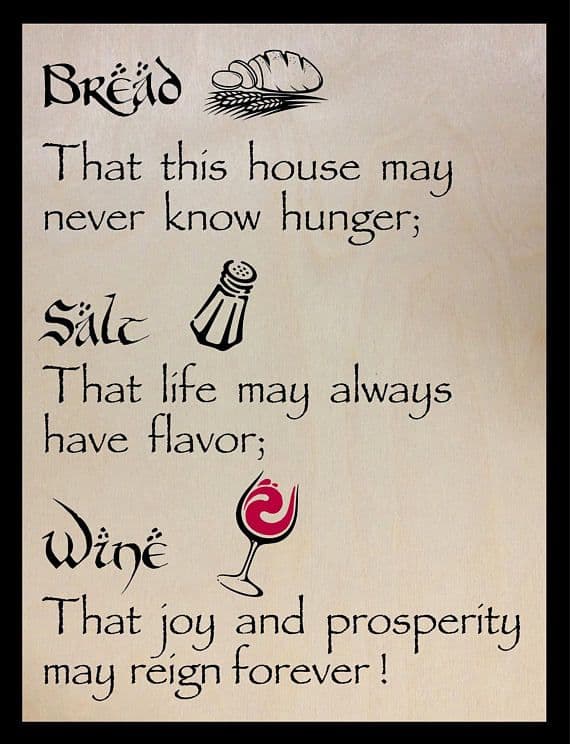
Bread has historically been one of the most loaded housewarming gifts, traditionally given with the blessing "May your house never know hunger," and the tradition invites practical, beautiful updates — a bread board, a recipe folded inside a good linen towel, the ingredients for a first loaf. A solid end-grain bread board made from walnut or maple, typically $55 to $90 depending on the maker, is the kind of object that becomes part of the kitchen's visual identity within a week. The ones worth buying are large enough to double as a serving surface and thick enough to last a decade.
For someone who cooks from family recipes rather than books, a personalized recipe card box is the ritual gift that gets used every week for years. Etsy makers offer birch plywood boxes laser-cut and engraved with custom details, typically priced between $35 and $60, and the version that matters most is the one you fill before you give it: write out three recipes you know the recipient loves and tuck them inside the box with blank cards for the rest. You are not just giving storage. You are starting an archive.
Card script: *"The three cards inside are recipes I know you already make. The rest are blank, for the ones you'll learn in this kitchen."*
The Identity Marker Gift
Traditional housewarming gifts — bread, wine, salt, olive oil, honey — each carry symbolic meaning tied to how life in the new home should feel. The identity marker gift works in this same register, but updates it: it is the gift that names something true about who this person is, not just what the new house needs.
State-shaped charcuterie boards, available in 14-inch engraved versions, are a specific example: they function as a centerpiece that references where someone is from, not just where they now live. For a person who moved far from home, that is not decor. That is a conversation piece every time guests sit down. Prices run around $65 to $85 for a well-made version.
The same logic applies to a specialty food gift tied to a place of origin: a tin of za'atar and good olive oil for someone whose cooking roots are Lebanese, a bag of stone-ground grits from a specific Carolina mill for someone who moved north from the South, a jar of calabrian chili crisp for someone whose kitchen always smells like Italy. Truffle butter samplers, running around $40 to $60, occupy this same space — a gift for someone whose first instinct with warm bread is always to reach for something interesting. The specificity is the point. Generic olive oil says "new home." A particular olive oil from a place they love says "I know you."
Card script: *"This is the one ingredient I think should be in your kitchen from the very first week. Everything else can come later."*
Why the Food-Linked Gift Outlasts Everything Else
The essay "Pita" does not argue that housewarming gifts need to be expensive or elaborate. It argues that they need to carry something — a shared reference, a ritual acknowledgment, a marker of who the person actually is. Food gifts accomplish this more reliably than decorative ones because they are used rather than displayed, consumed rather than assessed. The bread board gets pulled out. The cookbook gets opened. The recipe box gets filled. None of those things end up in a donation bin.
The practical takeaway: before you buy anything, answer one of three questions. Is there a memory this gift can carry? Is there a ritual it can support? Is there something true about this person's identity it can name? One "yes" is enough. All three and you have given something that survives the first year, the second, and every kitchen the recipient ever moves into after this one.
This article was produced by Prism’s automated news system from verified source data, official records, and press releases, then run through automated quality and moderation checks before publishing. The system is built and supervised by the people who set the standards it runs under. Read our full AI policy.
Did this article answer your question?