Scammers Exploit Public Property Records to Send Fake Housewarming Mailers, QR Codes
Scammers mined public property records to target new homeowners with mailers, QR-code cards and phone prompts promising complimentary gifts and certificates.

Scammers used public property records to target recent buyers with glossy mailers, postcards and standalone QR-code cards that promised a complimentary gift or certificate, the pattern documented March 7, 2026. The mail pieces arrived in neighborhoods where deeds had changed hands, offering what looked like a polite housewarming gesture but steering recipients to scan a code or call a supplied number.
The campaigns combined three vectors: physical mail, quick-response codes printed on cards, and automated phone prompts. Recipients reported that scanning the QR code or following the phone menu initially produced a voucher or claim form for a free item, then requested additional personal details or payment to cover handling and shipping. Because the offer arrived by post and referenced the new homeowner by name, the outreach carried a veneer of legitimacy that many found convincing.
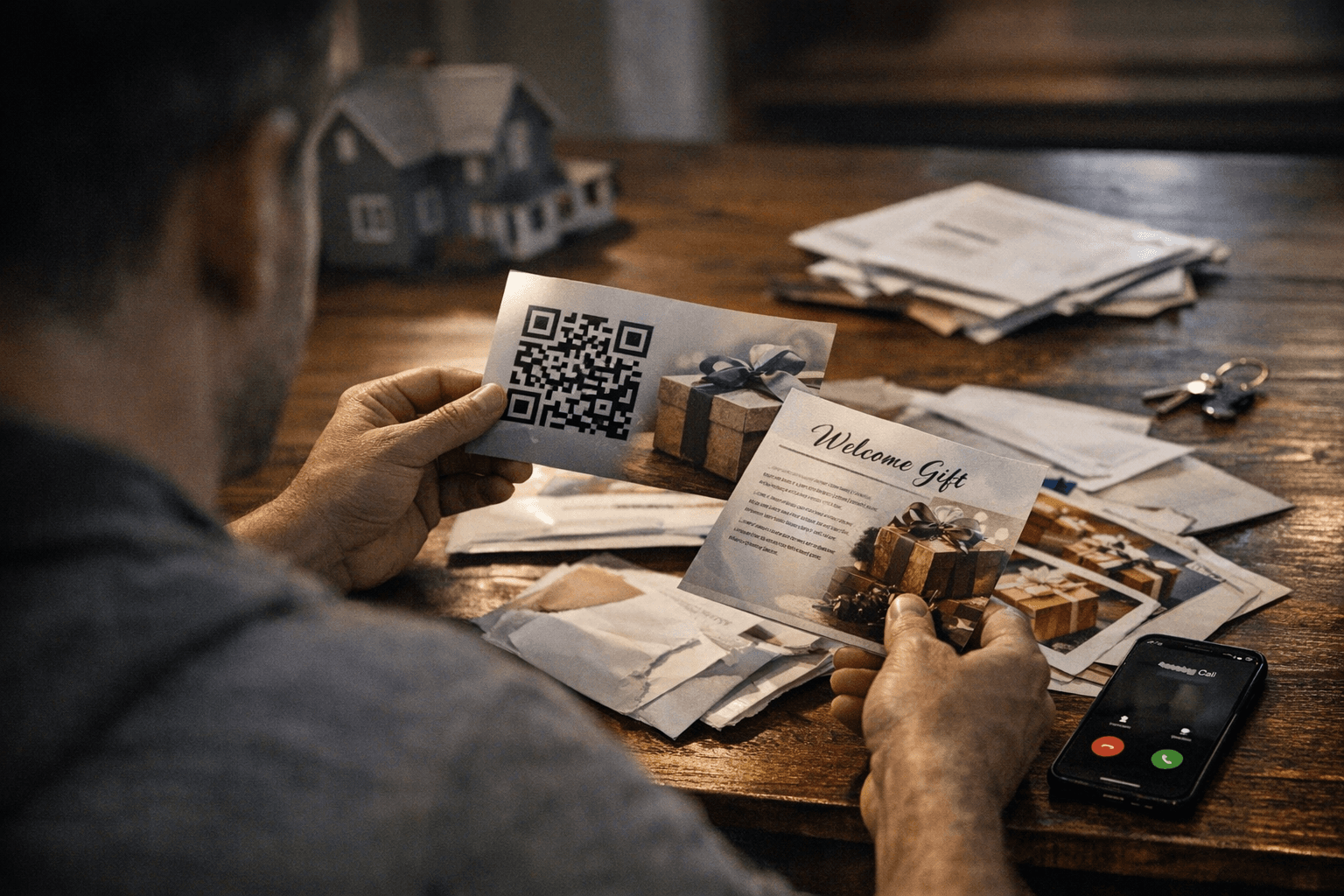
The scammers relied on information available in public property records, including recent deed filings and assessor rolls, to compile lists of newly titled owners and mailing addresses. Using those public records let the operators personalize postcards and QR-code cards with names and street addresses, a tactic that made the mailers stand out from typical junk mail and increased response rates among people who had recently moved.
If you are accepting housewarming offers, treat mailers and QR codes from unknown senders as unsolicited solicitations, not gifts. Verify any business by calling a phone number listed on an official website or by visiting a brick-and-mortar address before providing financial or identification information. Inspect return-address details on postcards and contact the local post office when mail looks suspicious; do not scan QR codes or follow phone prompts that ask for Social Security, bank details or up-front processing fees for a supposed complimentary certificate.
For anyone planning an authentic housewarming gesture, use direct channels: purchase a gift from a known local vendor, mail a handwritten card, or arrange delivery through a reputable florist or bakery with traceable payment and confirmation. Those actions preserve the intention behind a housewarming gift while avoiding mailers, postcards and QR-code cards that exploit public records to harvest data.
The March 7, 2026 pattern underscores a persistent risk as long as property transfers remain public: new homeowners are particularly exposed to mail-based schemes that promise a complimentary gift but extract personal information instead. Expect similar mail and phone tactics to recur; cautious verification will be the strongest protection.
Know something we missed? Have a correction or additional information?
Submit a Tip