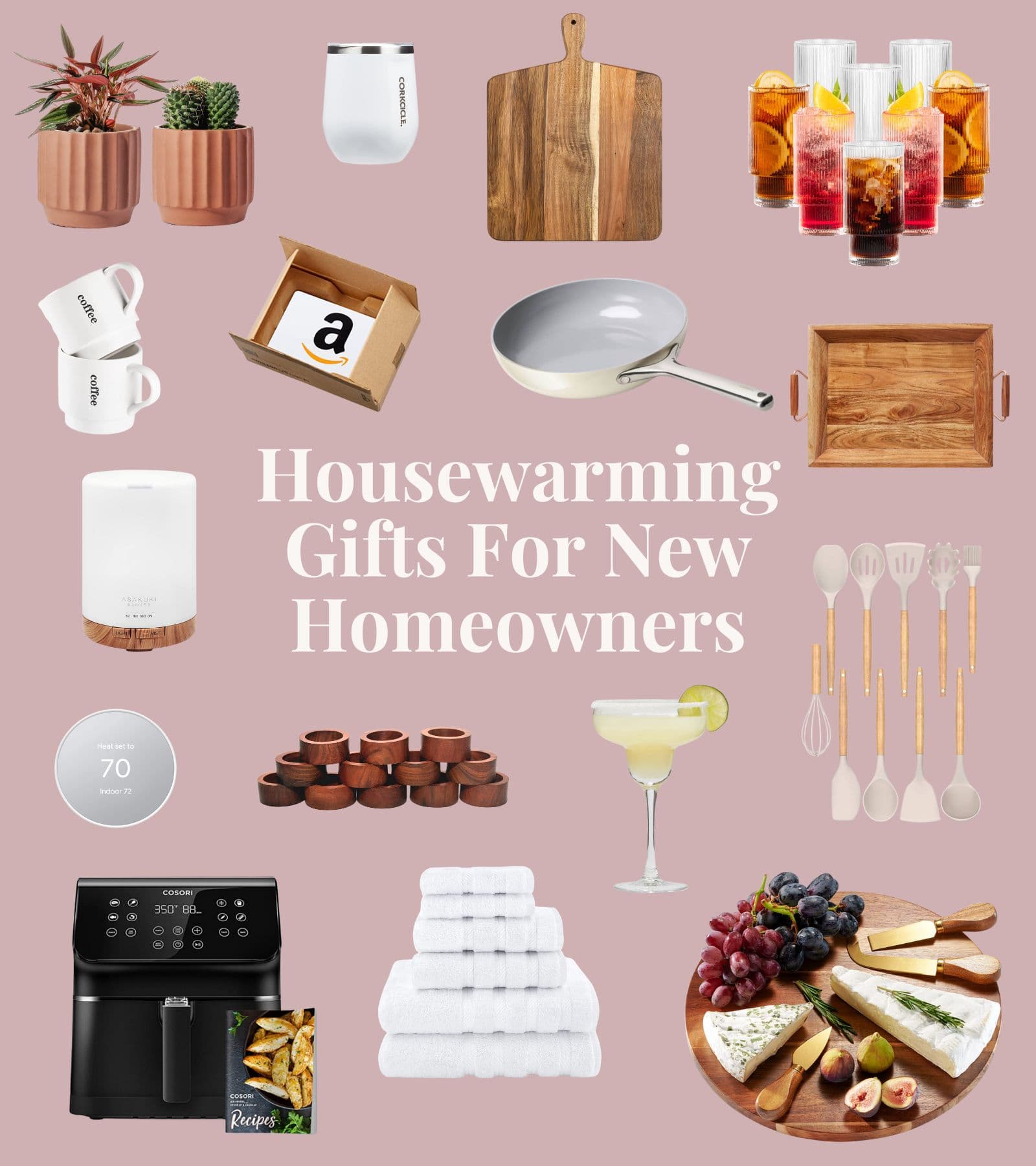
Starter housewarming gifts and tested picks (Good Housekeeping — evergreen guide)
Most housewarming gifts get donated within a year; the ones that stick are the unglamorous things new homeowners forget to buy themselves in the first frantic weeks.
The housewarming gifts that actually stay
Here's the quiet truth about housewarming parties: the decorative piece you spent an hour picking out is probably sitting in a donation box by now. Not because the recipient didn't appreciate it, but because new homeowners are drowning in the logistics of actual living, and what they truly need in those first 30 days rarely makes it onto anyone's radar as a gift. The candle smells great. The picture frame is lovely. But nobody is lighting candles when they can't find their can opener.
The Good Housekeeping Institute has spent years vetting exactly this problem, grouping its starter housewarming picks into four utility categories: kitchen basics, small appliances, home-care kits, and decorative-but-usable items. That last category is the key distinction. "Decorative-but-usable" isn't a compromise; it's the standard every housewarming gift should meet before you buy it. If it can't survive a Tuesday, skip it.
According to Mintel research, 70% of people ages 18 to 34 prefer to receive a wishlist when someone is shopping for them. That number should reframe how you approach a housewarming entirely: your thoughtfulness is best expressed through precision, not surprise.
Kitchen basics: the room that gets used before the beds are made
The kitchen is where new homeowners feel the gap most immediately. They've unpacked the plates but have nothing to cut with. They have a stove but no pan that fits it properly. The gifts that fill those gaps without overlap are the ones people remember.
A two-piece cutting board set, like the OXO Good Grips option at around $28, is a textbook example of a tested, durable pick. In hands-on testing, the non-porous plastic surface resisted staining and held up through repeated dishwasher cycles without warping. Two boards matter because new cooks and experienced ones alike need the separation between raw proteins and produce. It's unglamorous. It's essential. It will still be in their kitchen in five years.
For a higher budget, a quality Dutch oven or enameled cast iron skillet covers more ground than any single-use gadget. These pieces move from stovetop to oven to table, require no special storage, and last decades with minimal care. They're the kind of gift someone shows off rather than quietly returns.
Small appliances: pick the gap, not the duplicate
Small appliances are the highest-risk category for duplicates, and also the highest-reward when you get it right. The rule: one appliance per category. Before you buy a coffee maker, a toaster, or a blender, ask whether they already own one. This is not awkward; it is considerate.
For someone moving into a first apartment, a compact electric kettle covers tea, instant oats, pour-over coffee, and cup noodles. It's a space-saving multitasker with no bulky footprint. For someone moving into a first house, a rice cooker earns its counter space. The Zojirushi Micom model is consistently rated a top pick, with a detachable inner lid for easy cleaning and included steaming accessories that expand its use far beyond rice. Both gifts land in the "immediately needed, rarely self-purchased" zone.
Home care: what people never think to buy until they desperately need it
This is the category most gift-givers ignore entirely, and it's the most reliable path to being the person whose gift actually gets used. New homeowners tend to prioritize furniture and decor in their first month. The practical infrastructure of a home, including a sturdy toilet brush, a quality mop, a plunger that actually works, and a basic tool kit, gets pushed to "I'll get it later." Later arrives as a crisis.
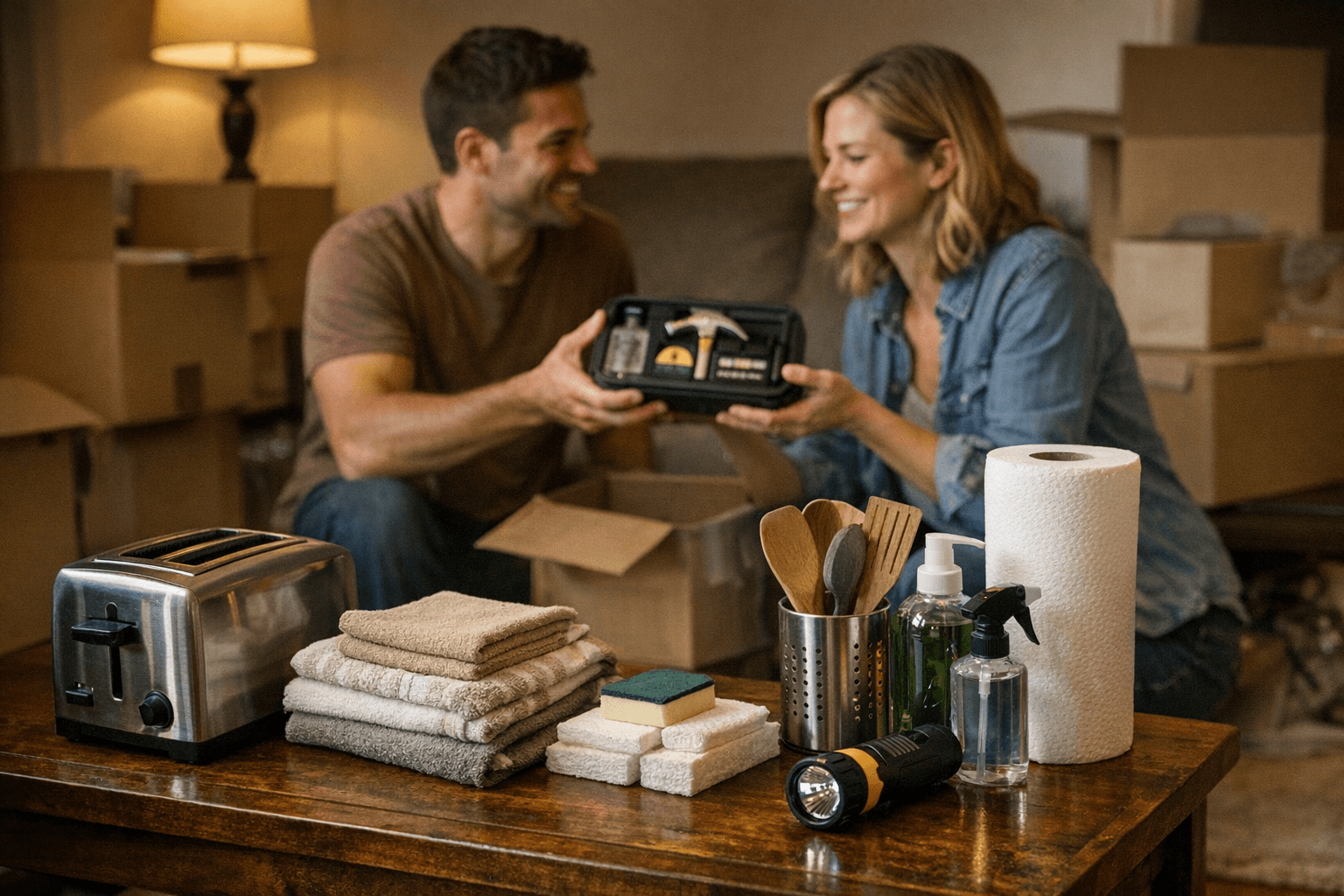
For renters in a first apartment, renter-friendly home care is the right frame: think Command strip hook sets, no-drill curtain rods, door draft stoppers, and a compact handheld vacuum. These are unglamorous, instantly useful, and renter-safe. Nothing here requires a landlord's permission. For first-house buyers, the calculus shifts toward permanence. A fire extinguisher is a legitimately brilliant housewarming gift. The Amerex B402 is widely rated among the most reliable on the market, with a durable steel cylinder and effectiveness across multiple fire types. It's the gift nobody buys themselves until after they need one, and it costs less than $50.
Decorative-but-usable: the category worth saving your budget for
Not every housewarming gift needs to be purely functional. The Good Housekeeping framework of "decorative-but-usable" creates a useful test: would this item still earn its space if it weren't pretty? A good set of kitchen towels, a ceramic serving board, a quality wine glass set, a weighted throw blanket. These items live at the intersection of beauty and daily utility. They get pulled out for guests and used on Tuesday nights. They don't collect dust because they have a job to do.
The key distinction between decorative-but-usable and purely decorative is frequency of use. If the gift only comes out during parties, it's décor. If it's in rotation within the first week, it's a keeper.
The avoid-duplicates checklist: how to buy without stepping on someone else's gift
The single most common housewarming gift failure isn't a bad pick; it's a duplicate. Three candles. Two toasters. Four cutting boards. Here's what to ask before you buy:
- Does the recipient have a registry? Check it first. Many people create one and don't mention it.
- Is a group gift being organized? Coordinate with the host of the party before you shop.
- Have they moved from a fully furnished home? If yes, they likely have the basics covered; lean toward upgrades or consumables (specialty pantry items, high-thread-count dish towels, a good olive oil set).
- Are they renting or buying? Renters benefit most from flexible, portable items. Homeowners can receive more permanent investments.
On the receipt question: always include one. Not as an afterthought, but as an act of confidence in your own taste. Including a gift receipt signals that you chose this item deliberately and still want them to have what they actually need. It turns a potential misfire into a guaranteed win.
First apartment vs. first house: how the gift changes with the life stage
A first apartment calls for compact, multi-use, deposit-safe solutions. A first house, particularly for a first-time buyer, signals that the person is likely nesting for real: they're thinking about the long term, they have more space, and they're probably staring down a longer list of needs than they expected. Hardware store gift cards, tool sets, and high-quality cookware that lasts 20 years make more sense here than they do for someone in a one-year lease.
The tested, durability-first methodology used by the Good Housekeeping Institute is precisely what a new homeowner needs applied to their gift selection. They don't have time to research every purchase. They're trying to figure out where the nearest grocery store is. The best housewarming gift closes a gap they haven't had time to fill yet, built to last long enough that they never have to think about it again.
Know something we missed? Have a correction or additional information?
Submit a Tip