Easter 2026 Spending Projected to Hit Record $24.9 Billion High
92% of Easter shoppers buy candy, but the gift driving this year's record $24.9 billion spend is a $290 chocolate handbag from Louis Vuitton.
The National Retail Federation projected Easter 2026 spending would reach a record $24.9 billion, or roughly $195.59 per person, the highest total in the survey's history. That number tells one story. The far more interesting one lives inside it.
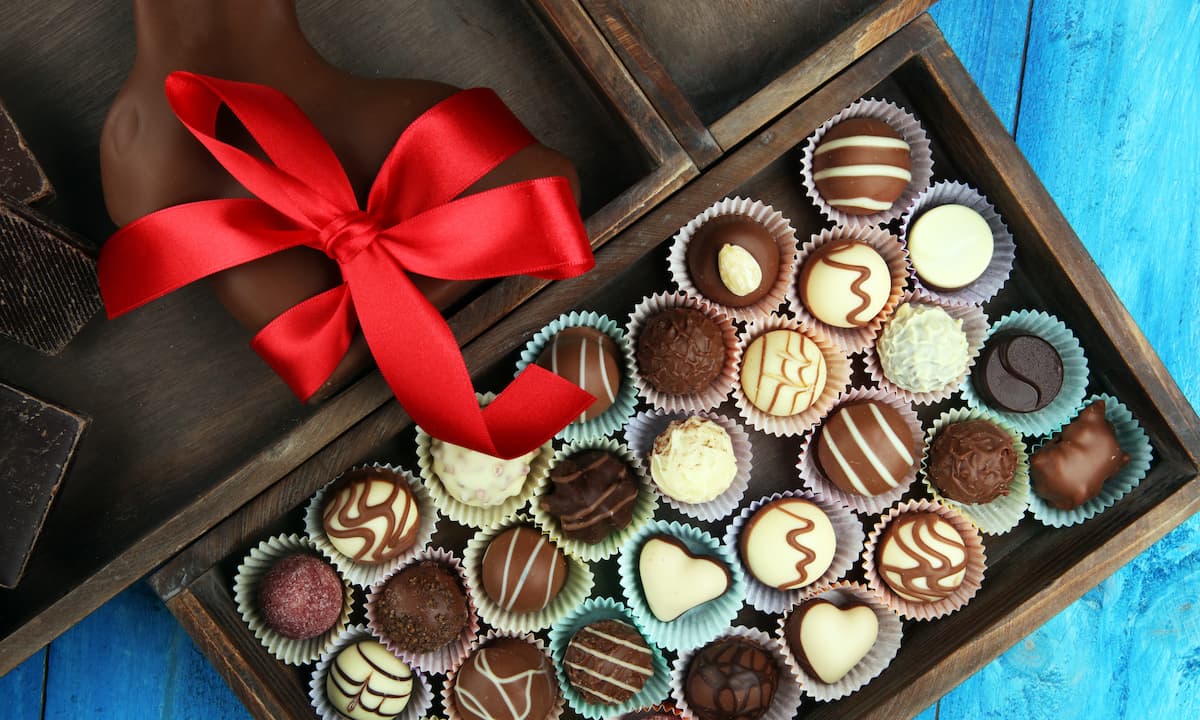
Ninety-two percent of Easter shoppers planned to buy candy this year, a penetration rate the NRF considers essentially saturated. Nearly every Easter basket in America gets a chocolate egg. The luxury opportunity, then, was never about adding candy buyers; it was about convincing existing ones to spend more on what they already buy. That pivot from mass-market confectionery to premium chocolate sculpture defined the most culturally resonant Easter gifting category of 2026, and the brands that moved earliest into that space understood something the NRF data kept confirming: seasonal gifting at its highest expression is not about the commodity but about the story attached to it.
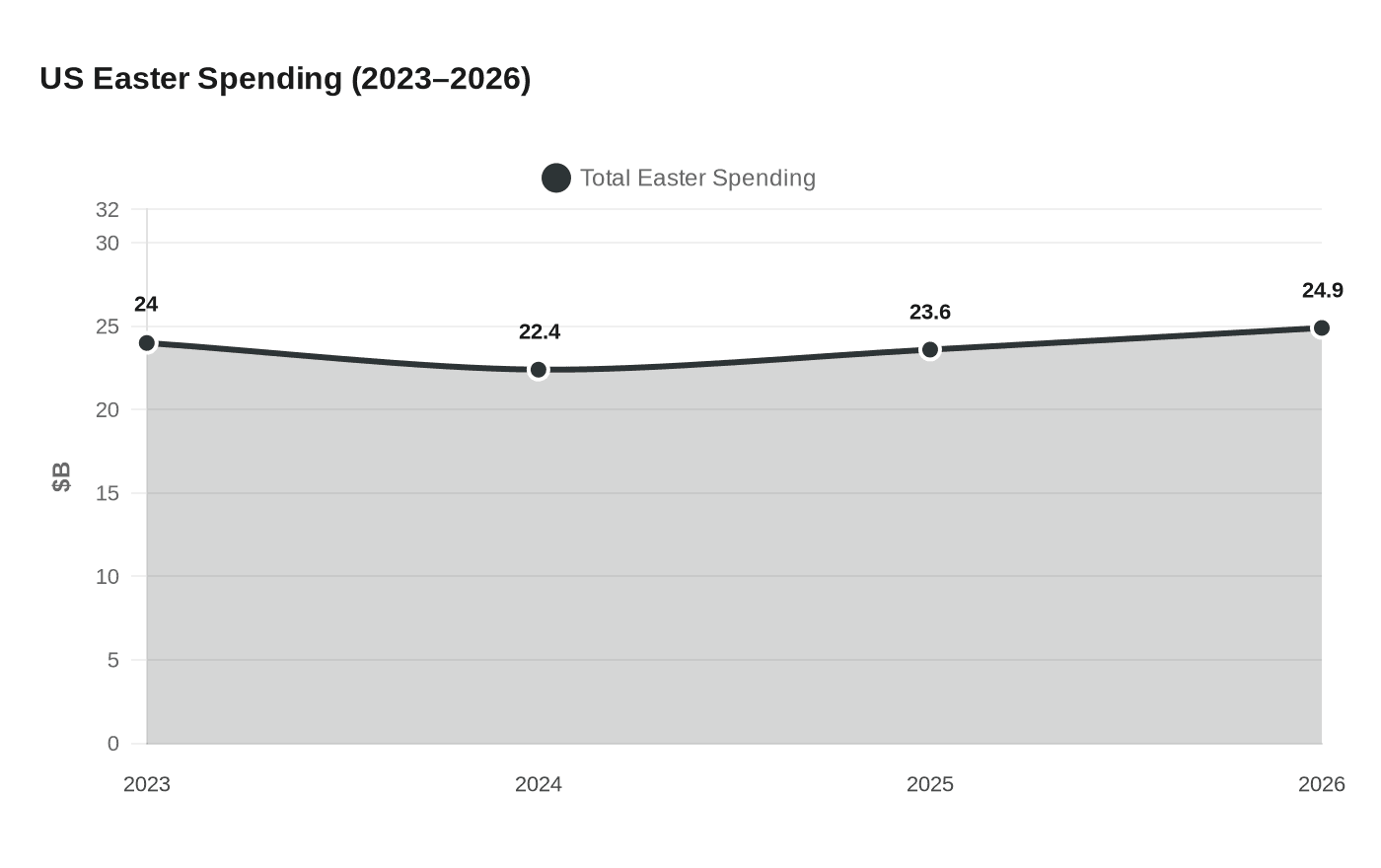
The four-year NRF spending arc makes clear this is not a post-pandemic anomaly. Easter spending hit a then-record $24.0 billion in 2023, partly aided by a late calendar placement. It fell to $22.4 billion in 2024, still the second-highest total in survey history. It rebounded to $23.6 billion in 2025, a year in which the NRF noted that consumers were "focused on making Easter special, even as they remain unsure about the broader economy." The 2026 projection of $24.9 billion extends that recovery into outright record territory, cementing Easter as one of retail's most durable seasonal events regardless of macroeconomic headwinds.
Within that $24.9 billion, food spending was projected to reach $7.5 billion, the single largest category. Gifts followed at $3.9 billion, clothing at $3.7 billion, and candy at $3.5 billion. The candy figure, despite commanding 92% consumer participation, represents only a fraction of total Easter spending: a mathematical reminder that the luxury tier in chocolate is a premium layer on an already-active mass-market base, not a replacement for it. The margin and the brand equity are being built at the top.
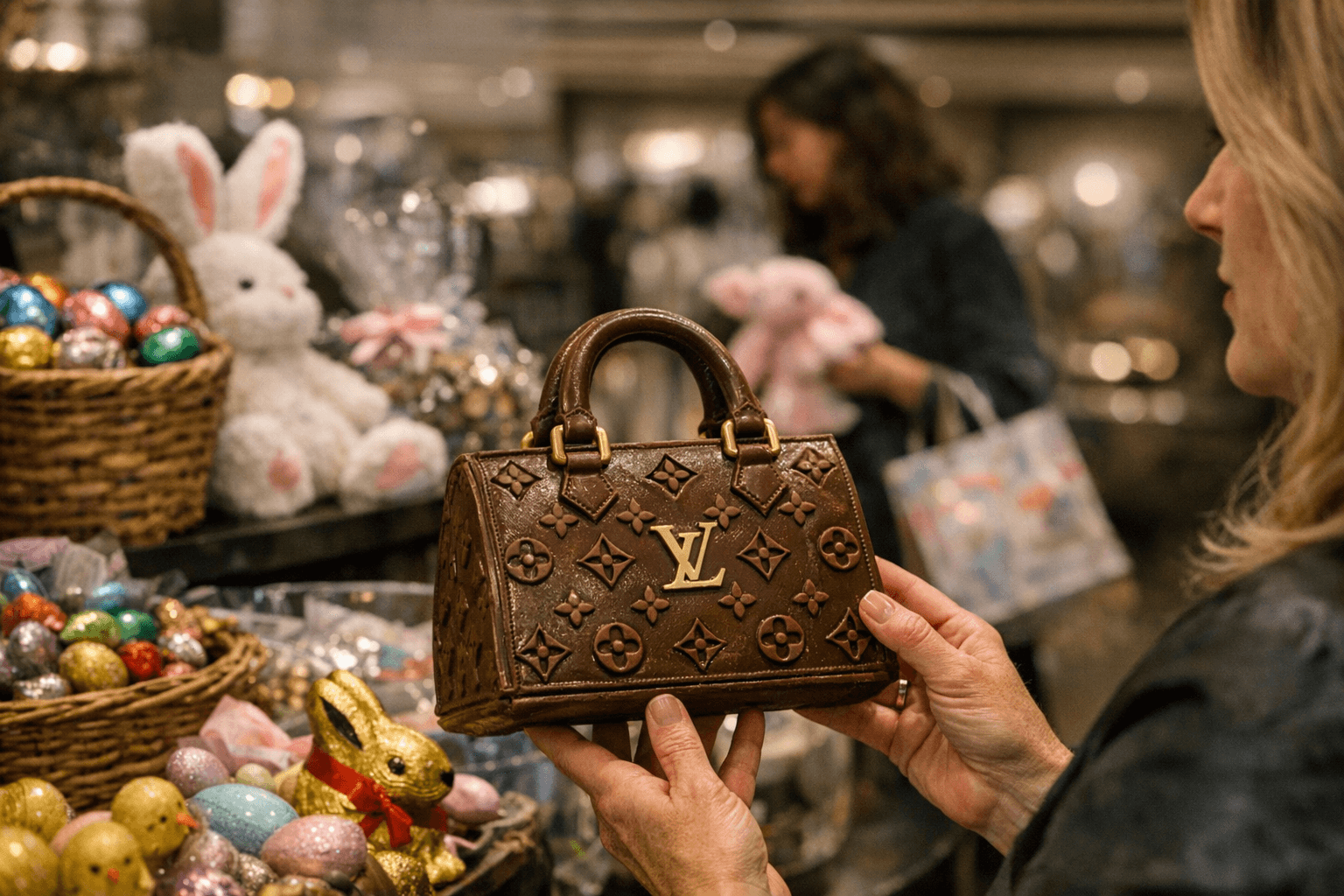
The gift that most explicitly merged fashion-house provenance with the confectionery category was Louis Vuitton's Sac Œuf Jaune, the centerpiece of La Collection de Pâques created by Maxime Frédéric, the maison's in-house pastry chef and World's Best Pastry Chef 2025. The Chocolate Egg Bag, as it is known colloquially, is a 1,050-gram edible sculpture priced at €250 (approximately $290), built as a direct chocolate homage to a handbag Nicolas Ghesquière designed for Louis Vuitton's Spring-Summer 2019 runway. Two dark chocolate shells encase a filling of roasted nuts, candied fruit, and hazelnut praline, with handles and a zipper rendered in colored white chocolate. The fashion provenance is not incidental: this is a runway object reconstituted as a gift, and that legitimacy, the knowledge that the silhouette existed as a real bag before it existed as ganache, separates it from novelty confectionery entirely.
The 2026 Easter collection also included three chocolate chicks, each in a distinct flavor profile: dark chocolate with crunchy buckwheat praline and buckwheat caramel; milk chocolate with oat praline and honey caramel; and milk chocolate with corn praline and vanilla caramel. The retail line was available at the Maxime Frédéric at Louis Vuitton chocolate shops in Paris and New York from March 13, with a paired Easter gastronomic offering at Le Café Louis Vuitton turning the purchase into a full experiential moment. The dine-in option signals Louis Vuitton's broader strategy of treating gastronomy as a genuine extension of fashion identity, not a seasonal marketing exercise.
For those preferring architecture over fashion as their chocolate reference point, Claridge's offered one of the most formally precise Easter eggs of the season. The Mayfair hotel's milk chocolate egg is handcrafted from Valrhona chocolate at 40% cocoa, stamped with Claridge's crest, and filled with salted-caramel mini-eggs each wrapped in the hotel's signature black-and-white chevron foil. Every piece takes three days to produce. The egg arrives in a jade box tied with a black ribbon, priced at $87. The chevron pattern running through every element of Claridge's visual identity, from its Art Deco lobby to its room linens, makes this a genuinely site-specific object rather than a generic hotel co-brand, and at that price point it functions as both a gift and a piece of the hotel's design story.
Across the Channel, Mandarin Oriental Paris took its inspiration from something more unexpected: the palace hotel's own rooftop beehives on Rue Saint-Honoré in the 1st arrondissement. Chef Julien Dugourd designed La Ruche, a beehive-shaped chocolate sculpture available at the Mandarin Oriental Paris Cake Shop through April 12, priced at €75 and pre-orderable online with at least 24 hours' notice. La Ruche, which translates from French as "the beehive," carries a specificity that purely decorative Easter eggs rarely achieve. It is a building-shaped object referencing an actual working element of the hotel's infrastructure, edible architecture in the most literal sense, and the pre-order requirement positions it as a limited collectible rather than an off-the-shelf impulse buy.
Fortnum & Mason's large praline and ganache Easter selection represented the heritage British approach: a curated assortment built on the Piccadilly grocer's century-long authority in fine confectionery, without the sculptural theatrics. For a host gift or a corporate basket where the name on the box carries as much weight as what is inside, the Fortnum's selection delivers institutional credibility at a price point well below the fashion-house tier.
What the NRF data and the luxury tier together confirm is that Easter has quietly become one of retail's most competitive seasonal categories at the premium end. The $24.9 billion record is the macro number. The $290 chocolate handbag, the three-day-crafted Claridge's egg, and the pre-order-only beehive from a Paris palace hotel are the individual transactions that get it there.
This article was produced by Prism’s automated news system from verified source data, official records, and press releases, then run through automated quality and moderation checks before publishing. The system is built and supervised by the people who set the standards it runs under. Read our full AI policy.
Did this article answer your question?