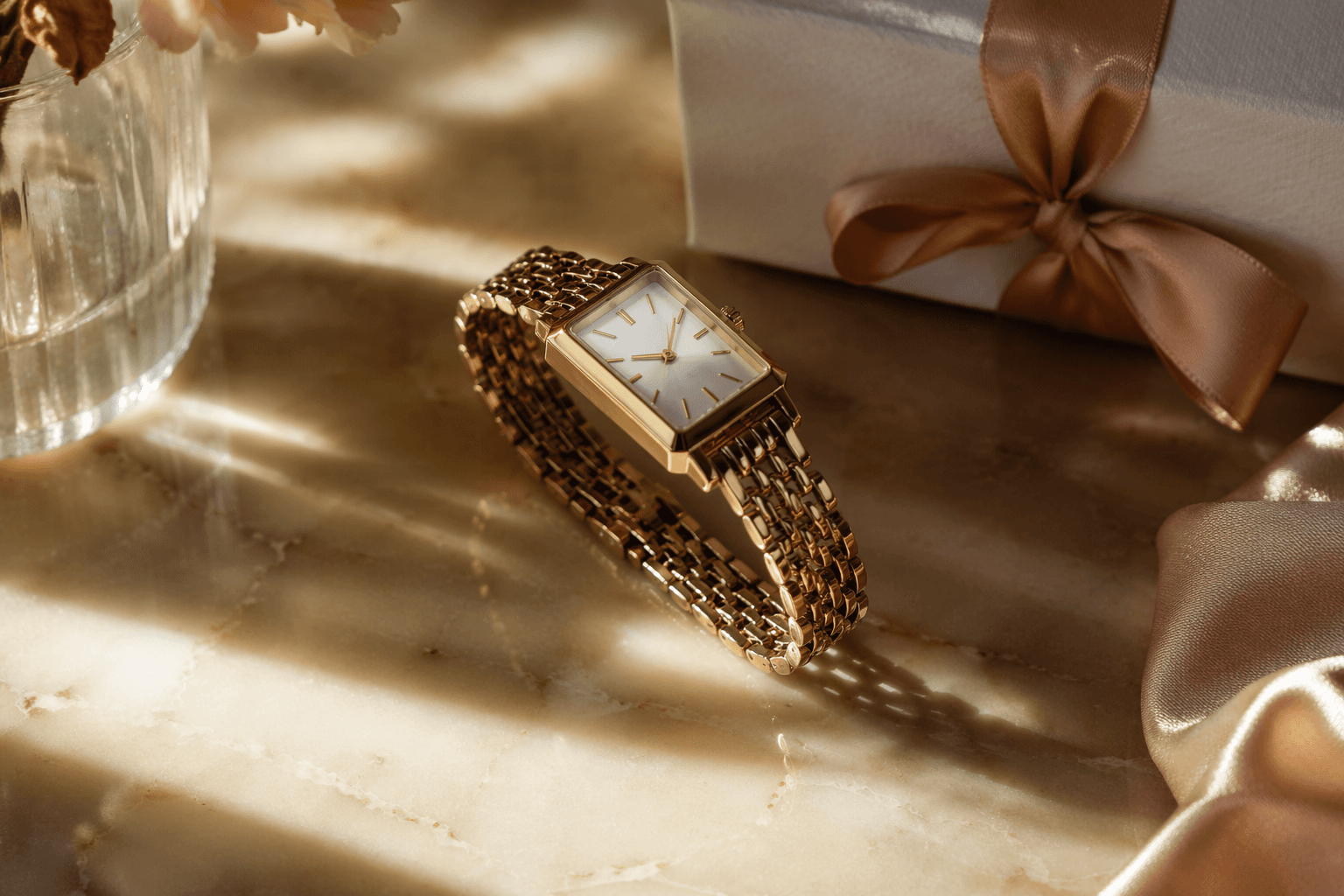
From Chaucer to Chocolates, the Long History of Valentine’s Gifts
Valentine’s gifting began with Chaucer, love tokens, and hidden surprises. The best modern gifts still do what the old ones did: show deliberate attention.

The first Valentine gifts were not generic
Before Valentine’s Day became a $29.1 billion affair, it was a holiday of rings, brooches, gloves, boxes, and even fish. Geoffrey Chaucer’s *The Parliament of Fowls*, written in the 1380s, is widely held to be the first reference tying February 14 to love, and the holiday did not settle into romance until the 14th century. That matters now because the oldest Valentine traditions were never just about price or polish. They were about specificity, restraint, and the feeling that someone had looked closely enough to choose well.
The commercial scale of the holiday only sharpens the point. The National Retail Federation projected U.S. Valentine’s Day spending at a record $27.5 billion in 2025, up from $25.8 billion in 2024, and then a new record of $29.1 billion in 2026, with an average shopper budget of $199.78. Those numbers explain the modern pressure to buy something polished and obvious. The long history of Valentine’s gifts suggests a better standard: choose something that feels unmistakably intended for one person.
Love tokens came first, not retail categories
The late Middle Ages gave Valentine’s Day a vocabulary of personal objects rather than standardized gifts. Historical love tokens included personalized textiles, rings, brooches, gloves, boxes, and even fish, which sounds eccentric only because today’s gift aisle has trained us to think in categories instead of gestures. In the old tradition, the gift often had a use, a daily presence, or a hidden meaning. It was less a product and more a private signal.
That is the part worth borrowing now. A pair of gloves is not romantic because it is expensive; it is romantic because it will be worn in bad weather and remembered every time the hands are covered. A small box is not memorable because it is ornate; it is memorable because it invites touch, opening, and surprise. Even the oddity of fish tells you something useful: Valentine’s gifts were once allowed to be practical, local, and deeply personal rather than universally recognizable.
Cards changed the holiday, but not its logic
By the late 1700s, valentines were already being mass-produced, and the oldest known printed Valentine’s Day card dates to January 1797. In the United States, handwritten valentines remained common into the early 1800s, but improvements in printing made cards more widespread and increasingly elaborate. Victorian cards often came trimmed with lace or fabric, and they could hide small gifts inside, turning the card itself into an object worth keeping.
That design instinct still feels modern because it solves the same problem many people face now: how do you give something intimate without making it cloying? The answer, then and now, is texture, concealment, and a sense of reveal. A card that opens to a note, a ribbon, a pressed flower, or a small token can do more emotional work than a large but impersonal present. In that sense, the Victorian valentine was already doing the job of today’s most thoughtful gift wrap.
Chocolate became a tradition later
Chocolate did not begin as the whole story of Valentine’s Day. In the 19th century, Cadbury helped popularize heart-shaped chocolate boxes as a Valentine’s gift format, and that move helped make chocolate a mainstream seasonal staple. The genius of the box was not just the candy inside it, but the fact that it was a romantic object in its own right, something to open, display, and sometimes keep long after the sweets were gone.
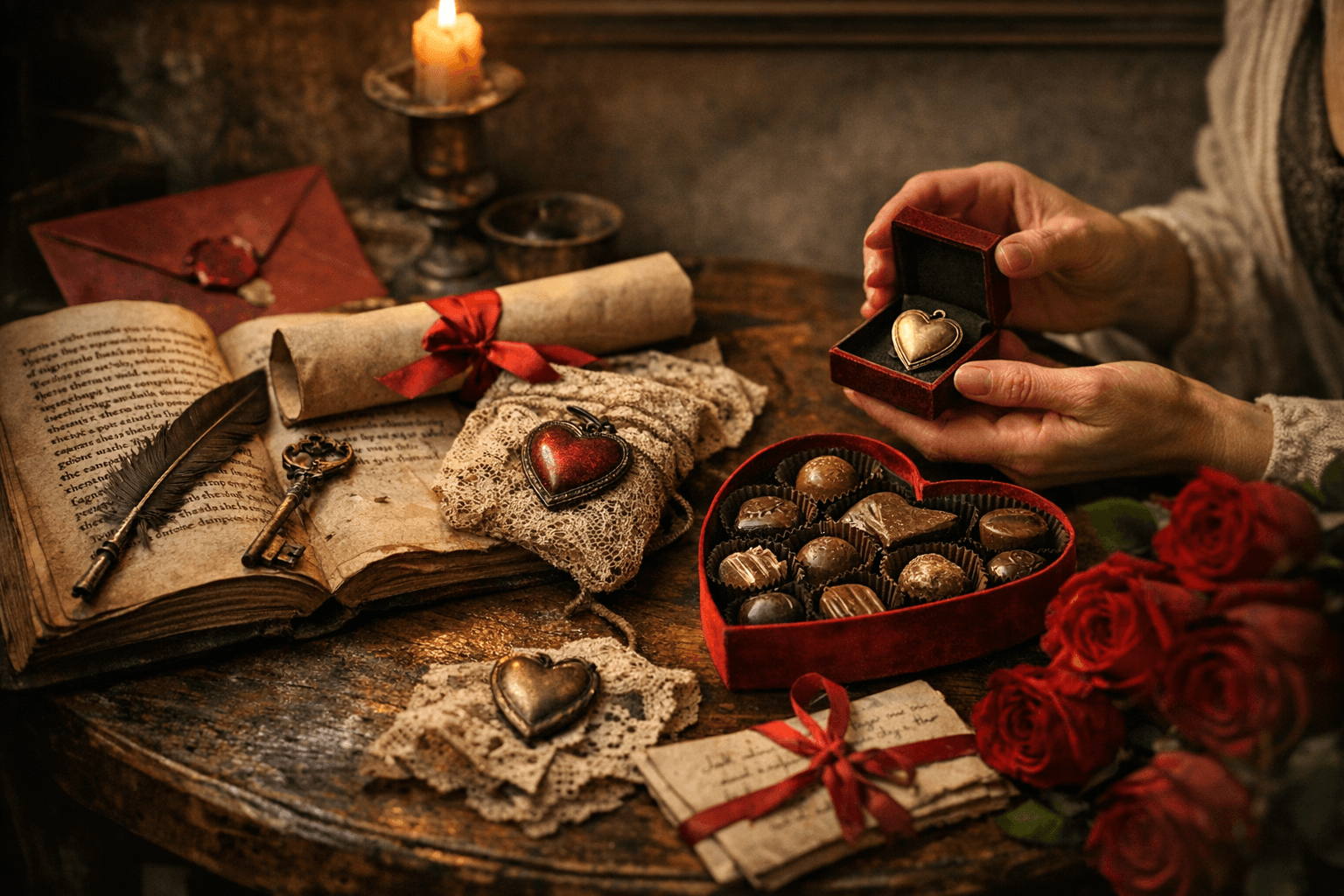
That is why chocolate still works when it is chosen with care. A heart-shaped box, a local confectioner’s assortment, or a tied box from a favorite maker feels more faithful to the holiday’s history than a random box pulled from a checkout line. If the treat is beautiful, memorable, and clearly chosen for one person’s taste, it earns its place. The point is not to reject chocolate, but to stop treating it as the only acceptable language of affection.
How to turn history into a better modern gift
The old Valentine customs offer a simple shopping test: does the gift feel wearable, readable, openable, or shareable in a way that says, “I know you”? That is a more interesting standard than simply asking whether it looks romantic on a shelf. It also makes the holiday more flexible, because the most luxurious gift is often the one that feels precise rather than costly.
Here are a few historically inspired directions that translate well into modern giving:
- A personalized textile, about $30 to $150: think monogrammed gloves, a silk scarf, a handkerchief, or an embroidered pillowcase. This fits the medieval habit of giving useful, intimate objects, and it works especially well for someone who values things they can actually live with.
- An engraved ring or bracelet, about $75 to $250: the modern echo of acrostic rings and other Victorian love tokens. It is worth the money when the inscription, date, or hidden message means something only the two of you understand.
- A coin or small metal keepsake, about $20 to $100: a subtle nod to bent-coins and other love tokens. A stamped charm, a pocket token, or a tiny medallion can feel more private and lasting than a flashier piece of jewelry.
- A beautiful box with something unexpected inside, about $40 to $200: this could be artisan chocolates, a handwritten letter, a scent sample, or a small piece of jewelry tucked inside a keepsake box. It honors the Victorian instinct for surprise, where the container was as much a part of the gift as the contents.
- A food gift that feels chosen, about $50 to $200: the old tradition even allowed for fish, which is a reminder that a romantic gift can be edible and specific rather than ornamental. A favorite dessert from a serious bakery, a seafood dinner reservation, or a basket built around one beloved ingredient can feel more intimate than flowers alone.
What makes these ideas work is not extravagance, but clarity. Valentine’s Day has always rewarded the giver who understands that affection is easier to remember when it arrives as a particular object, a particular flavor, or a particular surprise. The oldest gifts were never generic, and the best modern ones should not be either.
This article was produced by Prism’s automated news system from verified source data, official records, and press releases, then run through automated quality and moderation checks before publishing. The system is built and supervised by the people who set the standards it runs under. Read our full AI policy.
Did this article answer your question?