Why Roses Became Valentine’s Day’s Default Romantic Gift
Roses became Valentine’s default because their old coded meanings already said love, secrecy, and affection, and modern trade turned that symbol into a ritual. The color you choose matters more than the stem count.
The flower that learned to speak
Roses did not become the Valentine’s Day standby by accident. The holiday itself reaches back to the 5th century and carries roots in the Roman festival of Lupercalia, then Victorian England helped turn February 14 into a more card-heavy, gift-driven occasion. Roses were already primed for the job because the red rose had long been linked with love, Aphrodite, Venus, and a wider symbolic tradition that made the flower feel instantly romantic.
Why the rose fit the holiday so perfectly
Victorian flower language gave roses a second life. By the mid-19th century, bouquets and nosegays were not just pretty arrangements, they were social messages, with flowers used to signal love, secrecy, and other carefully coded emotions. That is the real reason the rose won: it could be read as both overtly romantic and politely indirect, which is exactly the kind of emotional double duty Valentine’s Day asks for.
What your bouquet says before you even write the card
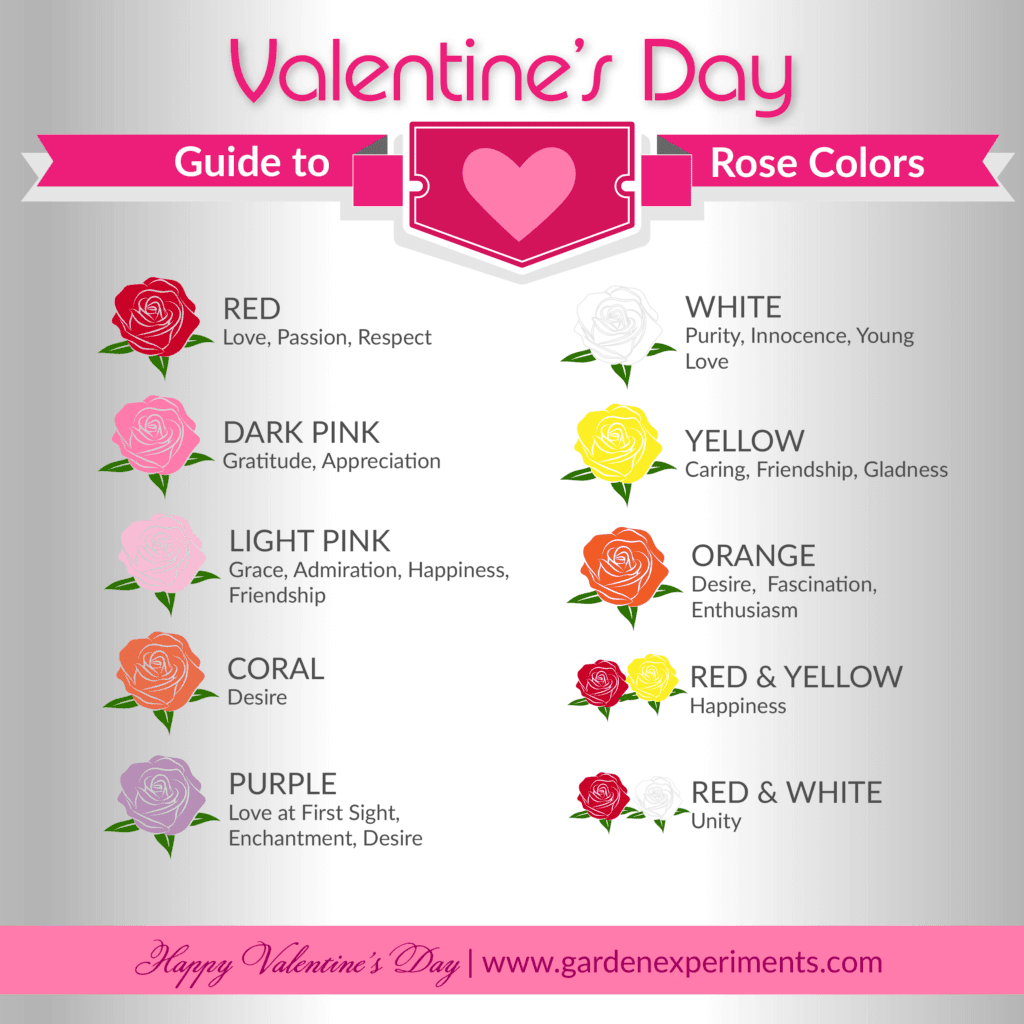
If you are buying roses, the color does most of the talking for you. Red roses still mean enduring passion and deep love, so they make sense when the relationship is established and you want the message to land without ambiguity. Pink roses soften the tone, which is why they read as admiration, sweetness, grace, gratitude, and appreciation, while white roses lean into innocence, humility, purity, and, in some retail floral language, loyalty and new beginnings. Yellow roses are the least obvious Valentine’s choice, but that is the point: they signal friendship, joy, and fresh starts, which makes them better when you want warmth without the full romance blast of red.
When red roses are not actually the smartest romantic move
The default red dozen can feel lazy when the relationship is new, the recipient prefers understatement, or the message you want is closer to tender than theatrical. In those cases, pink roses are usually the better love note because they say affection without pressuring the moment, and white roses can feel especially thoughtful for a partner who likes clean, quiet elegance. Yellow roses are even more specific: they work when you want to celebrate the person itself, not just the script of Valentine’s Day, and Teleflora’s own rose guidance treats the color as an explicit message choice rather than a decorative detail.
If you want to move beyond roses altogether, tulips are the cleanest alternative. They read lighter, more modern, and less predictable than a red dozen, and they are often easier on the budget too: Teleflora lists a purple tulip bouquet at $44.99 for the standard size, compared with $69.99 for a standard dozen red roses, $74.99 for a standard dozen pink roses, and $74.99 for a yellow rose bouquet. Proflowers lists a basic dozen red rose bouquet at $24.75 before delivery, which shows just how wide the price swing can be depending on the retailer, vase, and service model.
The Valentine’s rose is also a huge commercial machine
The romance is real, but so is the supply chain. TIME reported that more than 250 million roses were produced annually for Valentine’s Day as of 2018, and the Society of American Florists said 22% of Americans bought fresh flowers or plants for Valentine’s Day in 2022. That same industry data shows who is most likely to buy: men, married adults, adults ages 18 to 34, and households with children all rank among the likeliest flower buyers, which tells you roses are not a niche gesture, they are a mainstream ritual with serious seasonal demand.
The global scale is hard to miss once you look at where the flowers come from. USDA reporting says Colombia’s cut flower industry is a $2.4 billion export sector that supplies about 60% of the flowers sold in the United States and employs more than 200,000 people. U.S. imports of cut flowers, plants, and nursery stock reached nearly $3.3 billion in fiscal 2022, and fresh-cut roses alone accounted for more than $800 million of that total. Valentine’s roses are not just a symbol of romance, they are a finely tuned agricultural and retail product moving through an international market built to satisfy one very specific emotional deadline.
The easiest way to choose well
The safest rule is simple: match the flower to the feeling, not the holiday to the habit. Red roses are for unmistakable passion, pink roses are for affection with softness, white roses are for elegance and restraint, yellow roses are for warmth and friendship, and tulips are a smart reset when you want something more personal than the default romantic script. Roses became Valentine’s default because they already knew how to speak in a code of love, but the best bouquet is still the one that says exactly what you mean.
This article was produced by Prism’s automated news system from verified source data, official records, and press releases, then run through automated quality and moderation checks before publishing. The system is built and supervised by the people who set the standards it runs under. Read our full AI policy.
Did this article answer your question?